This Wasn't Meant to Be Public.
Read it. Delete it. Pretend you found these places yourself. We won’t tell.
Zero spam · Unsubscribe anytime

Where Sea Gypsies Still Talk to Fish
There's a specific kind of humbling that happens when you're snorkeling above a coral garden so alive, so extravagantly, almost rudely beautiful — brain corals the size of small cars, sea turtles gliding past with the unbothered energy of elderly professors who've seen everything, whale sharks occasionally photobombing your GoPro footage like they own the place (they do) — and you realize: this reef has been here for thousands of years, doing perfectly fine without your Instagram documentation.
Welcome to Mu Ko Surin National Park. Five islands in the Andaman Sea like nature's best-kept secret that nature is genuinely trying to keep. Pristine waters. Ancient jungle. Coral reefs that make marine biologists weep with professional joy. And a community of Moken sea gypsies who've been reading these waters like their personal library for four thousand years.
This is Thailand before tourism invented itself — raw, spectacular, and absolutely worth the effort to reach. The reef will survive your visit. Whether your concept of "travel" survives the reef is less certain.
Come ready to be the least impressive thing in the water. Discover that's exactly the point.
Before you pack your bags, read this. We score every hidden gem on the metrics that actually matter — tourist density, cultural depth, how badly it'll ruin you for ordinary travel — so you know exactly what you're walking into. And whether you should.
Similan gets the influencer budget, the speedboat crowds, and the glossy magazine spreads. Surin gets the marine biologists, the serious divers, and the travelers who actually read past page one of their guidebook. The coral reefs have made their peace with this arrangement. So should you.
Khuraburi Pier doesn't appear in most tourists' mental map of Thailand because most tourists' mental map stops at Khao Lak. Then add a 60km open-ocean crossing that introduces you to waves you weren't expecting, on a boat that has opinions about swell. The 1% who make it? They get the Andaman coast circa 1985. Worth every kilometre and every wave.
November 1st: park opens. May 15th: park closes. No exceptions. No "I booked in advance." No "just one more day." No "what if I swim really quietly." The Andaman monsoon doesn't negotiate, and neither do the rangers. Check. The. Dates. This is not a warning. It's a public service announcement tattooed on your itinerary.
The kind of coral reef that makes marine biologists abandon professional composure and just float there whispering into their snorkels like overwhelmed tourists at the Sistine Chapel — except the ceiling is alive and it's underneath you. Hard corals, soft corals, reef sharks, manta rays, whale sharks if you're cosmically lucky. Remoteness is conservation. Distance is protection. The reef survived. We should all be grateful.
3hrs to Khuraburi + 2–3hrs open-ocean crossing + basic bungalows + zero WiFi + generator-off at 10 PM. In return: floating above coral gardens so healthy they look like screensavers someone forgot to turn off. Reef sharks cruising past like they own the place. They do. Ratio: absurdly, embarrassingly favorable. Someone check the math.
The Moken — chao le, sea people — have called these waters home for centuries. They free-dive to 10+ metres on a single breath and read ocean currents the way most people read text messages. The 2004 tsunami? Their village survived almost entirely — elders recognised warning signs their ancestors had encoded in oral tradition. Visit respectfully. Ask before photographing. This is their home, not a cultural exhibit with opening hours and a gift shop.
Thai Mum who grew up near the sea and free-dives like it's just breathing with extra steps? She's already packed. She's asking why you took so long to invite her. She will absolutely out-snorkel you and maintain eye contact while doing it.
Bangkok Mum who considers the Emporium Mall a legitimate outdoor experience? Brief her carefully about the shared bathrooms, the 10 PM generator cutoff, and the fact that the nearest 7-Eleven is 60km of open ocean away. If she still says yes after that full briefing — that Mum is a keeper. Take her immediately.
She'll have the time of her life and you'll have a story you tell for the next twenty years.
Thais have a complicated relationship with Surin Islands — the kind of complicated where you love something so fiercely you're almost relieved most people don't know about it. These five islands are what we call tham-ma-chat bori-sut — pure nature. Ecosystems so intact, communities so ancient, waters so clear that visiting feels less like tourism and more like being granted temporary access to something sacred.
When Bangkok Thais talk about Surin, we lower our voices slightly — the way you do when discussing something precious you're not entirely sure should be discussed at all. Then we immediately tell everyone, because Thai people cannot keep good secrets. It's a character flaw we've made peace with.
The Moken — chao ley, sea people — have called these waters home for over 4,000 years, navigating by stars and currents, reading fish behavior like weather forecasts, maintaining a relationship with this marine environment that makes modern conservation science look like it's still doing its homework. Some people protect nature because someone told them to. The Moken protect it because it's their living room, their library, and their grocery store, in that order.
Most places that call themselves "untouched" have been touched considerably and are being diplomatic about it. Surin is genuinely different. The 60–70% coral coverage here (global "healthy reef" standard is 30%) isn't the result of a conservation project — there was never a destruction project to recover from.
The park's enforced seasonal closure (May 15 – October 15), visitor limits, and infrastructure-free philosophy aren't marketing choices. They're the reason this place still exists as it does.
The uncomfortable truth: Surin's magic is directly proportional to its inconvenience. Every filter — remote location, limited accommodation, seasonal closure — is doing active conservation work. The barrier is the ticket price. The effort is the entry fee for the real thing.
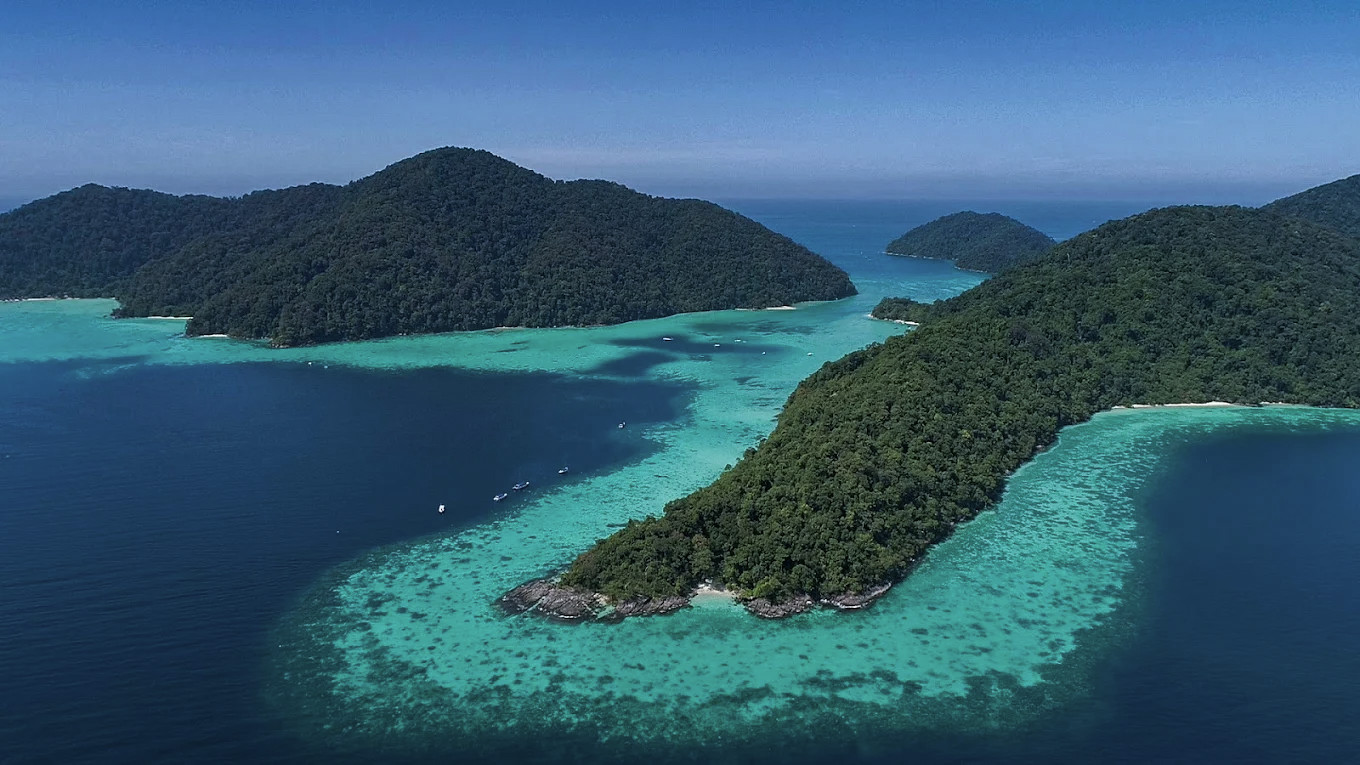 อุทยานแห่งชาติหมู่เกาะ สุรินทร์ · Mu Ko Surin National Park
"Five islands. 4,000 years of Moken knowledge. A coral reef doing extravagantly well without our help. The Andaman Sea, completely unbothered."
Thirty seconds. One form.
Zero tourist traps in your inbox.
No selling. No spam. We barely email — because we're too busy finding gems.
One hour and forty-five minutes of open Andaman Sea. Engines roaring. Bow lifting over swells. Horizon expanding in every direction until you forget Thailand has any roads at all. Dolphins occasionally race the boat alongside — showing off, clearly. They win every time. They seem to find this funnier than you do.
Flying fish skip across the surface like nature's own skip stones. Then the islands appear: first as smudges on the horizon, then as green peaks, then suddenly as exactly what they are — jungle-covered limestone rising from impossibly blue water, ringed by white sand beaches with no buildings, no signs, no development beyond the modest park facilities. The contrast with the mainland is so complete it feels like crossing an invisible line between the world you know and the world that existed before people got ideas about "developing" things.
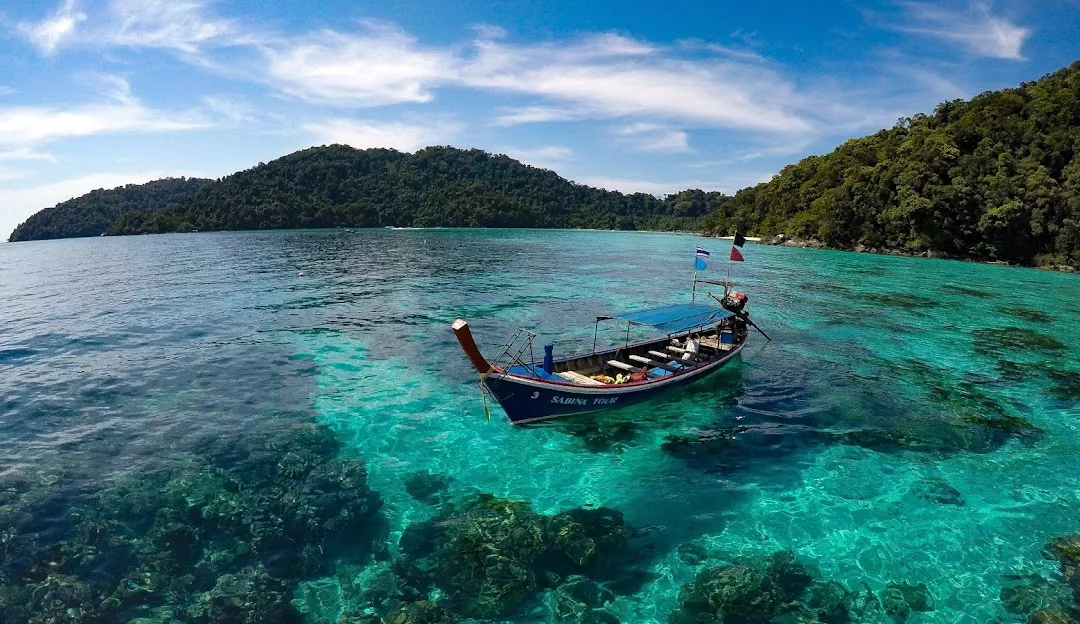
What experienced Thais know: The park opens November 1st and closes mid-October-ish (updated: May 15 closure in recent seasons). Within that window, the experience varies dramatically — and most tourists book without knowing which weeks are actually magical versus merely good.
The sweet spots: Mid-November to mid-December (post-monsoon, visibility peaks 20–30 metres — clarity so good you feel cheated by every other snorkelling experience you've had before). Late March to mid-April (crowds thin, weather holds, marine life peaks before closure, Moken community most active). January–February: beautiful but busy — boat traffic multiplies, reef areas feel populated, prices spike.
Weekdays are dramatically calmer than weekends. Day-trippers from Khuraburi arrive Saturday–Sunday in waves. Tuesday–Thursday, the islands return to something approaching their natural state.
The move: Book DNP bungalows the moment the reservation window opens in August — November slots fill completely. Request Ko Surin Tai (southern island) for proximity to the Moken village and the best sunset views. Wake at 5:30am — before tour boats from the mainland arrive at 9am, you'll have reef systems entirely to yourself. The snorkelling directly off Ko Surin Tai beach at dawn is as good as any guided site, and free.
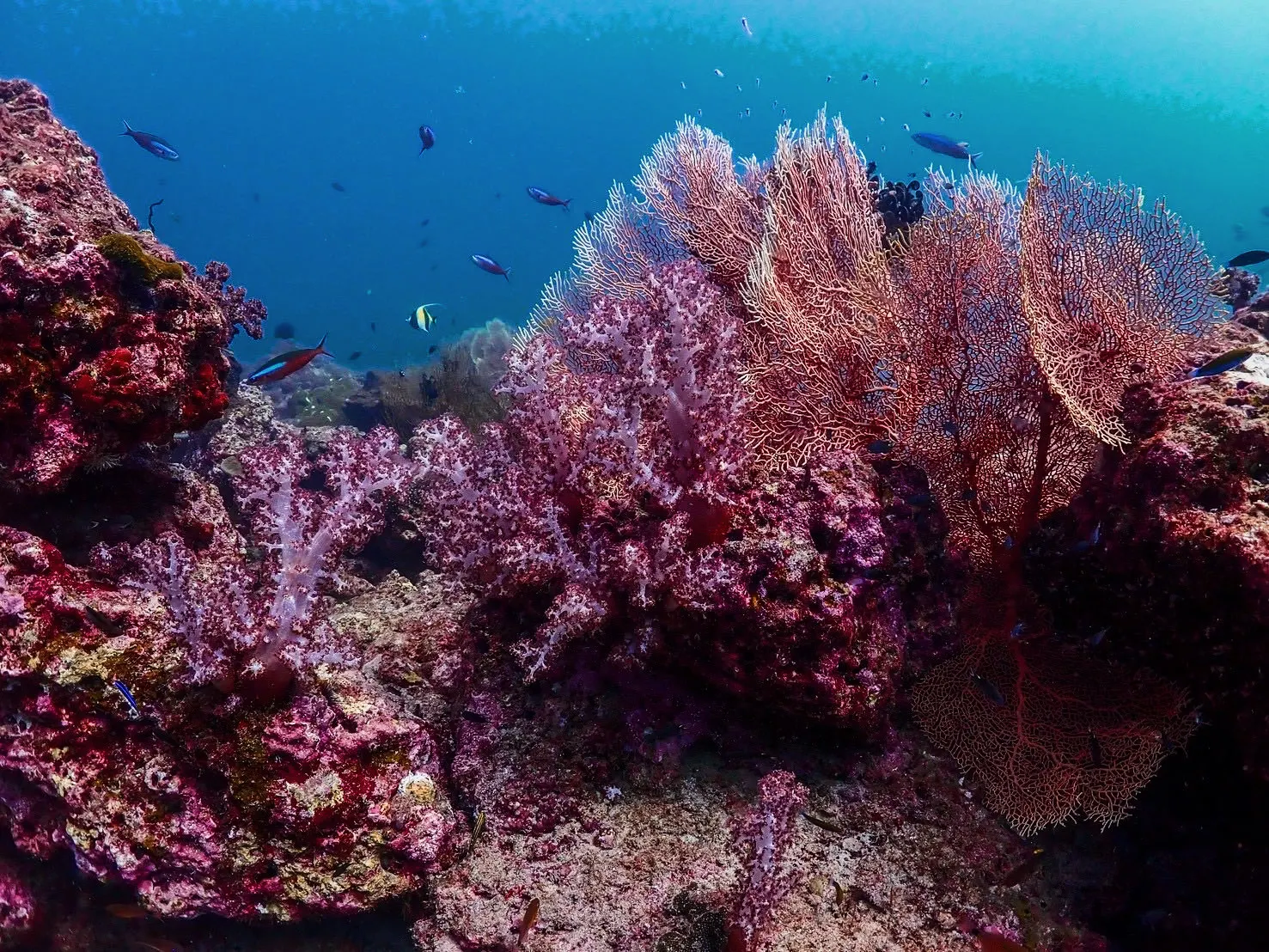
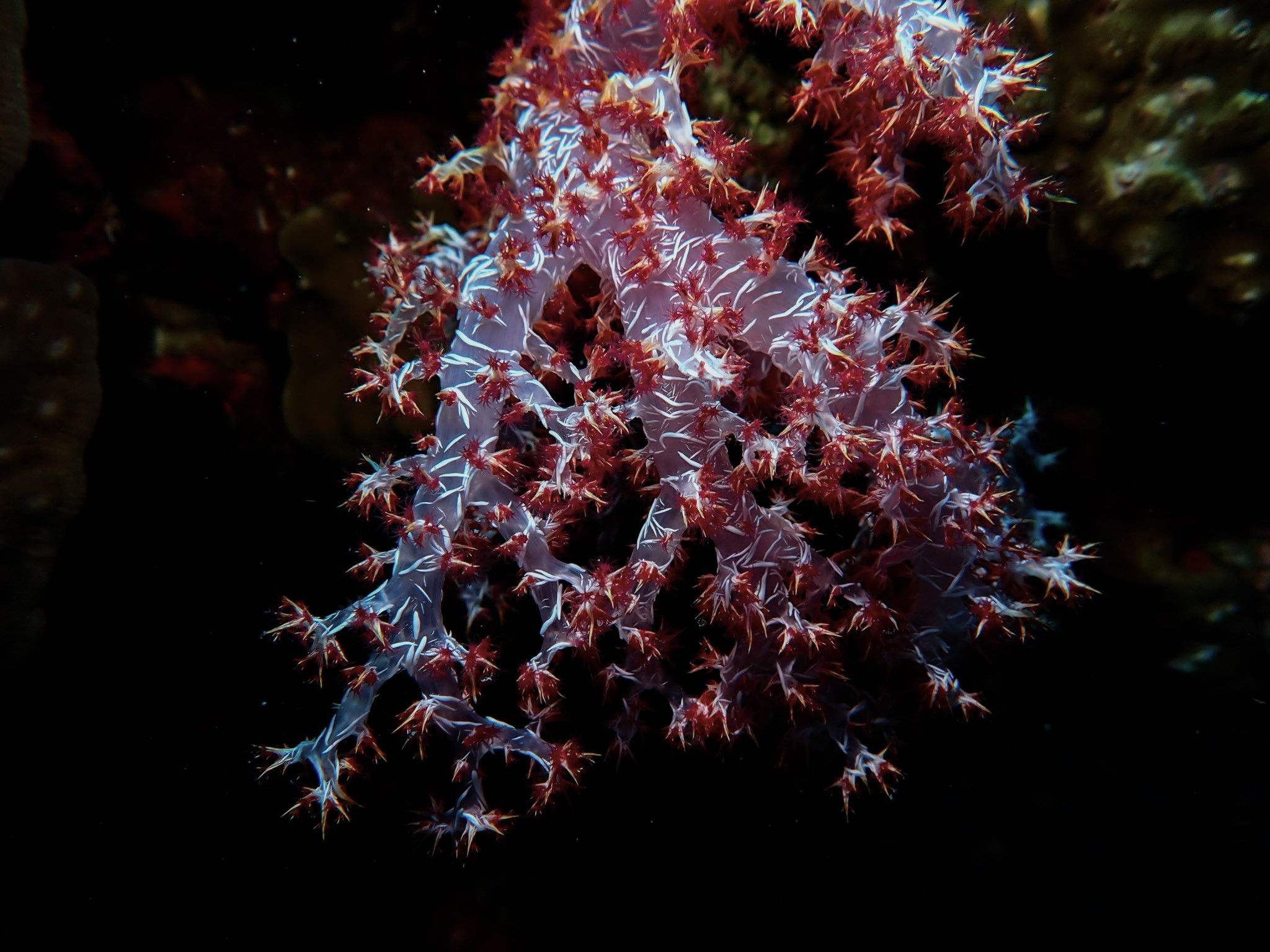
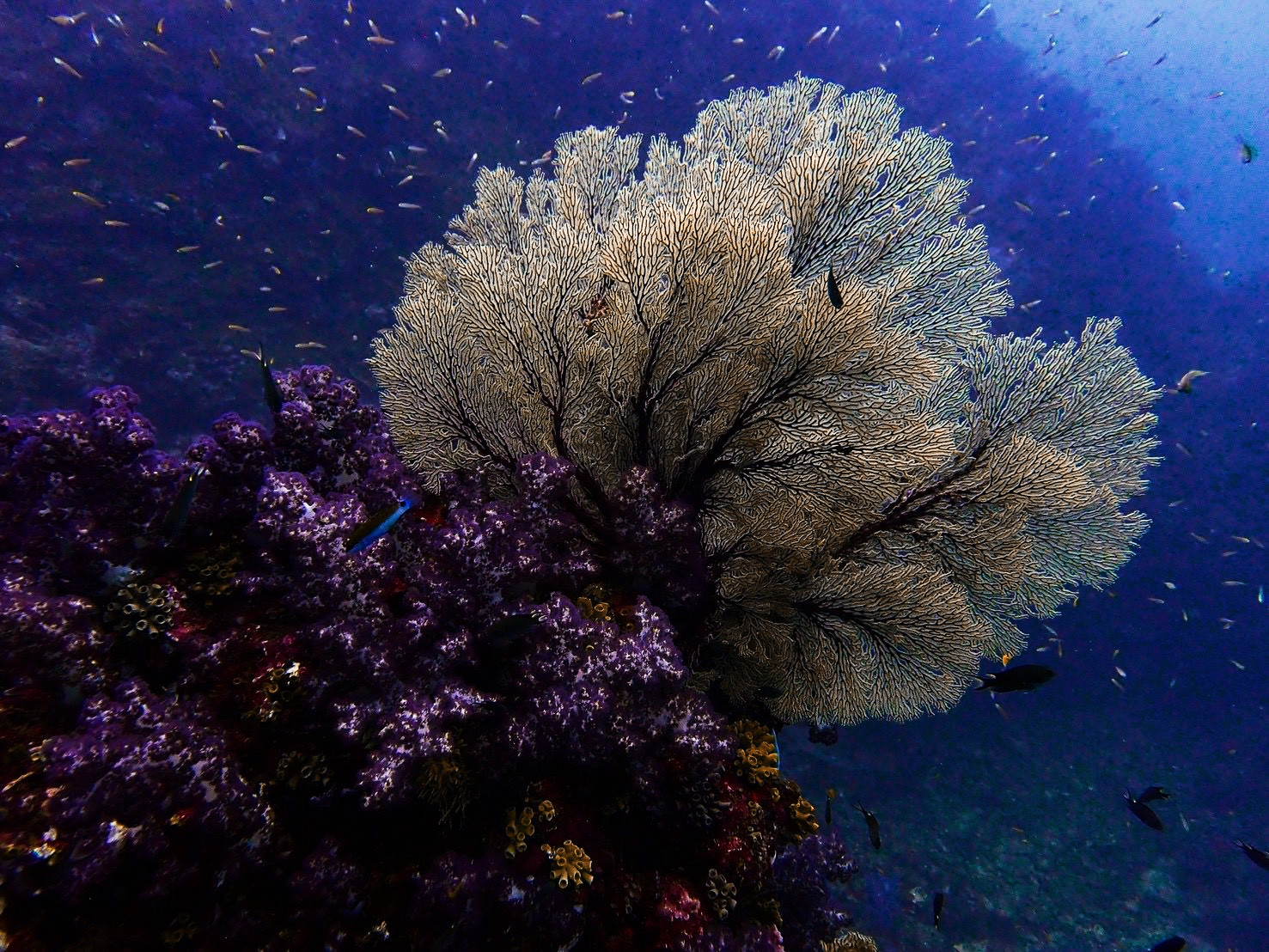
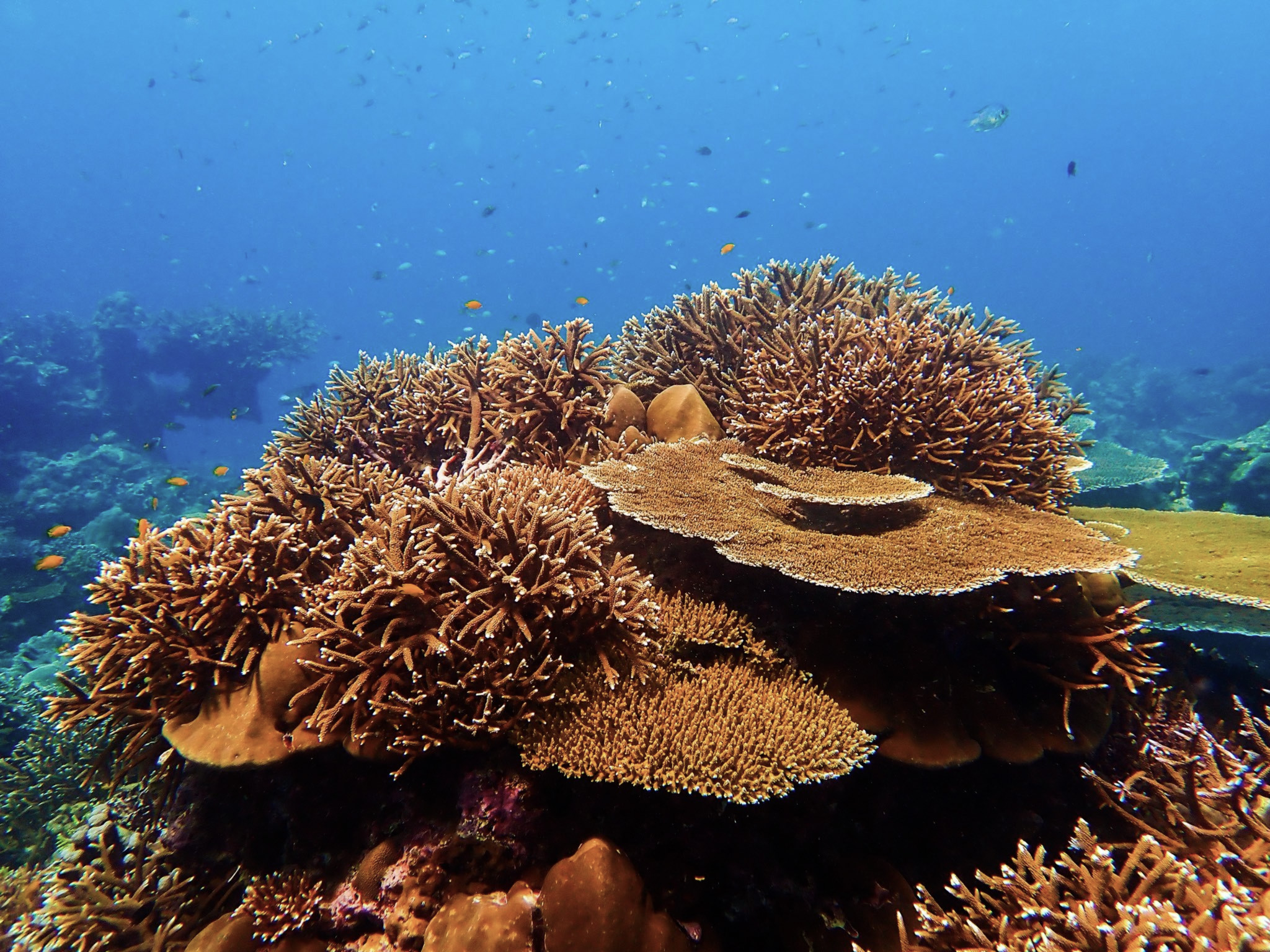
Coral coverage at Surin runs 60–70% in prime areas. Global average for a "healthy reef" is around 30%. This means the seafloor here isn't dotted with coral — it's carpeted with it, a living mosaic of brain corals, staghorns, table corals, and sea fans in colours that make you question whether you've accidentally snorkelled into a screensaver.
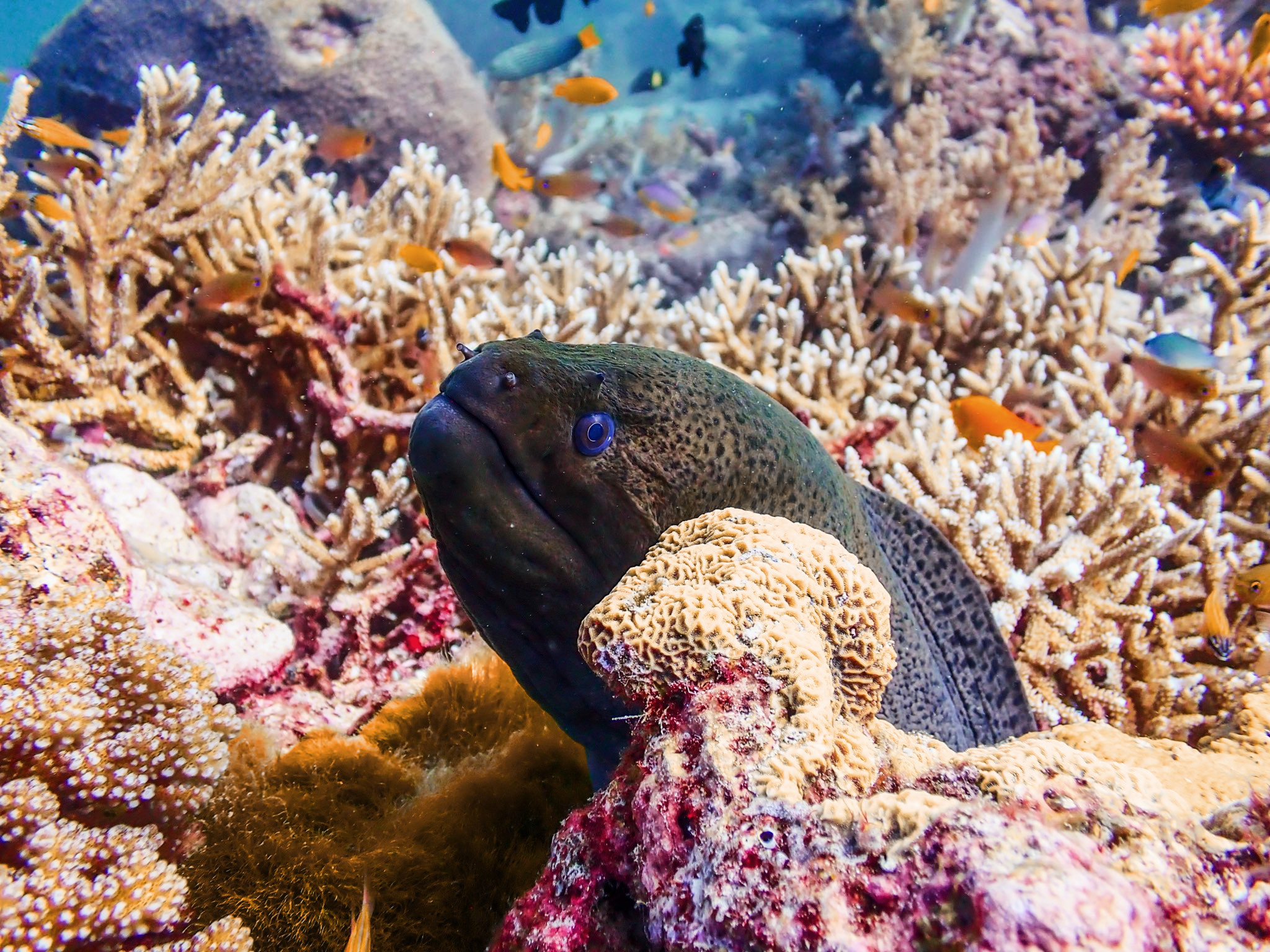
Hin Rap and Hin Pae are the headline sites. Submerged rock formations covered in coral that attract the entire food chain: chromis fish flickering in synchronised clouds, parrotfish doing their extremely important reef-maintenance work (they eat coral, digest it, excrete white sand — every beautiful tropical beach you've ever photographed is essentially fish waste, you're welcome), reef sharks patrolling with the unhurried authority of security guards who know nobody's going anywhere, and occasionally — if the ocean is in a generous mood — whale sharks drifting through like the universe decided to send a gentle reminder of scale.
The whale sharks are not guaranteed. They are wild animals with their own agenda and no contractual obligations whatsoever. But Surin waters see them regularly enough that encountering one feels like a realistic hope rather than a lottery ticket. The hawksbill and green sea turtles, meanwhile, treat these reefs like their personal living room — which they are, having predated human presence here by several geological epochs. They graze, nap on coral formations, surface for air with maximum unbothered-ness, and seem genuinely baffled by the concept of snorkellers following them around making excited noises.
What the village is NOT: A cultural performance. A living museum. A photo opportunity dressed as people. An "authentic experience" to collect like a stamp in a passport. The Moken village on Ko Surin Tai is a functioning community of 200 people going about their lives — who happen to have 4,000 years of marine knowledge and extremely reasonable privacy expectations.
How Thais visit respectfully: Ask before photographing anyone — and accept "no" gracefully. Buy directly from artisans: handmade model kabang boats, woven items, dried fish. This is livelihood, not souvenir theatre. Hire Moken guides specifically — ask park staff to connect you — they show you reef systems through eyes that have been reading these waters their entire lives.
Learn three words in Moken: masalo (thank you), ko-lae (boat), nyik (fish). The delight this creates in Moken villagers is entirely disproportionate to the approximately thirty seconds of effort required. We have tested this formula. It works every time.
The golden rule: Move through the village at the pace of someone who was invited, not someone who paid admission. Do not offer children money — it creates dependency dynamics the community actively works to avoid. Fruit or school supplies are welcome. Most importantly: arrive curious, leave grateful, don't make the visit about you.
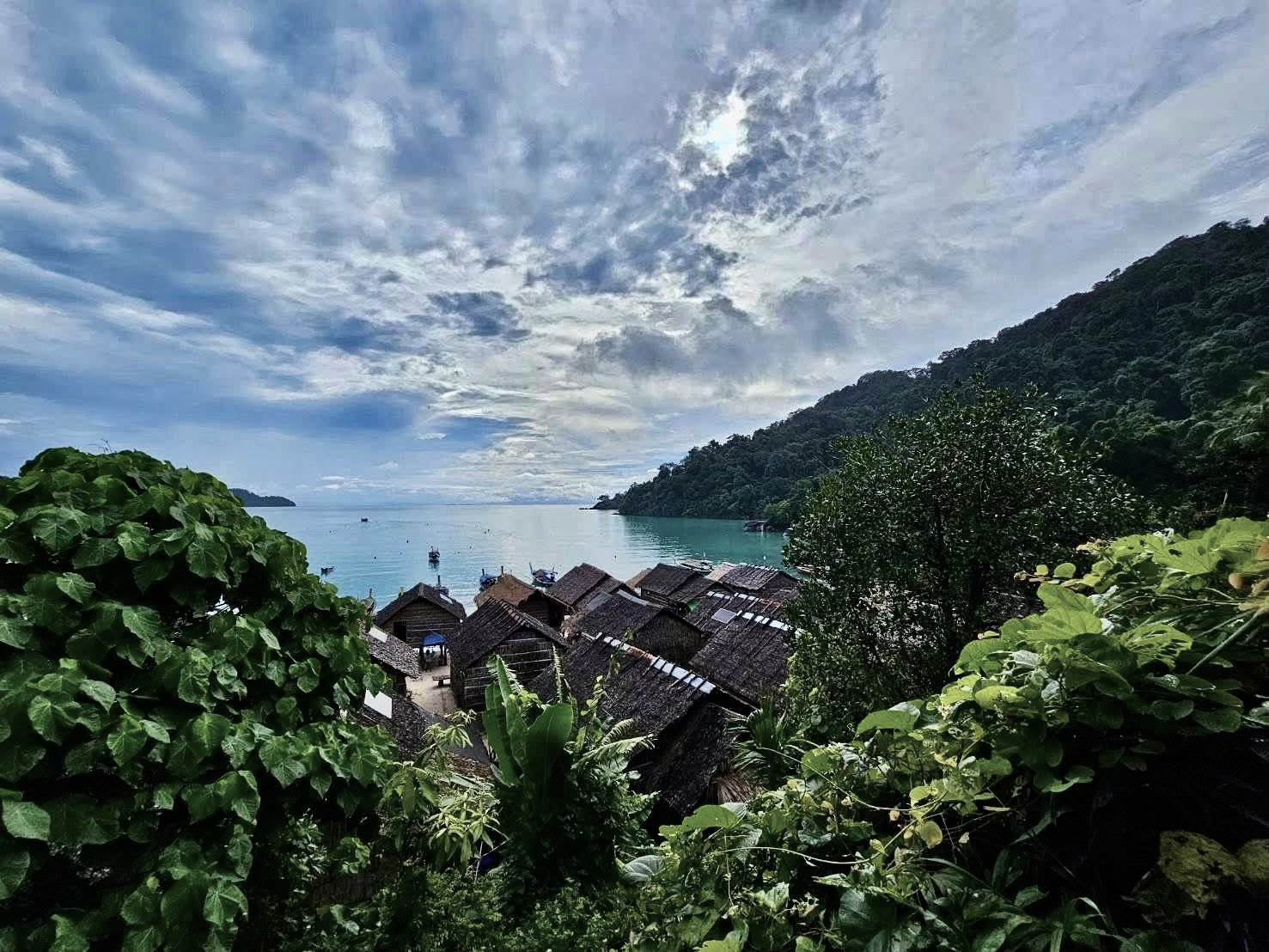
Ko Surin Tai hosts the only permanent Moken settlement within the national park — around 200 people in wooden houses on stilts above the beach, maintaining a way of life that predates every country, border, and government claim on these waters by several thousand years. The Moken are traditionally semi-nomadic sea people, free-diving to depths that make certified divers quietly reconsider their achievements, navigating by stars and currents with multi-generational empirical precision.
Thai anthropologists, marine biologists, and climate scientists pay attention to Moken knowledge not out of romantic primitivism but because it works: Moken elders predicted the 2004 tsunami before any instrument registered it, reading wave patterns and animal behaviour accumulated through thousands of years of oral tradition. The sea does not surprise people who've been listening to it for 4,000 years. The rest of us have been doing marine science for about two hundred years and are still taking notes.
Most tourists: Snorkel, eat dinner at the park hall, sleep, wake, snorkel again, eat, sleep, take the boat home. They've had a beautiful trip. They've had about 40% of what's available.
What Thai visitors who know someone who knows someone arrange: Going out with Moken fishermen for traditional night fishing — lom, spearfishing by torchlight in shallow reef areas using techniques unchanged because they don't need to be. Reading fish behaviour by water movement and moonlight rather than sonar. Fishing as ecological dialogue. Watching a Moken fisherman free-dive into darkness, emerge with a fish speared precisely, and return to the boat in one fluid motion while you're still processing what happened is a masterclass in what 4,000 years of practice looks like when it's fully embodied.
How to access it: This isn't a tour product. Access is through relationship — which requires time. Stay multiple nights. Buy fish and dried seafood from Moken vendors consistently. Ask your Moken guide (see Tip #2), after 2–3 days, if any fishermen would welcome company on an evening trip. Bring fruit, rice, or genuine curiosity. Accept that the answer is sometimes no. That "no" deserves as much grace as "yes." What it costs: ฿200–500 in food contributions. More importantly: your full attention and the understanding that you're a student, not a customer.
Here's what nearly everyone misses: the island interiors. Everyone arrives, snorkels the reefs, photographs the sunsets, sleeps, repeats. Which is understandable — the reefs are extraordinary. But the jungle covering Ko Surin Nuea and Ko Surin Tai has its own parallel spectacular: hornbills nesting in canopy, monitor lizards of genuinely alarming size sunning on trails, endemic plant species, and hilltop viewpoints where the entire archipelago spreads below you with Myanmarese islands visible on clear days. The international border is a line someone drew through the sea. Nature ignores it entirely.
Park rangers lead guided hikes (free with park entry, book at the office — do this). Their knowledge transforms a walk through forest into a narrative about ecosystems: how the jungle affects the reef, how the reef affects the fish, how the fish affect the Moken, how the Moken preserve the whole system. Pull one thread and everything moves. This is ecological literacy delivered through someone who has lived it, not a university that studied it.
"A reef that's 70% alive isn't just beautiful — it's a rebuke. A quiet, colourful, biodiversity-rich rebuke to every 'formerly had coral' destination we've loved to death elsewhere."
This isn't restaurant food — it's fishing community food. Moken women steam the morning's catch (whatever the sea offered, not whatever you requested) over coconut shell coals with fresh turmeric root, lemongrass, and wild ginger foraged from island edges. The turmeric turns the fish flesh a faint gold. The flavour is clean, mineral, faintly earthy — tasting specifically of these waters, this reef, this morning. You cannot order this. You can only be present when it appears, which is its own lesson about Moken relationship with food.
Caught the same day. Grilled over charcoal on the beach at the park dining hall. Served with nam jim seafood — the tangy, spicy, lime-heavy dipping sauce that should be bottled and sold as Thai national treasure. The squid here has a sweetness and texture from cold, clear Andaman water that supermarket squid spends its entire existence failing to achieve. Note: alcohol is prohibited in the national park. The sunset will do the job. The park accepts no liability for what the view does to your priorities.
"The Moken don't conserve the sea because someone told them to. They conserve it because they understand something 4,000 years of listening teaches: the ocean is not a resource. It's a relationship. You take care of it, and it takes care of you."
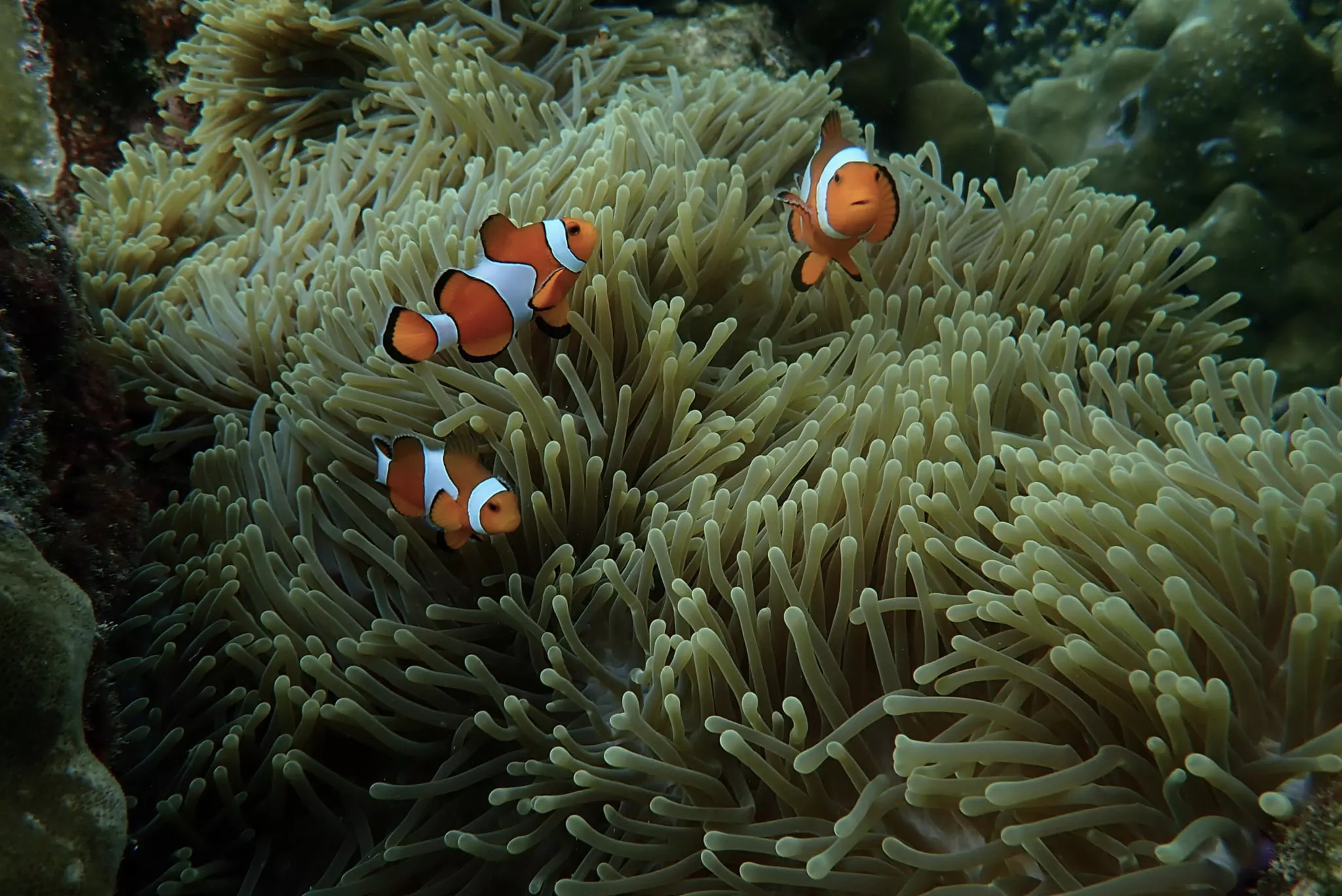
Surin protects some of the most extraordinary marine biodiversity in Southeast Asia. Wild animals also have their own schedules, agendas, and absolutely no interest in your itinerary. These two facts coexist peacefully.
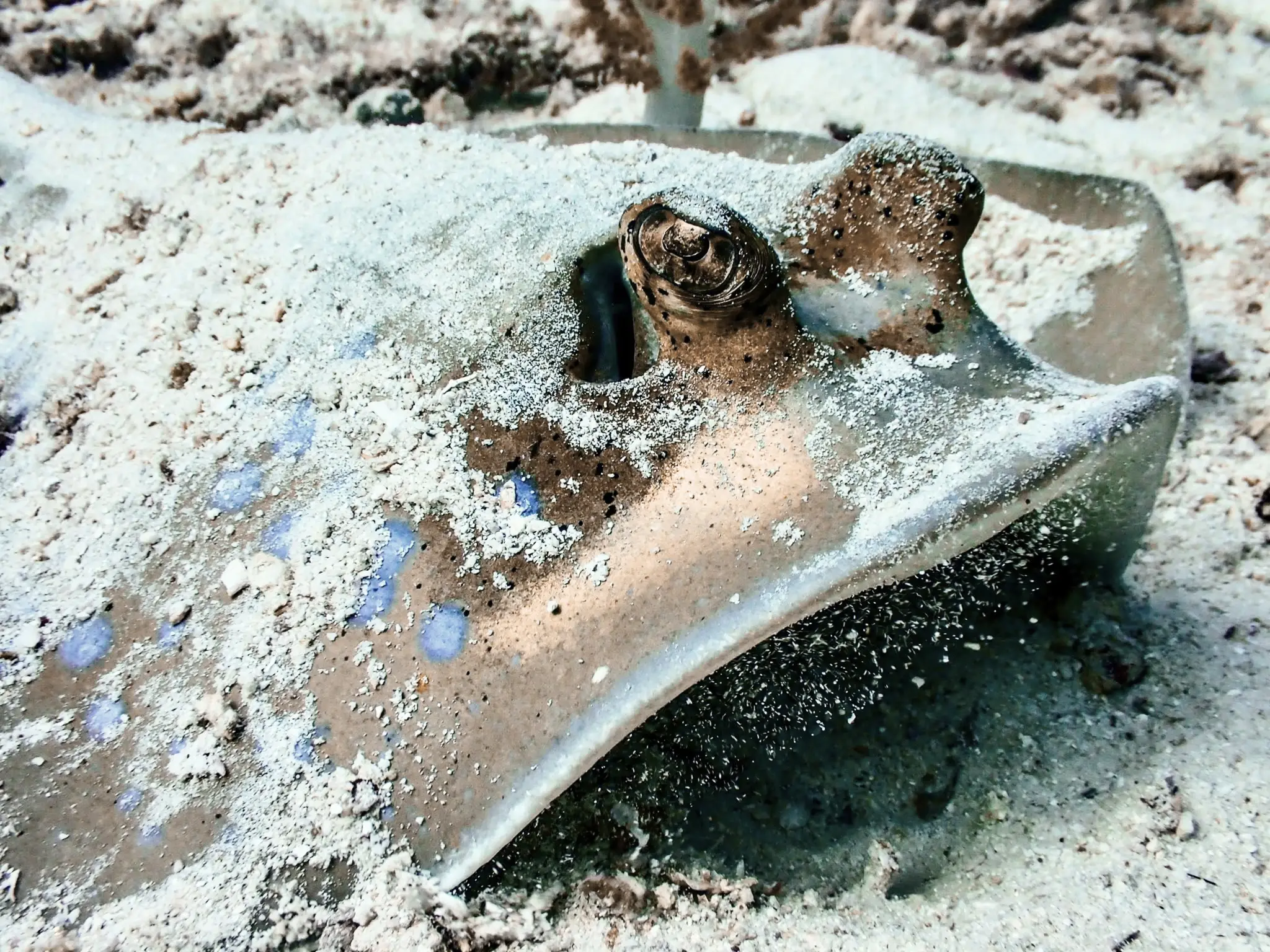
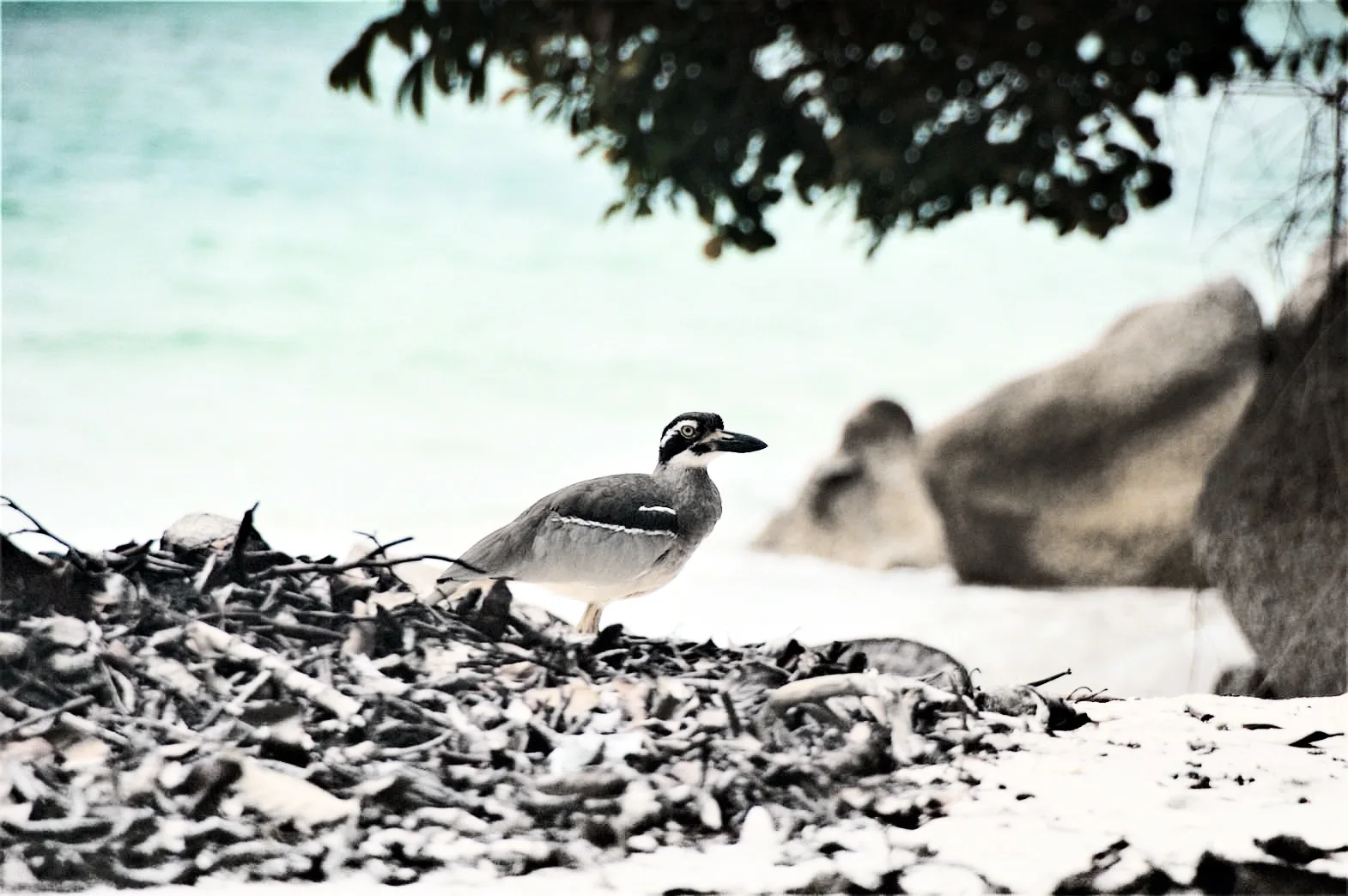
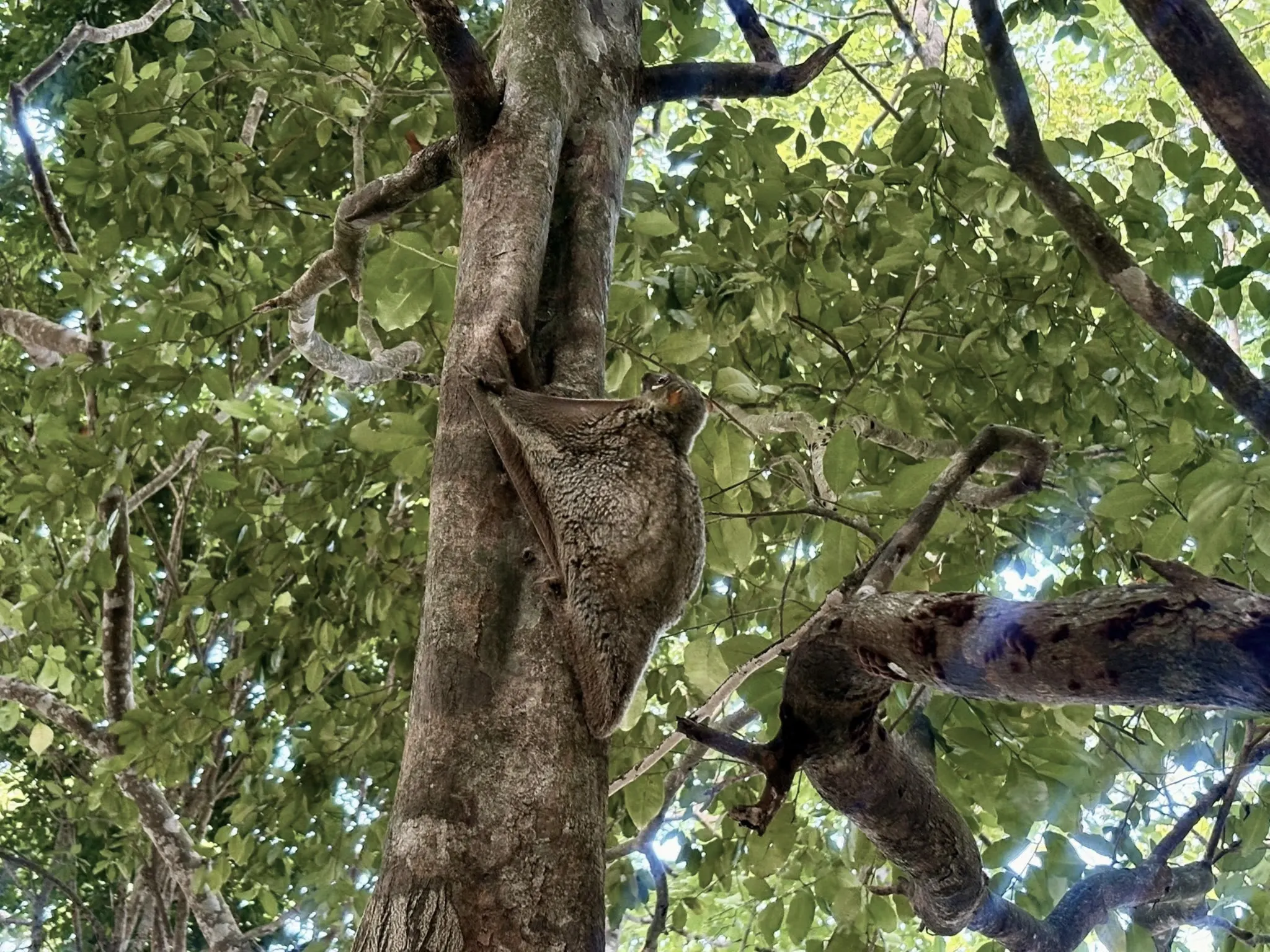
This is a national park, not an aquarium. The animals operate on their own terms. That is, in fact, the point of coming here.
 THAITOP.CO
You are the least impressive thing in the water. That's not an insult. That's the whole point.
When you're floating face-down above Hin Rap at dawn — tour boats still two hours away, visibility so clear you can see 25 metres in every direction, a hawksbill turtle gliding below you with the complete indifference of something that was here 65 million years before you — and you hear, very faintly through the water, the sound of a Moken fisherman's boat motor starting in the village cove, heading out for the morning catch, the same way his grandfather did and his grandfather before him and his grandfather before him and approximately two hundred generations of grandfathers before that —
That's when it lands. You are the least impressive thing in the water. This reef has been doing fine for thousands of years without your documentation. The Moken have been sustaining this marine ecosystem with zero conservation hashtags since before the concept of "country" existed. Some places don't need to be saved. They need us to stop needing to save things.
Surin isn't preserved because conservationists arrived with clipboards. It's intact because the Moken have been living within its limits for four millennia, and because the park's inconveniences create the same filter that any worthy thing creates: the barrier keeps out everyone who isn't willing to treat it with the seriousness it deserves.
Most tourists see a pretty island group with good snorkelling. What's actually on offer is rarer: a functioning, intact, living relationship between human community and marine ecosystem that the rest of the world has spent decades and billions trying to rebuild. Surin didn't lose it. Nobody got ambitious enough, or careless enough, or disconnected enough from the sea to break what 4,000 years of paying attention built.
Bangkok → Khuraburi: 9-hour overnight bus (฿500–700) or fly to Ranong + 1.5hr drive (฿2,500–3,500).
Khuraburi Pier → Surin: Speedboat ~1.5–2 hours · ฿1,800–2,200 return · Book through park or licensed operators — peak season slots fill weeks ahead.
There are no direct flights. No luxury transfers. No Grab boats. The sea has always been the point.
Open: Nov 1 – May 14 (approx) · Closure: May 15 – Oct 15 · Absolute. Enforced. Non-negotiable. The Andaman decides.
Sweet spots: Mid-Nov to mid-Dec (post-monsoon peak visibility, uncrowded) + late March to mid-April (pre-closure serenity).
Busiest: Jan–Feb — book furthest ahead.
Weekdays: dramatically calmer than weekends.
Park bungalows: ฿1,000–1,500/night (2–4 persons) · Book via DNP national parks website · Reservations open August for November season — they sell out completely.
Camping: ฿225/night · Tent rental ฿150 · Bring your own if possible.
Park entry: ฿500 (foreigners) · ฿100 (Thais) · Valid for duration of stay.
Day trips: return by speedboat same day. Genuinely not recommended. The park accepts no moral responsibility for the disappointment.
Seasickness medication before boarding. The open Andaman crossing has real swell. Take medication before you leave the pier — after the boat starts moving is too late, and the dolphins will not be sympathetic.
Bring ฿5,000–8,000 cash minimum. No ATMs anywhere on the island. This covers accommodation deposit, meals (park dining hall food is genuinely good — no need to bring much), and community purchases from Moken artisans.
Combine wisely: Khuraburi town is an underrated overnight stop before/after — genuine southern Thai town, excellent seafood, zero tourists. Khao Sok National Park is 2 hours east. Richelieu Rock (Thailand's best dive site) is a 14km day trip from the island.
Share your turtle moment. Your dawn reef before the boats arrived. The exact second you heard a Moken fisherman's motor and understood something that's hard to put into words. Or just your "I survived the crossing and I'd do it seventeen more times" report.