
Nobody
Told You
About.
Nobody puts Buriram on their Thailand itinerary the first time. Or the second time. Honestly, most people couldn't find it on a map without help — and Buriram has noted this, filed it away quietly, and responded by becoming one of the most genuinely extraordinary provinces in the entire country. Just to make a point.
This is the province that somehow holds a 10th-century Khmer temple and a MotoGP circuit in the same postcode without finding this arrangement even slightly unusual. Where ancient sandstone ruins sit on extinct volcanoes surveying rice fields that have been farmed the same way for centuries — and forty minutes away, international racing drivers are hitting 300km/h past a crowd of 50,000 people eating grilled pork skewers. Buriram didn't plan this personality. It simply accumulated one, the way genuinely interesting people do.
But here's what no itinerary captures and no highlight reel shows: Buriram is, at its absolute core, that Isan aunt. The one who starts cooking before you've sat down, feeds you until walking becomes ambitious, and then — just as you're considering whether lying down is socially acceptable — starts packing containers for you to take home. Warm before you arrive. Generous beyond reason. Refuses to let you leave empty-handed. That isn't a hospitality policy in Buriram. It's a personality. Built from generations of rice farming communities who understood, bones-deep, that sharing is how everyone survives the hard seasons.
Most travellers pass through Thailand collecting beaches and temples and street food markets. Buriram offers something rarer and harder to photograph: the feeling of being genuinely, unconditionally welcomed by a place that wasn't performing for you and never planned to start. Come for the Khmer ruins. Stay for the football. Leave — eventually, reluctantly, with three bags of food you didn't ask for and didn't refuse — having understood something true about Thailand that the more famous cities are sometimes too busy to show you.
So pull up a chair — someone's auntie is already making you food.
 Buriram Province · Lower Isan
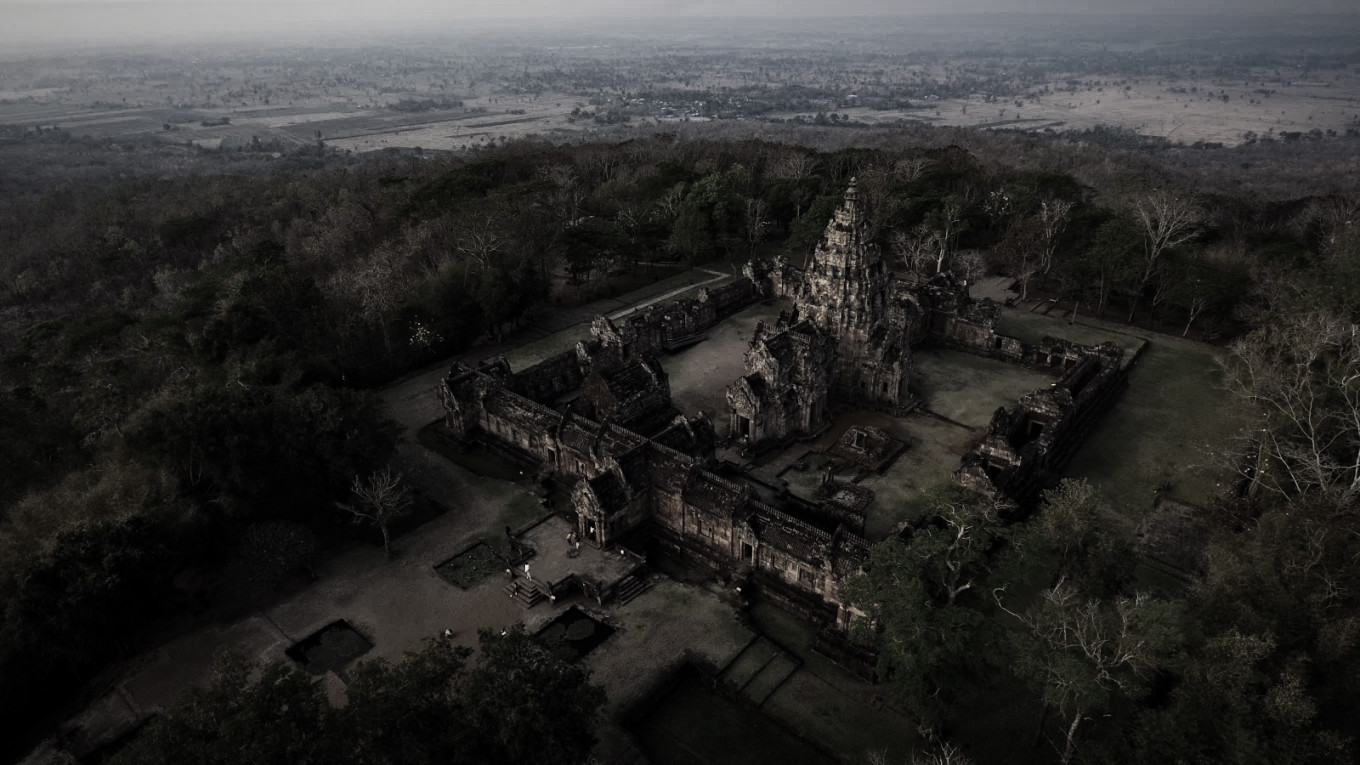
 "Built on a volcano. Aligned with the sun.
Nine hundred years ago. Subtlety was not the brief."
At a Glance
Buriram Province — where the Khorat Plateau meets Cambodian history and the rice fields run to the horizon.
Rushing Phanom Rung is, respectfully, a crime. 3 is the minimum. 5 is the honest answer.
English menus rare. Tourist maps rarer. Best experiences have neither.
This is Isan. Your money goes embarrassingly far. Yes, embarrassingly.
City DNA
Before you look at a single temple or order a single bowl of larb, understand something about Buriram that no guidebook will tell you: this city doesn't perform for visitors. It just lives.
There is no tourist street. No backpacker quarter. No laminated English menu district. What Buriram has instead is a 5am morning market where vendors have genuinely never needed to translate a price, a temple complex that makes grown adults go completely, involuntarily silent, and a football stadium that turns an entire province into one very loud extended family on matchday.
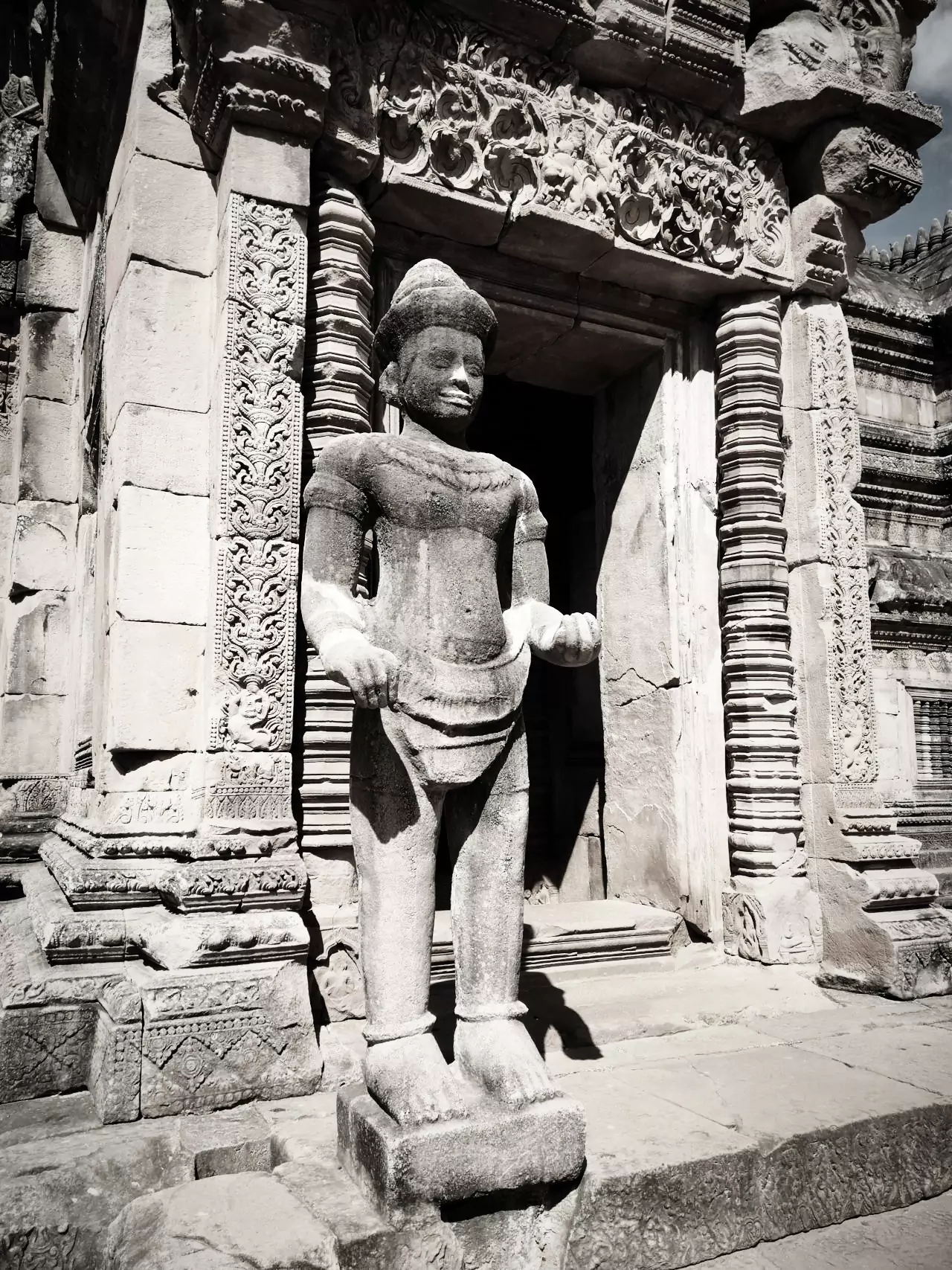
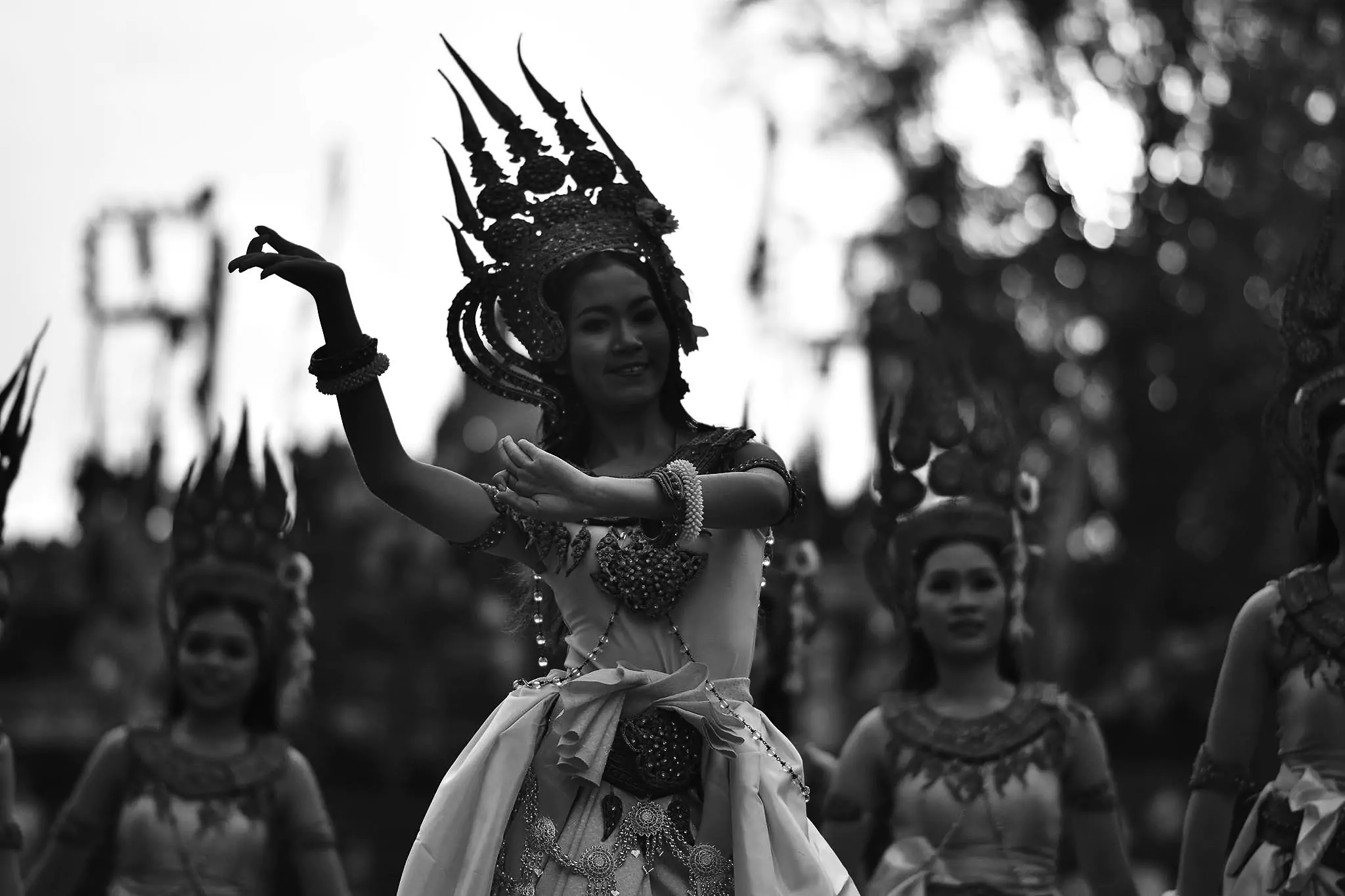
Here in southern Isan, the Khmer empire gave the architectural soul — extraordinary stone temples built with astronomical precision on volcanic peaks. The Lao tradition gave the living culture — the morlum music, the storytelling circles where grandmothers and grandchildren share the same floor, the dialect that sounds like central Thai doing something considerably more interesting.
When we gather for morlum sessions beneath temple walls that have stood since the Angkor period, we're not performing our culture for an audience. We're just living it. The invitation is to come close enough to understand what you're witnessing.
Village festivals don't have guest lists — your invitation is that you arrived. An 80-year-old grandmother and an 8-year-old grandchild share the same storytelling circle. This is not remarkable. It's just Tuesday.
Thrives: Anyone who finds "no English menu" exciting rather than terrifying. Anyone chasing the feeling of being the only person from their country who chose this city this week.
Might struggle: Anyone whose non-negotiables include a rooftop bar. Bangkok is four hours south. It'll be there.
"Phanom Rung has been sitting on that volcano for 900 years, perfectly aligned with the sun, waiting for someone to notice. Most tourists are still in Phuket. Their loss is your gain."
Meet the Soul of Isan
The Social Logic — How Isan People Actually Work
Forget the formal distance you might associate with Thai social hierarchy. In Isan, the default setting is: everyone is family until proven otherwise.
This isn't a tourism tagline. It's how communities that have worked rice fields together for generations actually function. When your survival depends on your neighbors showing up at harvest time, you build a culture where showing up is the highest virtue. That culture is still here, still running, still entirely genuine.
When someone offers you food in Buriram — and someone will offer you food in Buriram — they are not being polite. They are including you. The respectful response is to accept, try everything, and say Zap lai! with genuine enthusiasm.
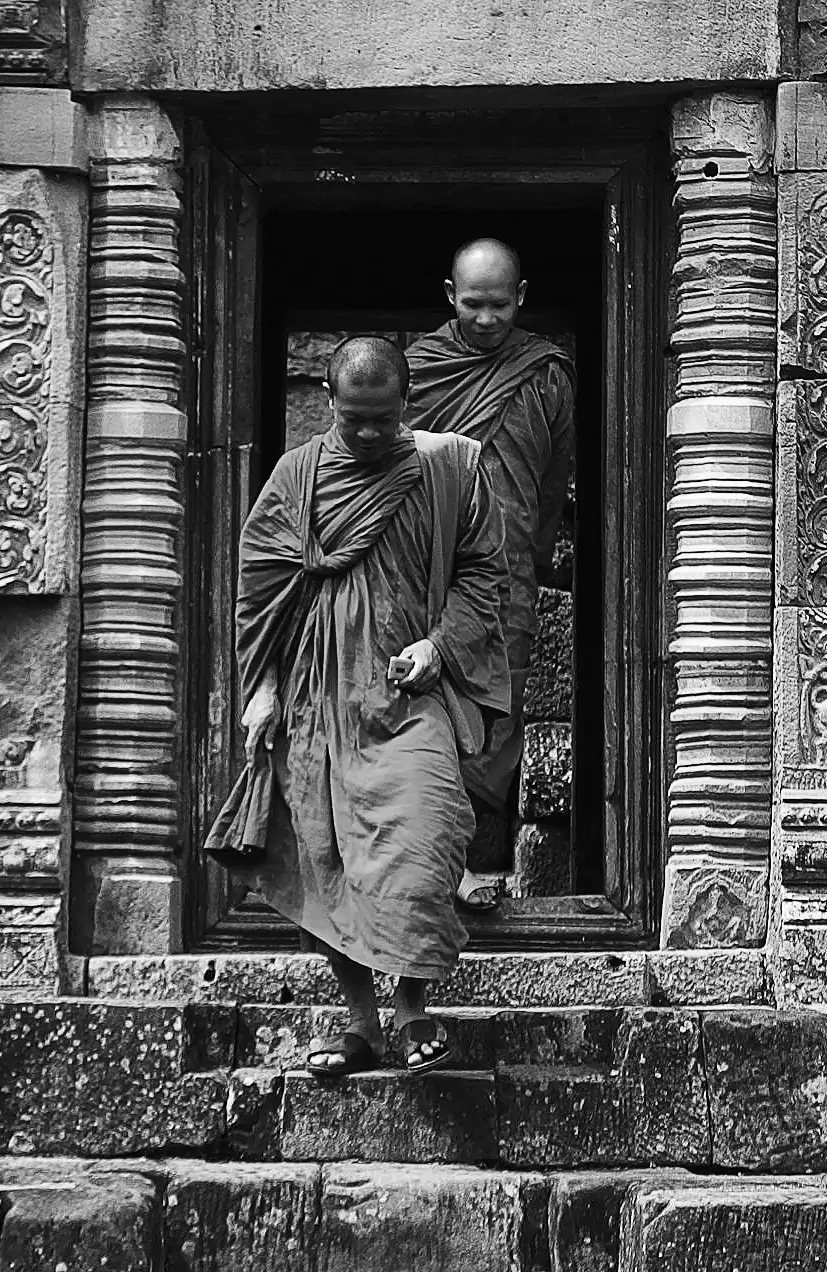
Tham bun — merit-making — isn't a tourist attraction in Isan. It's the rhythm of daily life. Every morning at around 6am, monks walk their alms route in saffron robes, and locals step out with offerings of rice and curry — not because they have to, but because giving creates a cycle of spiritual balance.
When you walk into a temple here, you're not entering a museum exhibit. You're entering a living spiritual space where people have been practicing their faith continuously for centuries. The stones are old. The prayers are happening right now.
Understanding this — really understanding it, not just intellectually agreeing with it — is the difference between a visitor who sees Phanom Rung and a visitor who feels it.
Isan pride is joyfully unapologetic, and Buriram's version is specific.
They know that Phanom Rung is extraordinary. Their ancestors built it that way deliberately — on a volcano, aligned with the astronomical calendar, with 15 doorways for the precise moment when sunlight passes through all of them in perfect sequence. Subtlety was not the brief. They were building for eternity and they knew it.
They know their som tam is built differently from what Bangkok calls som tam. They know their morlum goes places that other music doesn't. They're not competing with anywhere else. They just happen to be right.
What Makes Buriram Irresistibly Authentic
- Volcano-top temples that make other ruins look like they weren't trying — because our ancestors were trying very, very hard.
- Phanom Rung and Prasat Muang Tam — an Angkor-level Khmer experience with a fraction of the crowds and all of the wonder.
- Silk weaving villages where traditional craft has been passed hand-to-hand through generations that know things no manual can contain.
- The football atmosphere. Buriram United matchday: 24,000 people in red, chanting in Isan dialect. You don't need to understand the game. You will within twenty minutes.
- Pure Isan culture running deeper than any guidebook has gotten around to describing properly. Until this one.
- The road between towns. Some of the best Buriram moments happen on the motorbike when the light turns everything gold and a farmer waves from his pickup.
 VISUAL II / III
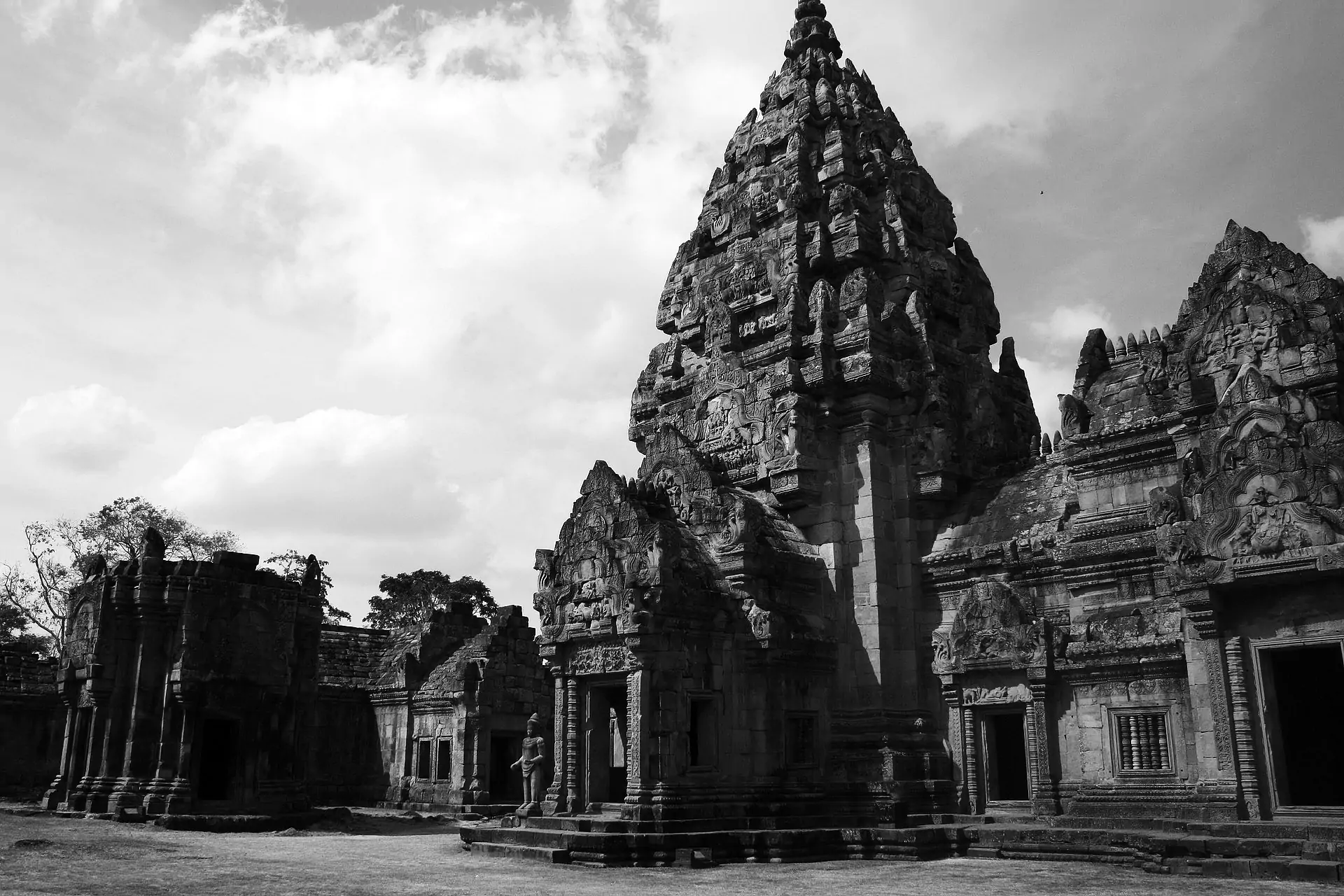
900 Years.
Still Standing.
The Khmer architects designed this deliberately. Before modern engineering. Before the concept of modern engineering existed.
Buriram's Four Characters
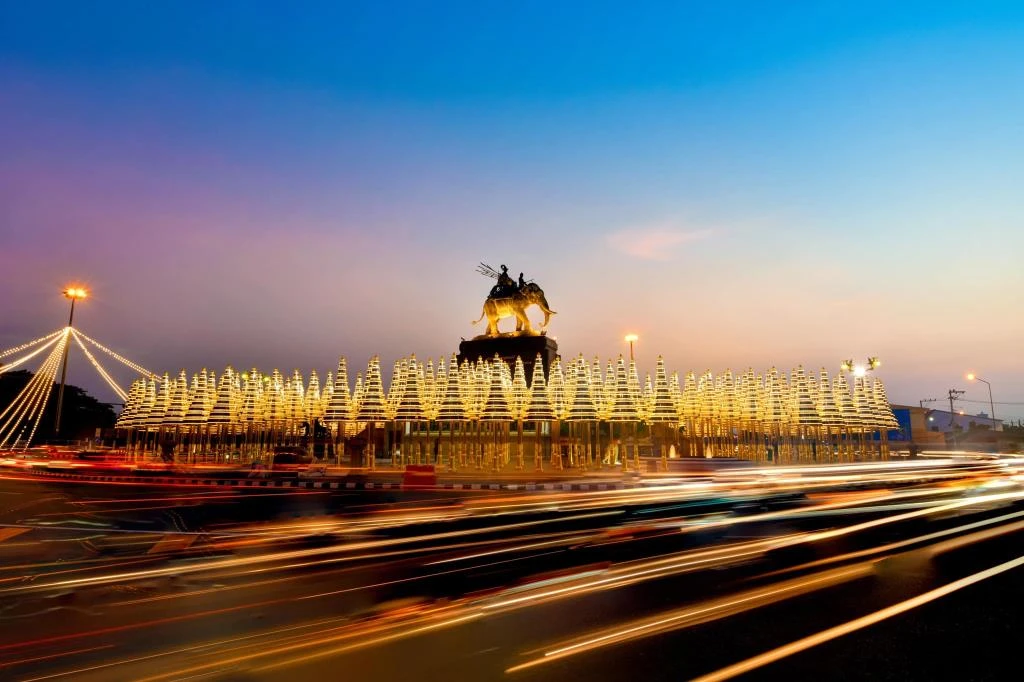
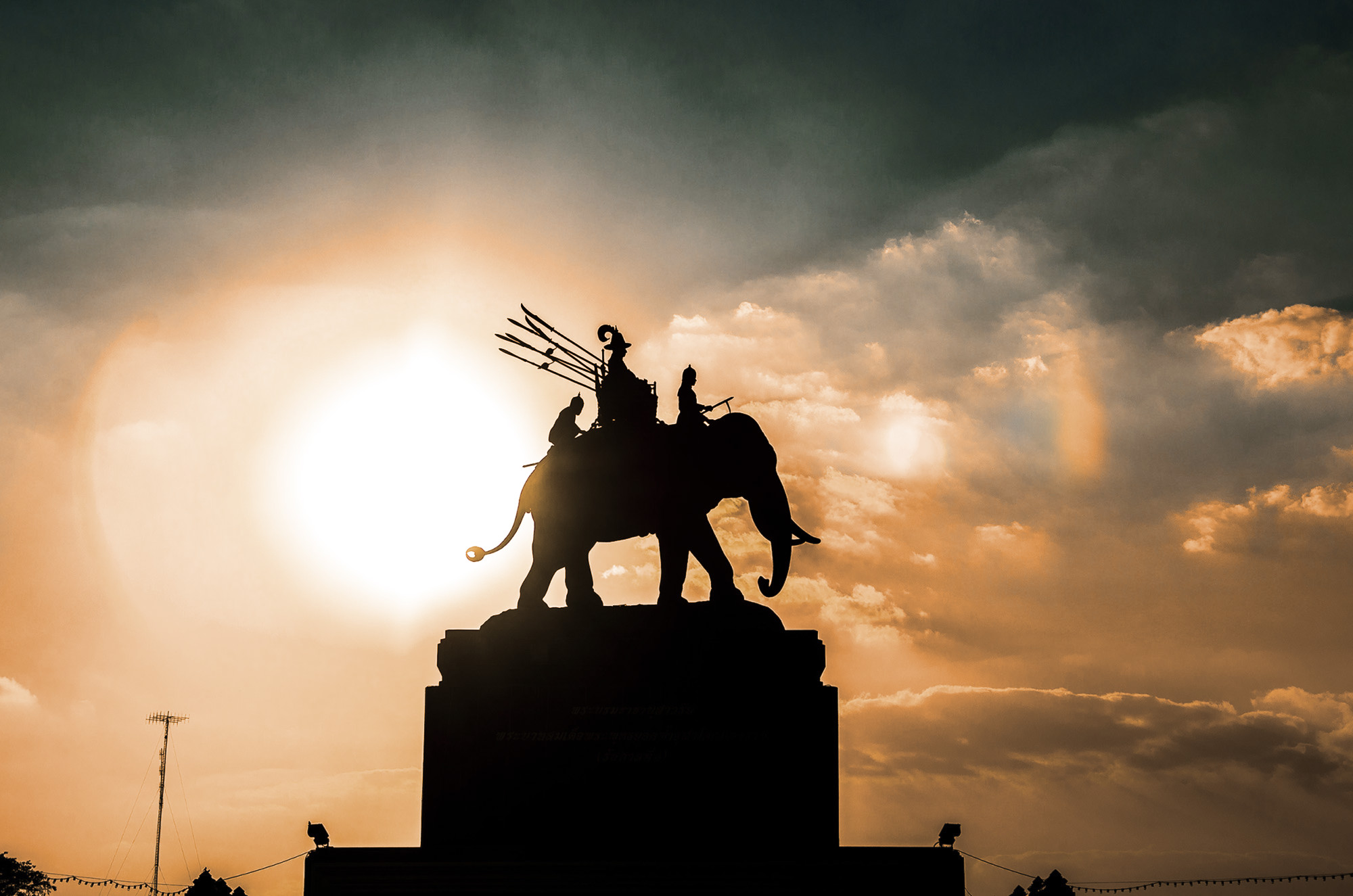
Buriram's old town moves at the pace of someone who has nowhere to be and a very good reason to stay here. At the heart of it all sits the King Rama I Monument — Buriram's spiritual epicentre and transit compass, the exact point where Khmer empire grandeur, Bangkok-era foundations, and the roaring energy of a modern sport city quietly converge. Before you go anywhere else, walk up to the Elephant Roundabout (Wongwian Chang) and wai King Rama I.
For locals, this isn't ceremony — it's instinct. For you, it's the most honest way to enter a city that remembers exactly who built it, and hasn't forgotten to be grateful.
Locals never leave town without stopping here first. Flowers, incense, seven-coloured garlands. Pray for safe travels, good fortune, and honest directions.
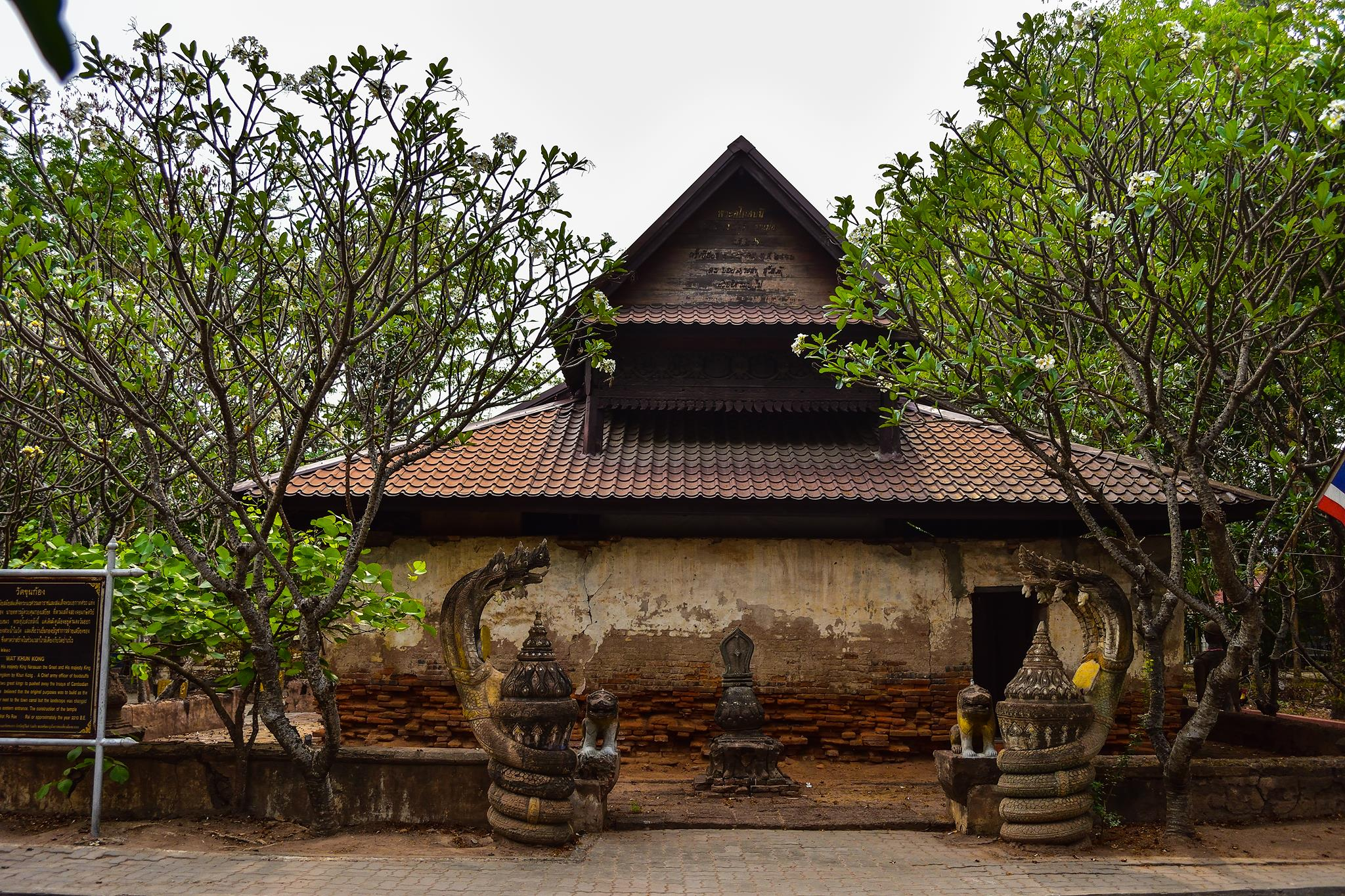
The base camp for Phanom Rung and Prasat Muang Tam. Nang Rong wears this responsibility with the quiet confidence of a town that knows exactly what it's sitting next to.
Simple guesthouses, local restaurants, waterfalls in the nearby hills. No tourist infrastructure. The entire district feels like a secret that kept itself.
Stay overnight here rather than day-tripping from Buriram town. The Phanom Rung sunrise experience and the 9am day-tripper experience are genuinely different temples.
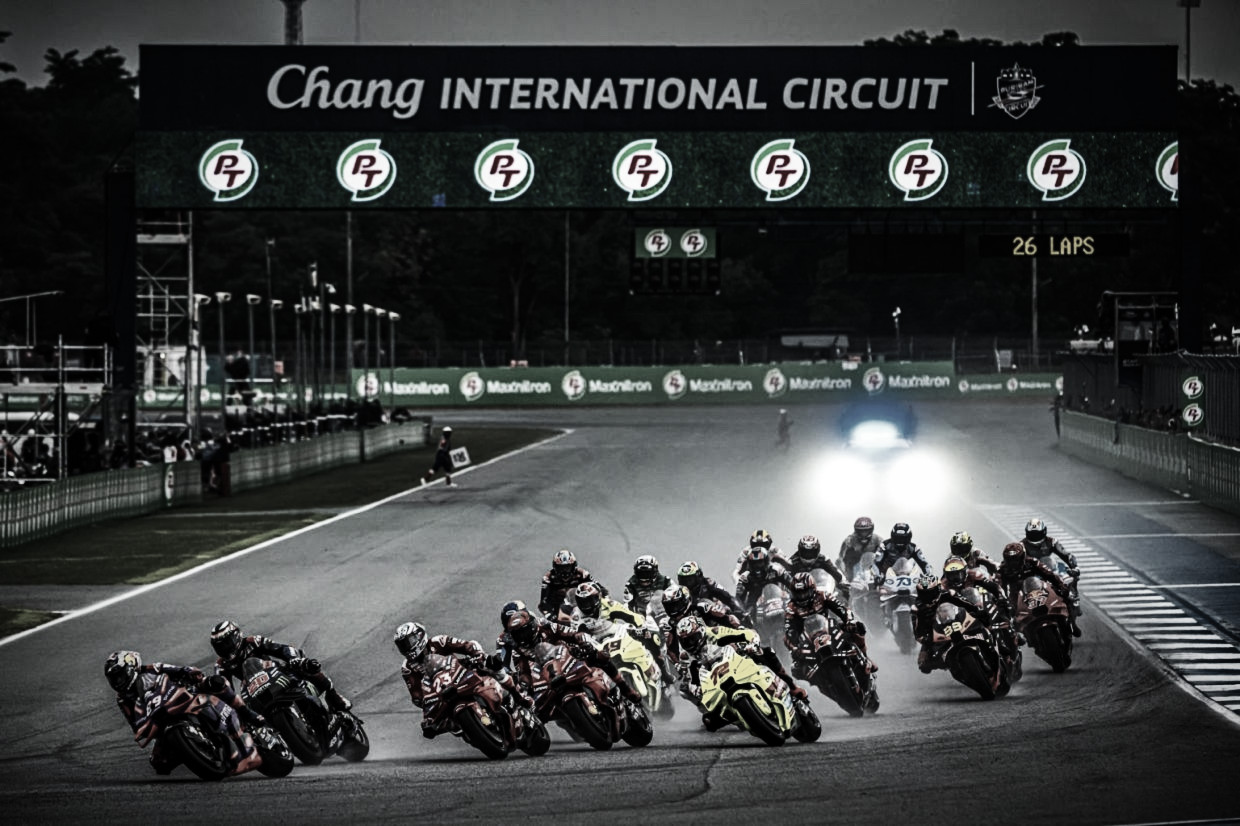
Chang International Circuit sits in the Buriram landscape like a piece of a different reality that landed here and decided to stay. On ordinary days, it's surreal and magnificent — walk the pit lane, stand on the podium.
On MotoGP or World Superbike weekends? The entire region transforms. 80,000 people in a province that usually holds considerably fewer.
Non-race day circuit tours are bookable and genuinely extraordinary. The scale of the facility against the surrounding rice fields is something your camera will try and fail to capture.
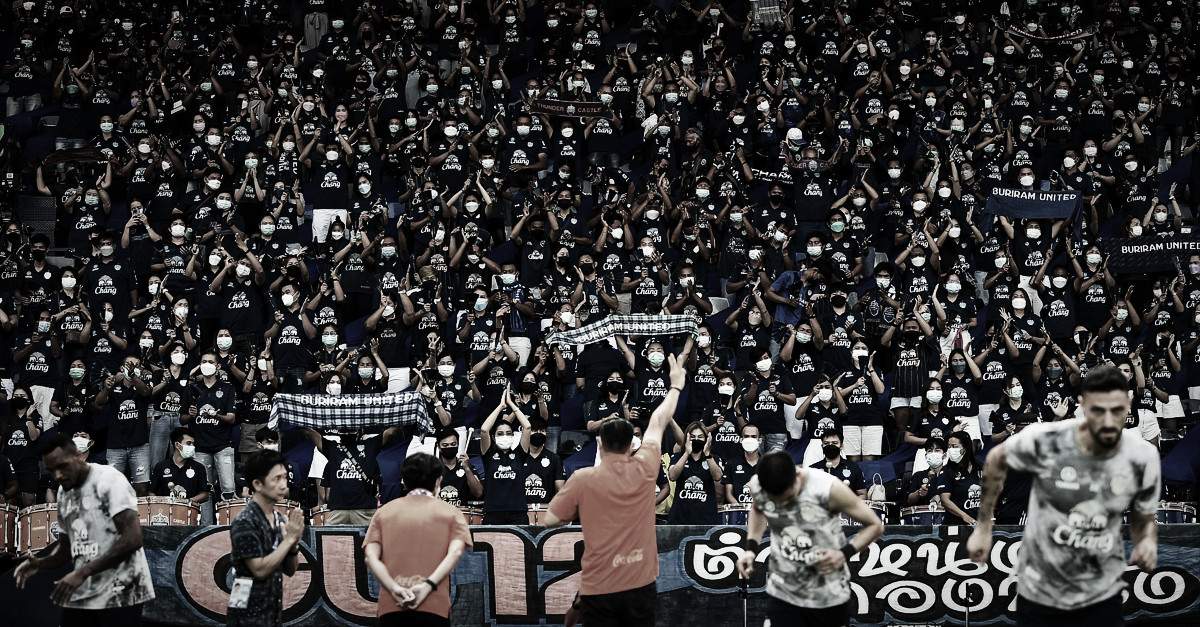
Buriram United FC is not just a football club. It is a community identity, a source of provincial pride, and the organisational backbone of one of Thailand's most successful clubs.
Chang Arena holds 24,000 people and on match nights, every seat is occupied by someone who cares deeply. You don't need to understand Thai football. The atmosphere will explain everything.
Buy a scarf from a street vendor outside the stadium. Follow the crowd. Within twenty minutes you will be chanting along to things you don't understand. This is correct.
Things To Do
Pull on your most comfortable walking shoes, leave at dawn, and prepare to feel very small in the best possible way.
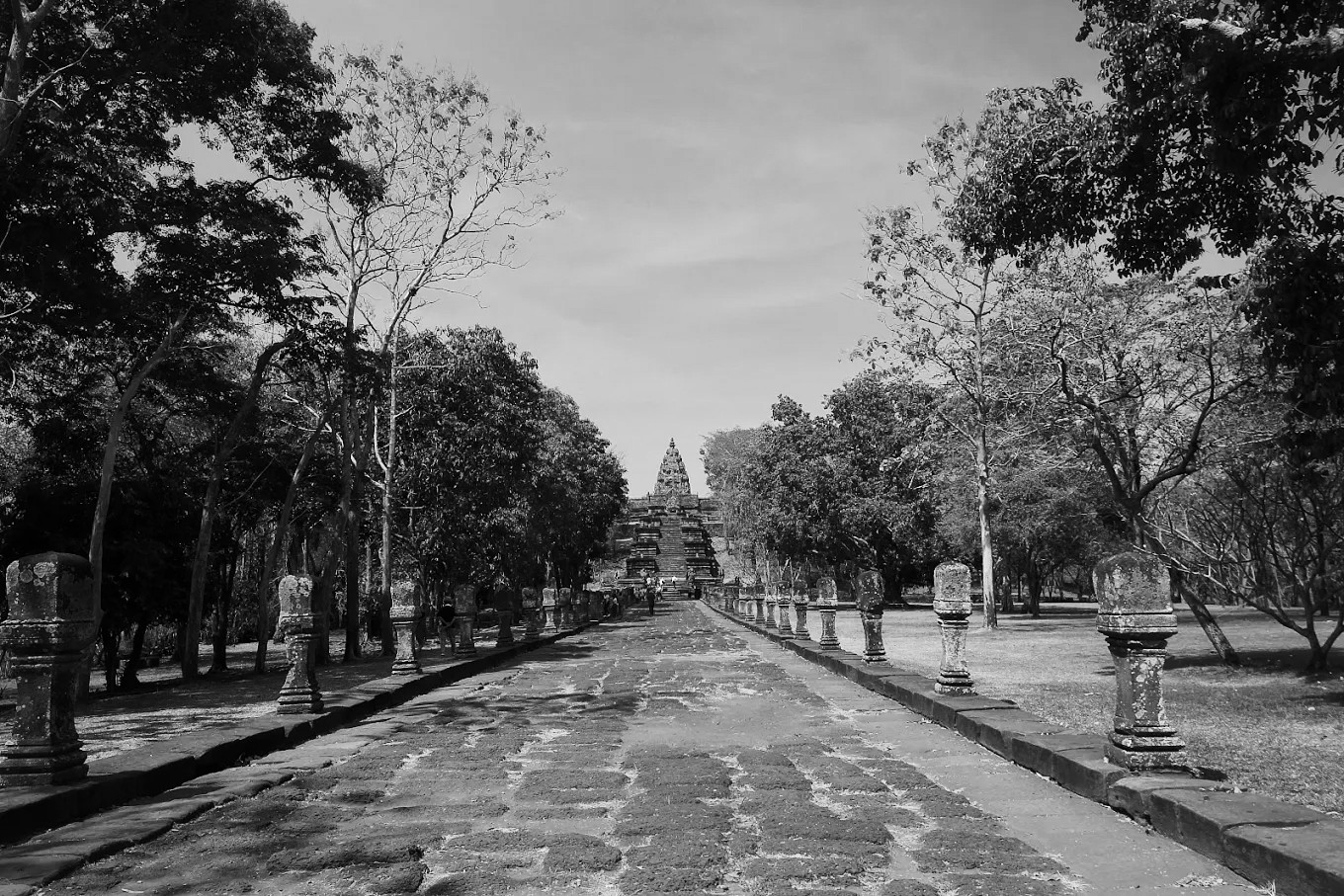
Prasat Hin Khao Phanom Rung sits at the summit of an extinct volcano — a Khmer Hindu temple built between the 10th and 13th centuries with a precision that should not have been possible and somehow was. Four times a year, sunlight passes through all 15 doorways in perfect sequential alignment. Nine hundred years ago. Before modern engineering existed.
The 160-metre processional walkway alone will recalibrate your sense of what human effort can produce when motivated by devotion and excellent spatial reasoning.
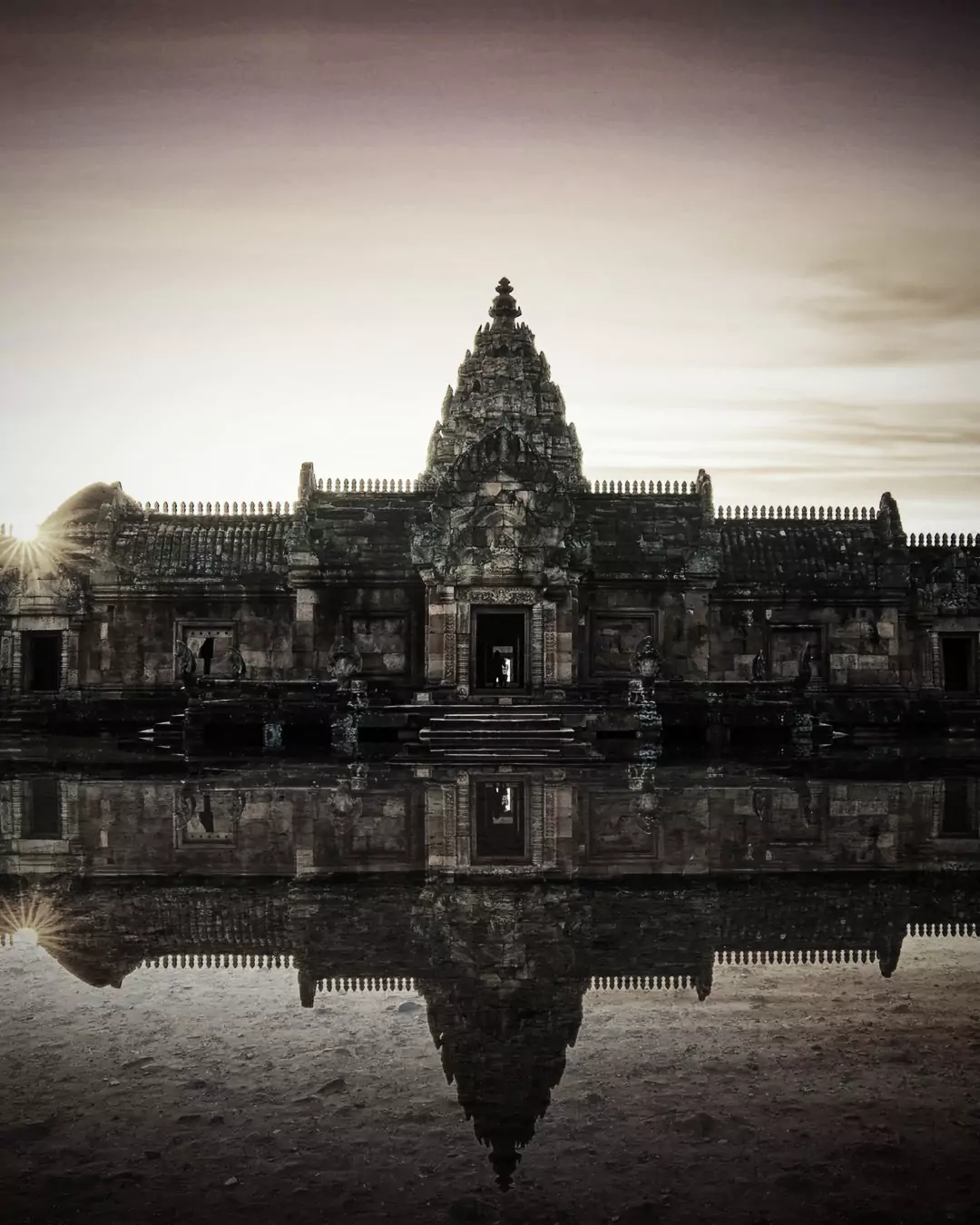
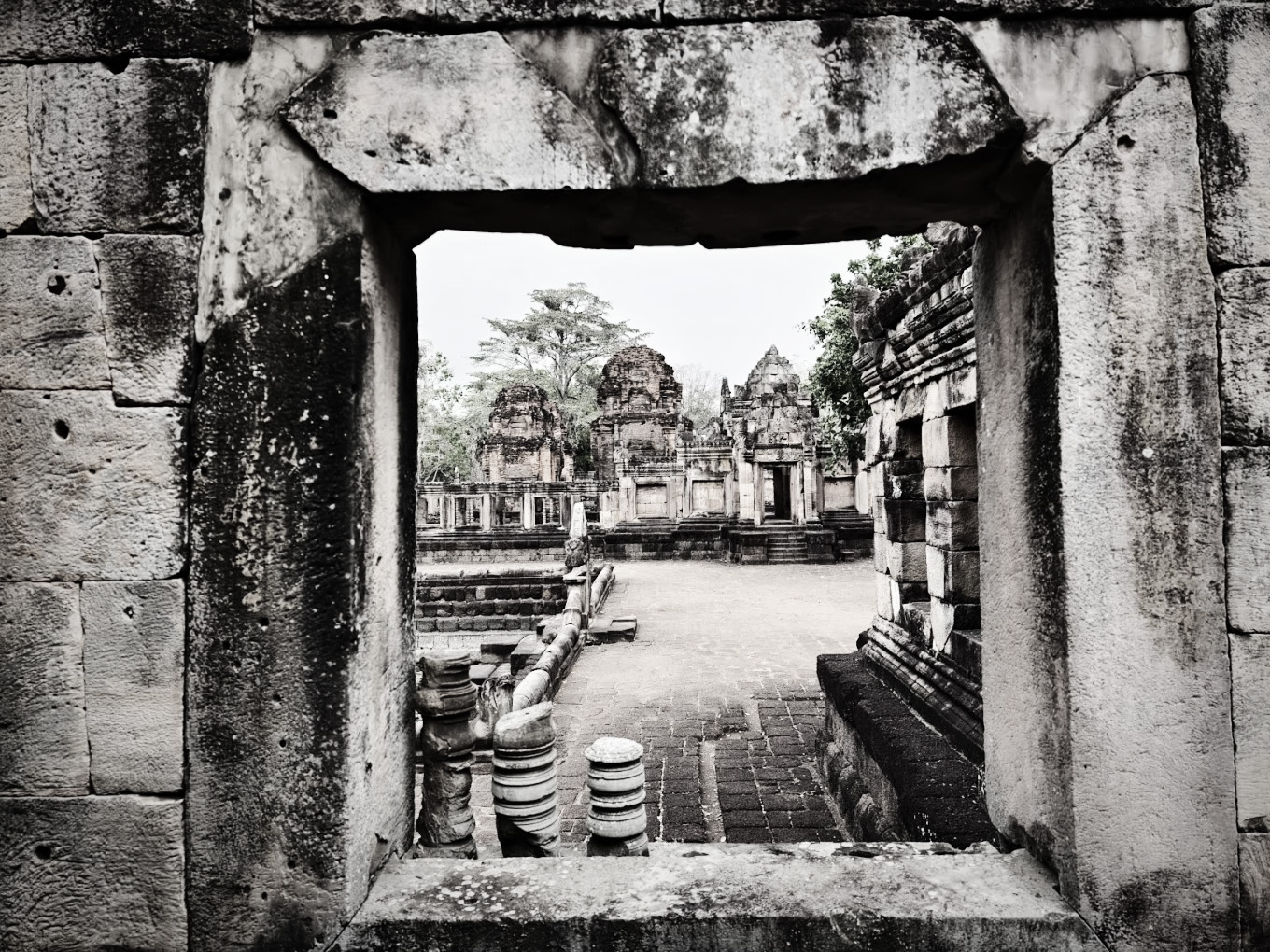
Five kilometres from Phanom Rung, at the base of the volcano, sits Prasat Muang Tam — a 10th-century Khmer temple complex that would be considered a major historical landmark in any other province. Here, it's the quieter sibling that Phanom Rung tourists drive past on their way back to the car park.
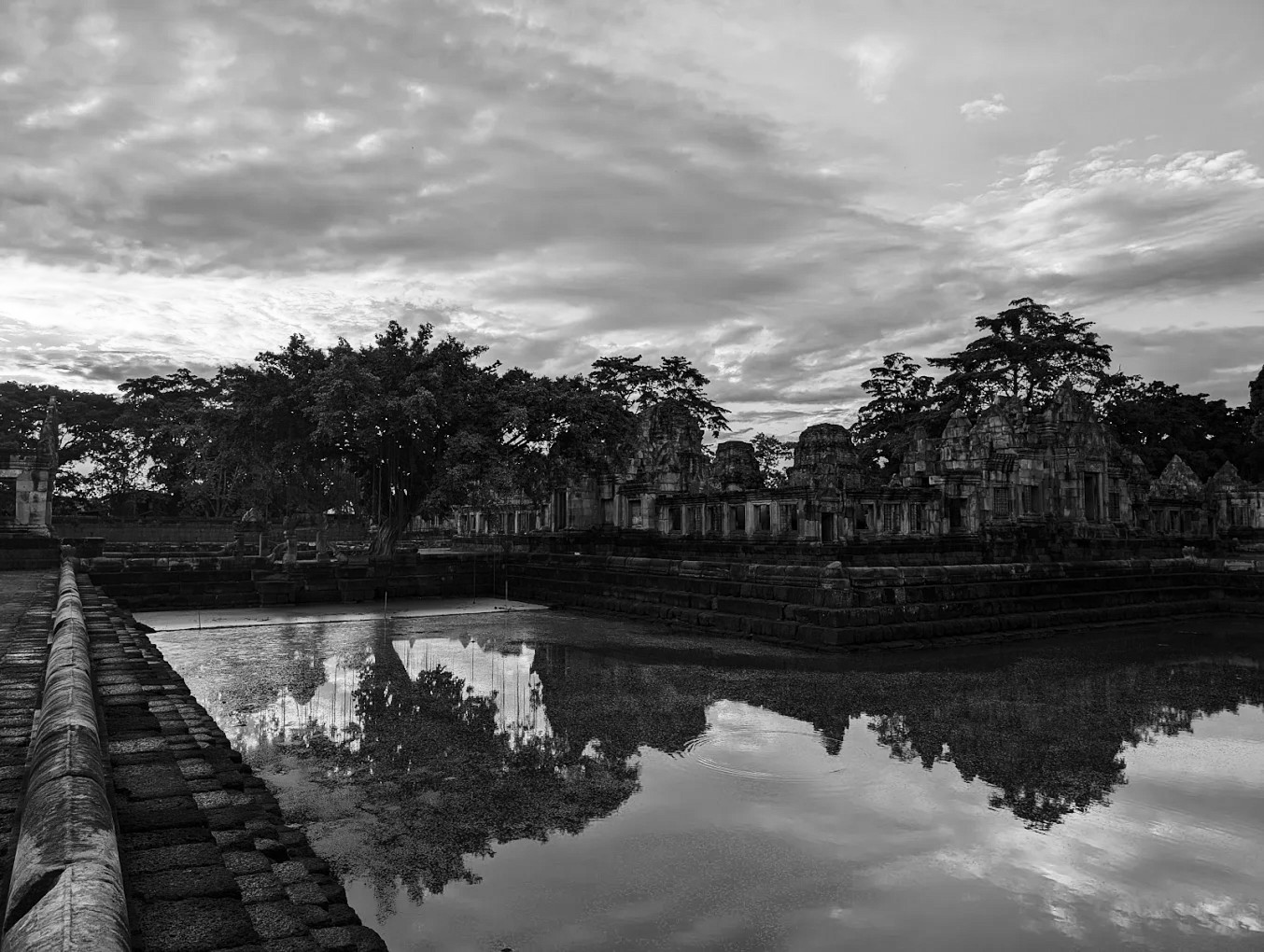
Their loss is yours. Muang Tam's four L-shaped ponds still hold water. The laterite towers reflect in them in early morning. Almost nobody is there. The silence has been accumulating for a thousand years and shows no signs of stopping.
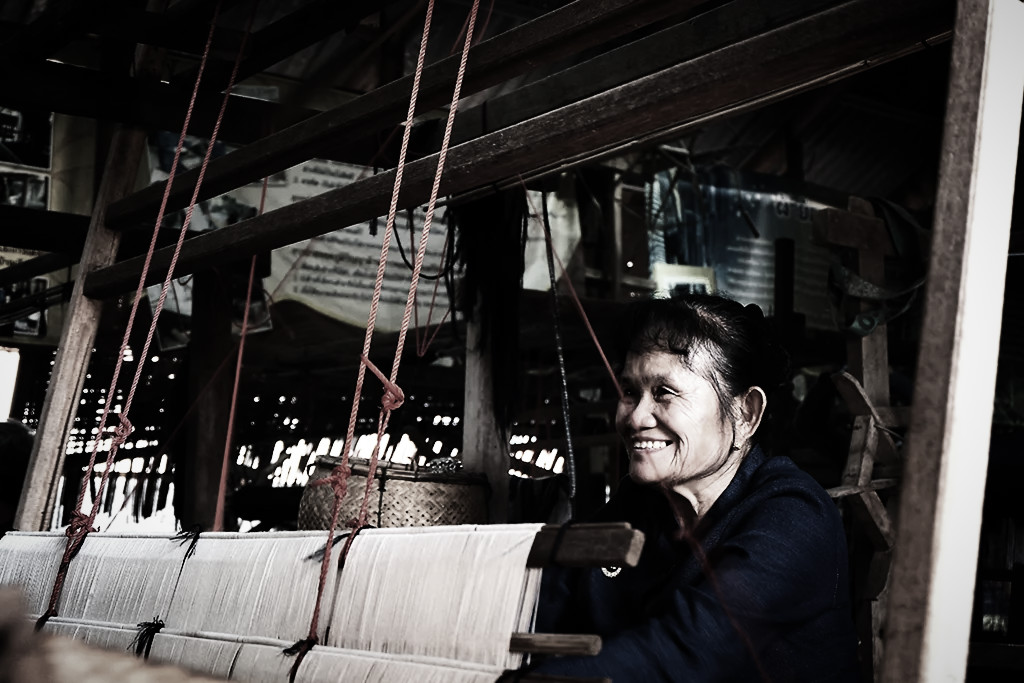
In villages around Buriram, traditional Isan silk weaving continues on wooden hand looms, with natural dyes, by women whose grandmothers taught them the patterns their grandmothers taught them. The silk coming out of these villages is not a product. It's accumulated knowledge wearing a physical form.
Visit. Watch. Ask questions. Buy directly from the weaver if you're buying at all. Ask whose grandmother invented the design. These are not small-talk questions. They are the actual story of what you're holding.
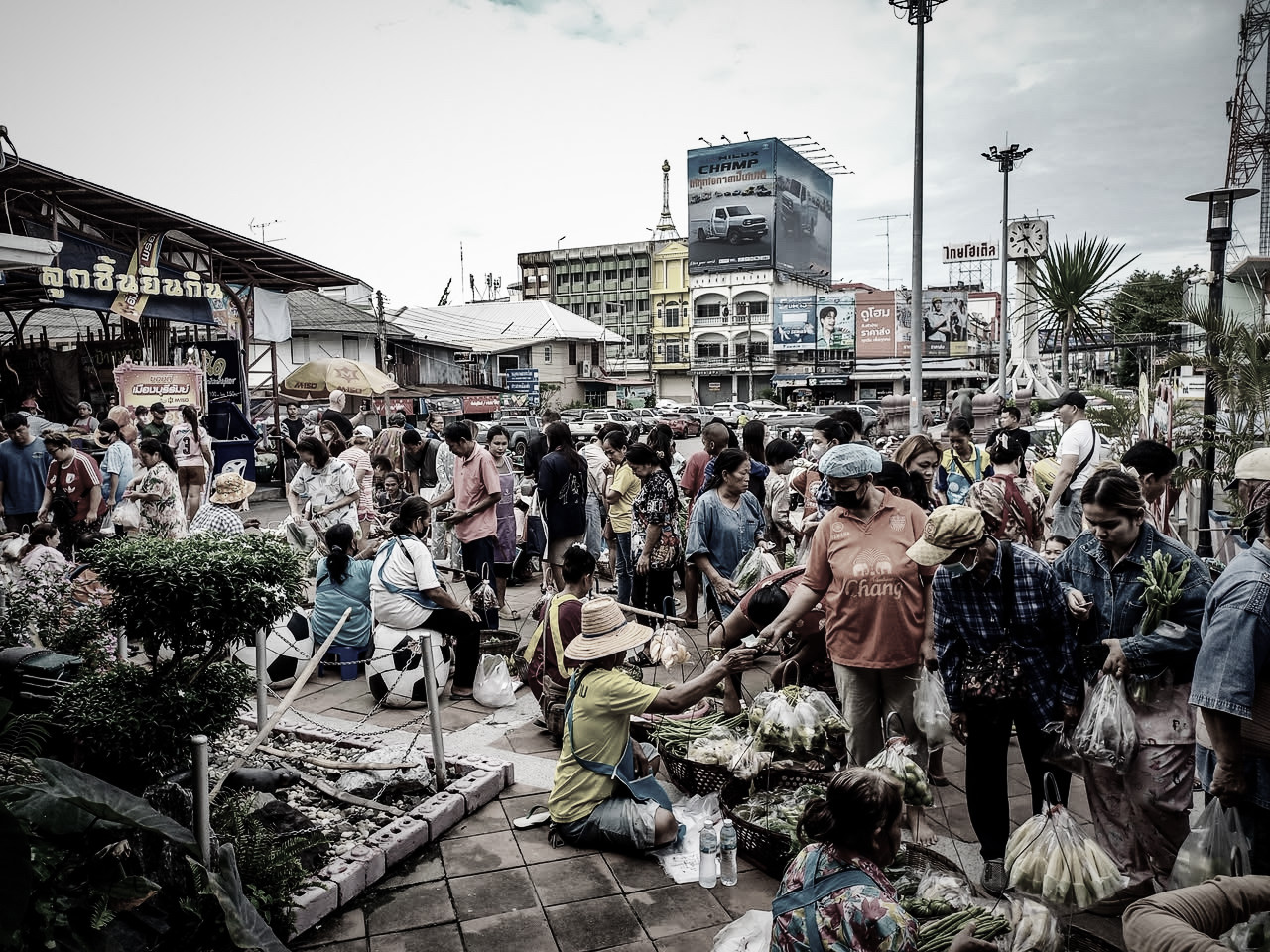
Every morning at 08:00, the cross-district train pulls in and Buriram's most extraordinary market explodes into existence — grandmothers and grandfathers stepping onto the platform with bamboo shoulder poles and rattan baskets packed with things Bangkok supermarkets have never heard of. Wild forest mushrooms. Backyard organic chilies. Ant eggs harvested from the village's tallest trees. Grandma's ready-to-eat frog stew, still warm, wrapped in a way that says I made this for someone I love. By 08:13, they're gone. The platform goes quiet. The train moves on. Locals have been showing up for this for over 20 years — not out of habit, but out of trust. These aren't vendors. They're neighbours from the next village, passing something real down the line.
This is Buriram before it knows anyone's watching. It's the best version.
Four times a year — usually mid-April, early November, early February, early August — sunrise turns Phanom Rung into something even more extraordinary than usual. Sunlight passes through all 15 doorways in perfect sequential alignment. The Khmer architects designed this deliberately. Nine hundred years ago.
Check the Fine Arts Department calendar before you book. Arrive before dawn. Bring a light layer — the hilltop is exposed and cold before sunrise. Prepare for the kind of moment that travels poorly in photographs but lives permanently in memory.
Practical note: These dates are the one time queues form at Phanom Rung. You are still almost certainly the only person from your country who booked specifically around this. That remains true.
The approach is not a casual stroll. It's a 160-metre ceremonial processional walkway followed by a series of staircases up a volcanic hill, in Thai heat, carrying whatever you thought you needed in that bag. Your legs will lodge a formal complaint. The 900-year-old Khmer empire at the top will not apologise. Nor will we.
Wear proper shoes. Bring water. Start early. And when you reach the first gate and the full scale of the complex reveals itself — notice the thing that happens to your breathing. That reaction is approximately nine centuries in the making.
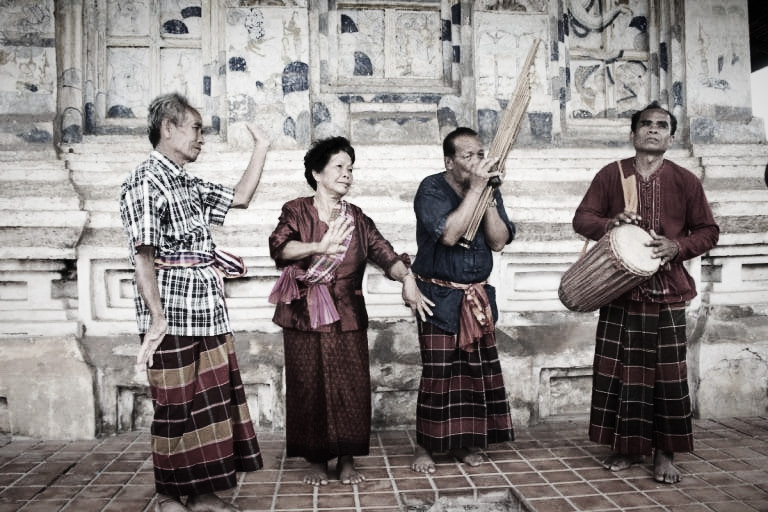
Morlum is Isan's soul music — fast, joyful, slightly chaotic, deeply rooted in Lao folk tradition, and absolutely impossible to sit still through for long. Festival evenings and village celebrations feature morlum performances designed for the community, not for outside observers.
If you find yourself at one: move to the edges, watch before joining, let someone invite you in. Then — when the invitation comes — accept it completely. This experience cannot be scheduled. It can only be stumbled into, which is exactly how all the best things happen.
"In Buriram, nobody eats alone, nobody leaves hungry, and nobody goes home without something packed for the journey. This isn't hospitality. It's just how we are."
The Most Honest Food in Thailand
Let's be direct: Isan food is not Thai food with extra chilli. It is a complete culinary philosophy — built around fermented flavours, fresh herbs, charcoal fire, and a relationship with sourness and heat that doesn't ask for your permission.
Marinated overnight in lemongrass, garlic, coriander root and fish sauce, then grilled over charcoal low and slow until the skin is lacquered and the inside impossibly juicy. Served with khao niao (sticky rice) and green papaya salad. This is the Isan meal. The one everything else orbits.
Every market has a gai yang stall. The one with the longest queue is the one you want. The queue is information. Trust the queue.
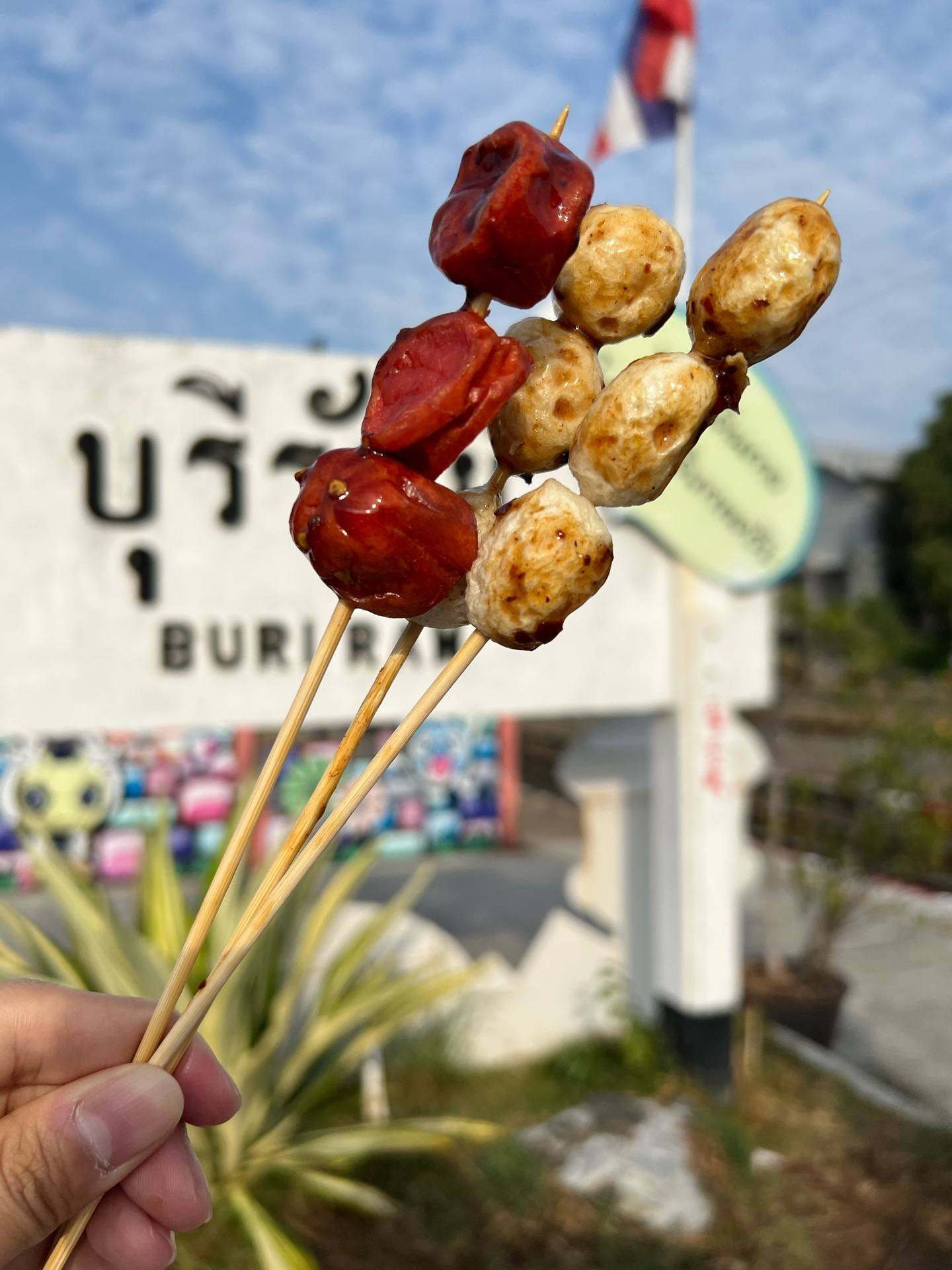
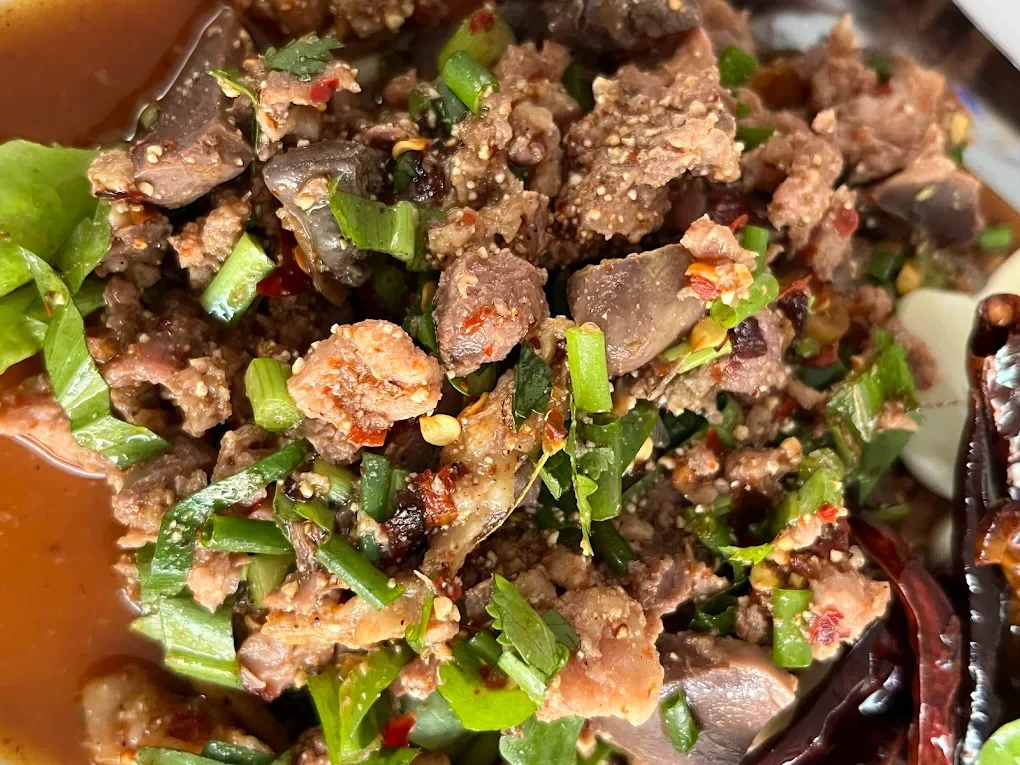
Minced ducks tossed with toasted rice powder, fish sauce, lime juice, shallots, mint, and enough dried chilli to make your initial reaction slightly alarmed. The khao khua — toasted rice powder — is the detail that separates real larb from everything else. Once noticed, it cannot be unnoticed.
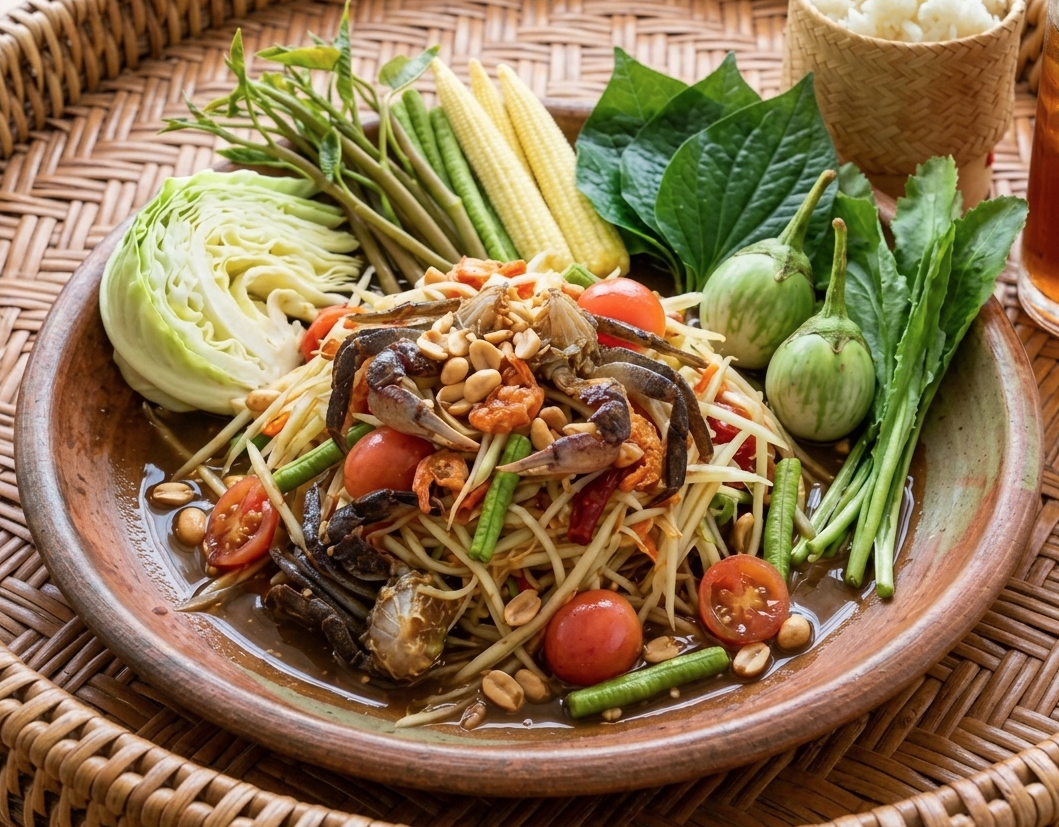
Bangkok's som tam is a charming cousin of the original. Buriram's version contains fermented crab (poo plara) and fermented fish sauce (plara) — flavour dimensions that Bangkok restaurants quietly omit for tourist palates. The result is deeper, funkier, and significantly more Isan.
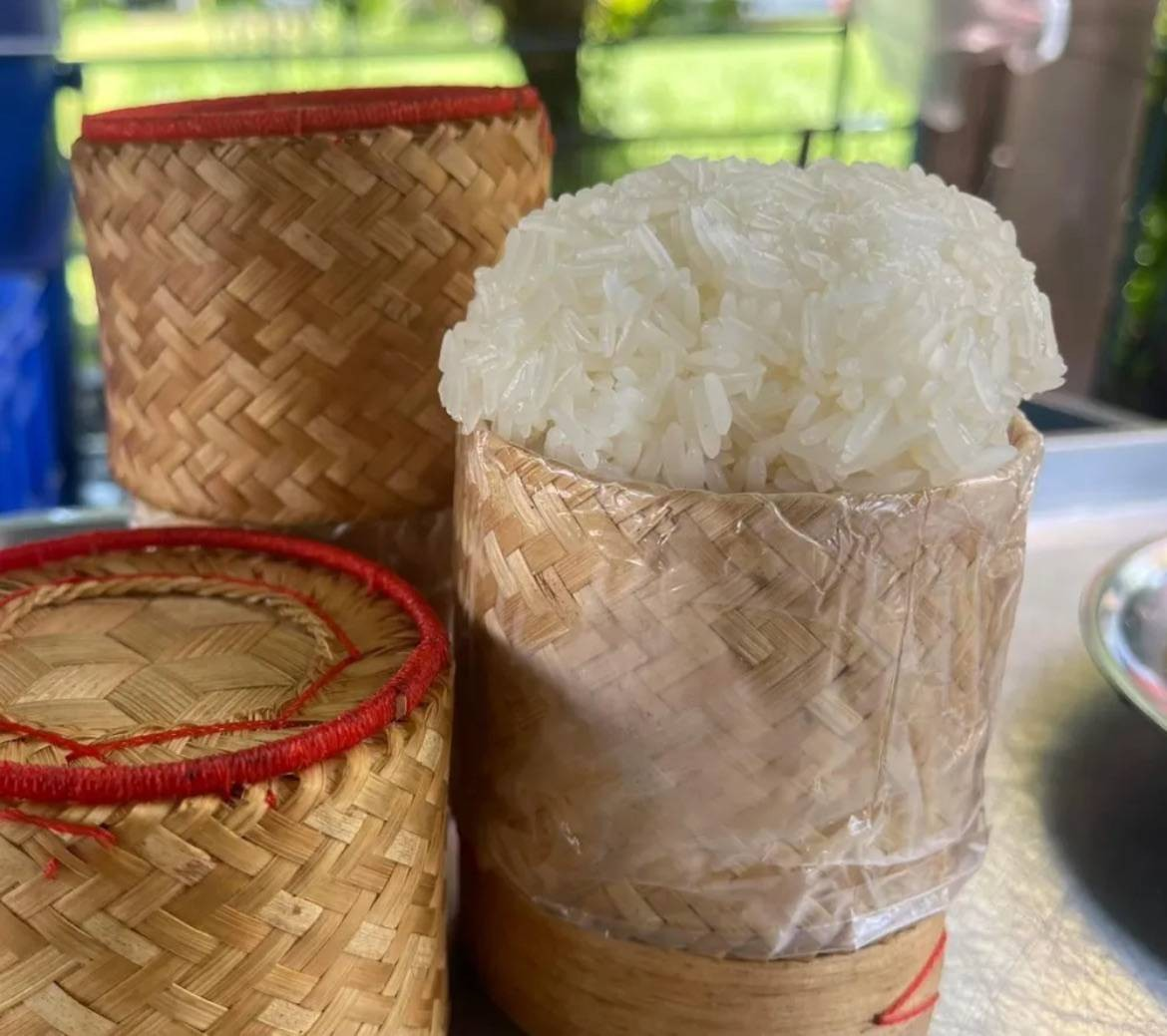
Sticky rice isn't a side dish in Buriram. It's the meal's heartbeat — pulled from the kratib basket, rolled in your fingers, and eaten with your hands the way it was always meant to be. Everything else on the table exists to accompany it. Not the other way around.
Set an alarm. This is not a metaphor. The alarm is mandatory. The porridge is worth it.
We Love You. Please Don't Do This.
We genuinely love that you're here. And as people of Seroch-Graw country, we are far too warm to say these things to your face. So we're putting them in a guide instead. Consider it a gift from Buriram's soul to yours. You're welcome.
Those worn stone steps, smoothed by a million bare feet over centuries? That's accumulated respect, one visit at a time. Removing your shoes is the precise moment you shift from tourist to guest. Leave your shoes at the door. Leave your assumptions there too.
Buriram's chili baseline is fierce and unapologetic. Ordering Zaab-Zaab then complaining it's too spicy causes the mortar-wielder to lose face — and you to lose credibility. Need mercy? Say it upfront: "Sai phrik met diew der ja."One chili, please. We won't judge. Much.
When an Isan family offers you food — and they will — the offer is not politeness. It is inclusion. Refusing without a genuine reason communicates that you're rejecting the relationship, not just the meal. Accept. Try everything. Say Zap lai like you mean it.
Passing money or accepting items from an elder with your left hand reads as graceless in Southern Isan culture. Use your right hand. Better yet, cup the item gently with both hands and bow slightly. That single gesture will make her entire morning.
Feet are the lowest part of the body — symbolically and spiritually — and pointing them at a monk or shrine is a genuine offence. Be a rectangle, not a compass. Cross your ankles. Sit sideways if you must. You'll manage.
Monks observe strict precepts — physical contact breaks them. No handshakes, no selfie shoulder-grabs, no accidental bus brush. If a monk drops something near you, set it somewhere he can retrieve it himself. This one matters.
When someone presses their palms together and bows slightly, return it: palms together at chest height, slight bow. Getting this right will make an elderly Isan person's entire morning. We promise.
Isan cuisine is its own complete culinary tradition. Telling someone that their larb tastes "like the Thai place near my office" is the culinary equivalent of a diplomatic incident. It is not the same. It has never been the same.
The Phrases That Open Everything
Buriram speaks Isan — a dialect far closer to Lao than to the central Thai taught in language apps. Using even a few Isan phrases will get you a reaction that no guidebook phrase has ever produced.
Your enthusiastic attempt matters infinitely more than perfect pronunciation. We can hear sincerity better than we can hear tones.
| Say It | Thai Script | When to Use It |
|---|---|---|
| Sabai dee bor, lung/pa?สบายดีบ๋อลุง/ป้า? | "How are you, uncle/auntie?" | Say this to any market vendor, temple caretaker, or guesthouse owner over 40. Watch what happens to their face. This is not a small thing. |
| Zap lai!แซ่บหลาย! | "Absolutely delicious!" | The moment after your first bite of anything. Cook's pride, instantly activated. You will receive more food. Deploy generously. |
| Bor pen yangบ๋อเป็นหยัง | "No problem / you're welcome" | The most Isan thing you can say. Use whenever the moment calls for maximum warmth with minimum effort. |
| Khob khun lai deขอบคุณหลายเด้อ | "Thank you very much" | Isan version. Carries more warmth than standard Thai equivalent. Use after every meal, kind gesture, or moment of unexpected generosity. There will be many. |
| Pai sai?ไปไส? | "Where are you going?" | Isan's all-purpose conversation starter. The answer doesn't matter. The asking does. You will be invited to join something within two minutes. |
| Pet jug noiเผ็ดจั๊กหน่อย | "A little bit spicy" | Your first line of defence at any Isan food stall. Use it. Isan chilli has convictions. Respect its convictions. |
 THAITOP.CO
Some Places Don't Need Crowds To Feel Complete
Phanom Rung challenges the heavens. Muang Tam bows to the earth. Visit both. Argue later.
Practical Intel
Train (the right way): Bangkok → Buriram Station. 5–6 hours. ฿200–600. The overnight sleeper is genuinely comfortable and the correct way to arrive.
Bus: Bangkok Mo Chit → Buriram Bus Terminal. 4.5–5 hours. ฿250–400.
By Air: Buriram Airport (BFV) via Nok Air and Bangkok Airways. Limited frequency — check schedules.
Self-Drive: 350km from Bangkok. 4–4.5 hours. Having your own vehicle unlocks every hidden temple and roadside stall.
Nov–Feb (Golden Window): Cool mornings, dry roads, harvest season, festival calendar active. The province at its best.
Mar–May: Extremely hot. Solar alignment dates at Phanom Rung are here — worth it. Go at dawn, done by 10am.
Jun–Oct (Monsoon): Lush, beautiful, humid. Proceed with a flexible plan and waterproof footwear.
Race Weekends: Check the Chang Circuit calendar annually. Extraordinary — requires militant advance planning.
Motorbike (The Definitive Method): ฿200–300/day. Required for reaching outlying temples at your own pace.
Songthaew: Shared pickup trucks. Cheap, local, require patience and a rough sense of direction.
Tuk-tuk: Town short trips. Negotiate before you get in.
Grab: Works in Buriram town. Does NOT reach Phanom Rung. Do not depend on Grab for Phanom Rung.
Budget (฿400–800): Local guesthouses in Buriram town and Nang Rong. Clean, basic, run by people who will give you better directions than any app.
Mid-range (฿800–2,000): Comfortable hotels in Buriram town. Amenities you need, prices you won't wince at.
Race/Match Weekend: Book 6–8 weeks ahead. Everything within 50km sells out. We are not being dramatic. Everything sells out.
| Category | Daily Estimate |
|---|---|
| Street food (3 meals) | ฿150–200 |
| Local guesthouse | ฿400–800 |
| Motorbike rental | ฿200–300 |
| Temple entrance fees | ฿100–300 |
| Comfortable day total | ฿800–1,500 |
| Generous day total | ฿1,500–2,500 |
| Phanom Rung | 65km · 1h 15min |
| Prasat Muang Tam | 70km · 1h 20min |
| Chang Circuit | 8km · 15 min |
| Bangkok | 350km · 4.5 hours |
Cash only in markets, temples, and rural areas. The nearest ATM to Phanom Rung is in Nang Rong town — withdraw before you go. There are no card machines at 900-year-old Khmer temples.
Download offline maps before heading to Phanom Rung. Mobile signal is unreliable at outlying temples. Getting lost on the road between temples is acceptable. Getting lost while trying to find the temple is different.
Sunscreen is survival equipment at Phanom Rung in March–May. The hilltop climb without SPF is a decision you will immediately and very physically regret. Apply before you leave the guesthouse.
Before you land in Buriram, the logistics still need sorting. Our Thailand trip planning guide helps you arrive with enough time to actually feel it.
Ready For Your Next Move?
Most visitors to Thailand see the surface and call it the whole picture. Buriram is the argument that the most extraordinary things exist in the places nobody thought to look.
The Khmer knew this. They built a temple on a volcano to prove it. Now you know too.