This Wasn't Meant to Be Public.
Hidden gems don’t stay hidden. Be first, before everyone else finds out. Thailand’s real cultural experiences and local secrets — delivered straight to your inbox.
Zero spam · Unsubscribe anytime

The name means "Mountain of Three Hundred Peaks," which sounds like the kind of poetic exaggeration travel writers reach for when the facts aren't quite dramatic enough. Then you actually see it — a limestone massif erupting from coastal plains like nature lost a bet and had to build something spectacular before sundown — and you realise three hundred was, if anything, conservative.
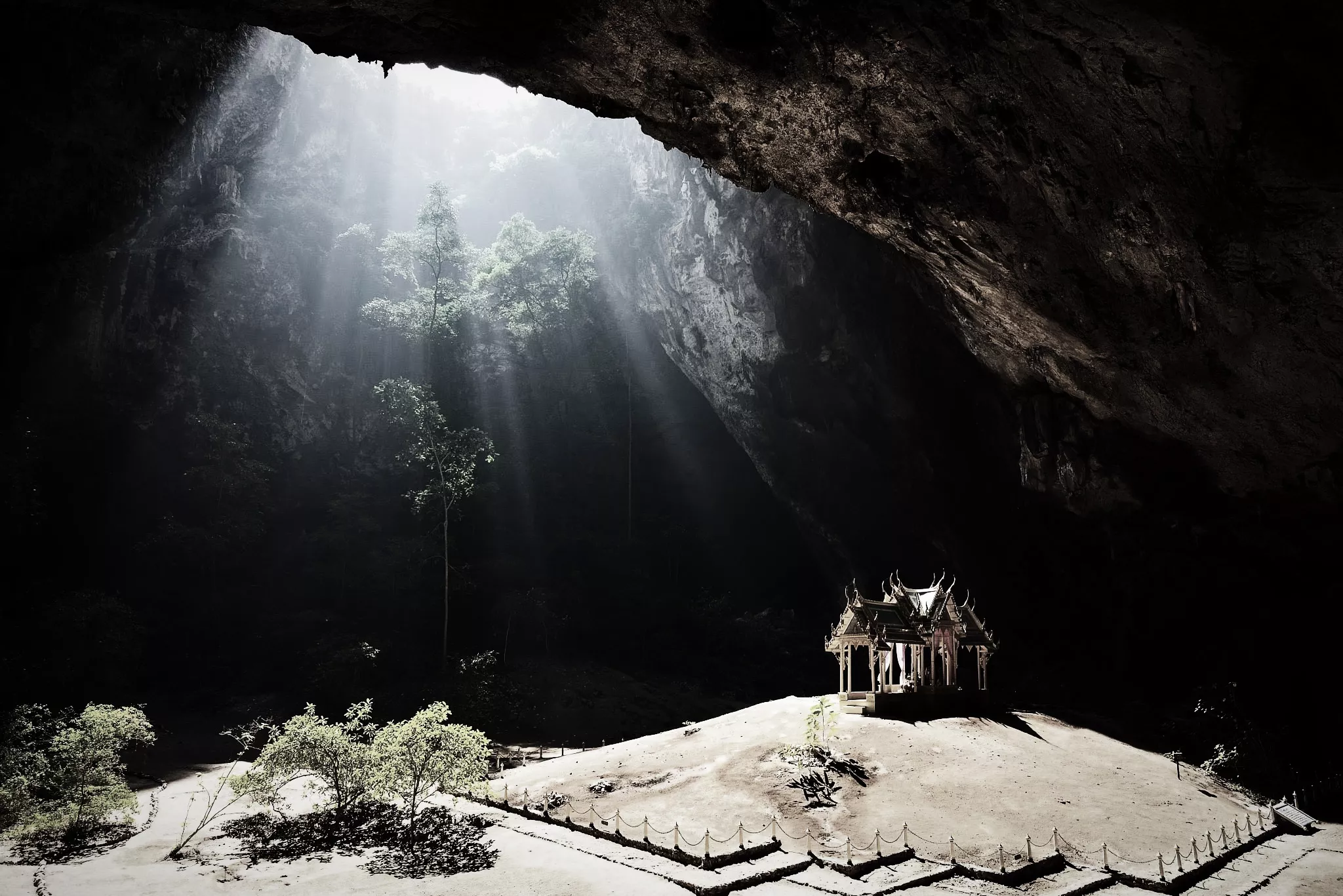
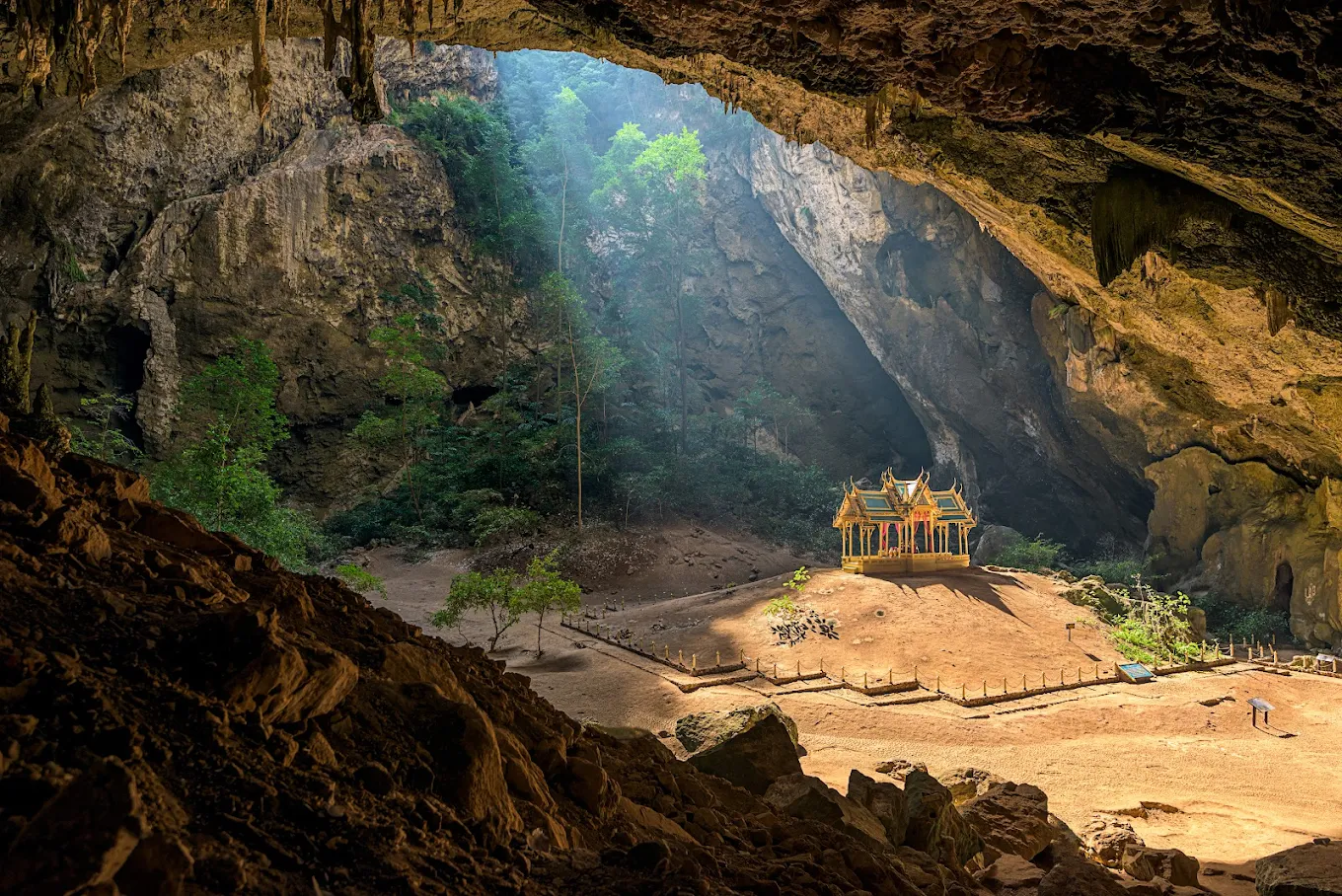
But here's what the standard Hua Hin itinerary buries somewhere between "day spa" and "night market": sixty kilometres south of one of Thailand's most reliably packed beach towns sits Phraya Nakhon Cave, where a four-gabled royal pavilion built in 1890 for King Chulalongkorn sits inside a collapsed cavern and waits, every single morning, for a shaft of sunlight to find it through a hole in the ceiling and turn it briefly, impossibly golden.
This image has appeared on Thai currency. It has graced royal ceremonies. It has anchored approximately every "secret Thailand" caption ever written. Somehow, the tour buses still stop in Hua Hin. We will never fully understand this. Come anyway.
The pavilion has been waiting since 1890. It is extraordinarily patient. You, however, should not be.
Before you pack your bags, read this. We score every hidden gem on the metrics that actually matter — tourist density, cultural depth, how badly it'll ruin you for ordinary travel — so you know exactly what you're walking into. And whether you should.
Sixty kilometres from Hua Hin — one of Thailand's most visited beach towns — and tourists still skip it for the 47th seafood restaurant on the strip. We've stopped being surprised. Almost.
430 metres of limestone stairs that make your calves file formal complaints, plus a golden royal pavilion glowing in cathedral light at the top. Nature's ultimate "you had to earn this" moment. The math is impeccable.
The photos are accurate. They just can't capture the sound of your own heartbeat in the silence, the cool cave air drying sweat off your back, or the specific smugness of "I climbed for this and it was absolutely worth it."
Royal pilgrimage site consecrated by King Rama V in 1890. Merit-making shrine inside the cave. Multi-generational Thai families climbing together like it's a sacred family tradition — because it is. This isn't sightseeing. It's reverence with hiking boots.
National park since 1966. No golf cart shuttles. No escalators. No luxury resorts inside park boundaries. The "inconvenience" is the conservation strategy. Accidentally brilliant.
No shortcuts. No selfie stations. The only filter is a 45-minute jungle hike that weeds out everyone who came for content, not experience. Working exactly as intended.
Only if Mum has decent knees and owns proper shoes. Flip-flop Mums get the longtail boat option — still magical, slightly less bragging rights. Either way, when she sees that pavilion glowing in the cave light, she will cry a little. We all do. It's tradition.
Pack her decent shoes. And snacks for the descent. She'll say she doesn't need them. She needs them.
We treasure Khao Sam Roi Yot as one of those rare places that refuses to be just one thing. It is simultaneously a pilgrimage site, a fitness test, a birdwatcher's fever dream, and a mangrove kayak trail — all within the same national park, all operating at once, all extraordinary. For us, this is where Bangkok families drag teenagers away from their screens to climb limestone trails, where grandparents share stories about King Rama V's royal visit to a cave that couldn't be more inconveniently located if it tried, and where the concept of khwam sa-ngop (ความสงบ) — tranquility — gets demonstrated rather than explained.
You don't read about peace here. You sweat your way up 430 metres of rock stairs, round a corner, and the cave opens like nature built a cathedral and forgot to charge admission. The peace arrives on its own. It always does, at altitude, earned.
The royal pavilion appeared on Thai banknotes because Phraya Nakhon Cave represents something we reach for repeatedly in Thai culture: the intersection of natural wonder and human reverence, the point where landscape becomes sacred not through declaration but through generations of people climbing to it and being changed by what they find. The mountain doesn't move toward you. You move toward it. This is the correct arrangement.
Thai sacred spaces rarely arrive without requiring something from you. The effort isn't incidental — it's architectural. The staircase to Phraya Nakhon is not an inconvenience someone forgot to remove. It's the threshold that separates the casual visit from the meaningful one.
Tham bun (ทำบุญ) — merit-making — in Thai Buddhist practice often involves physical effort precisely because the difficulty is part of the reverence. The staircase accumulates meaning the same way the stalactites accumulate limestone: one step at a time, across more time than we have language to properly express.
What visitors miss: When Thai families light incense at the shrine inside and make merit, they're not performing a ritual they were told to perform. They're participating in a conversation between this cave and their culture that has been running uninterrupted since 1890. You've been invited to listen in. That earns a certain quiet.
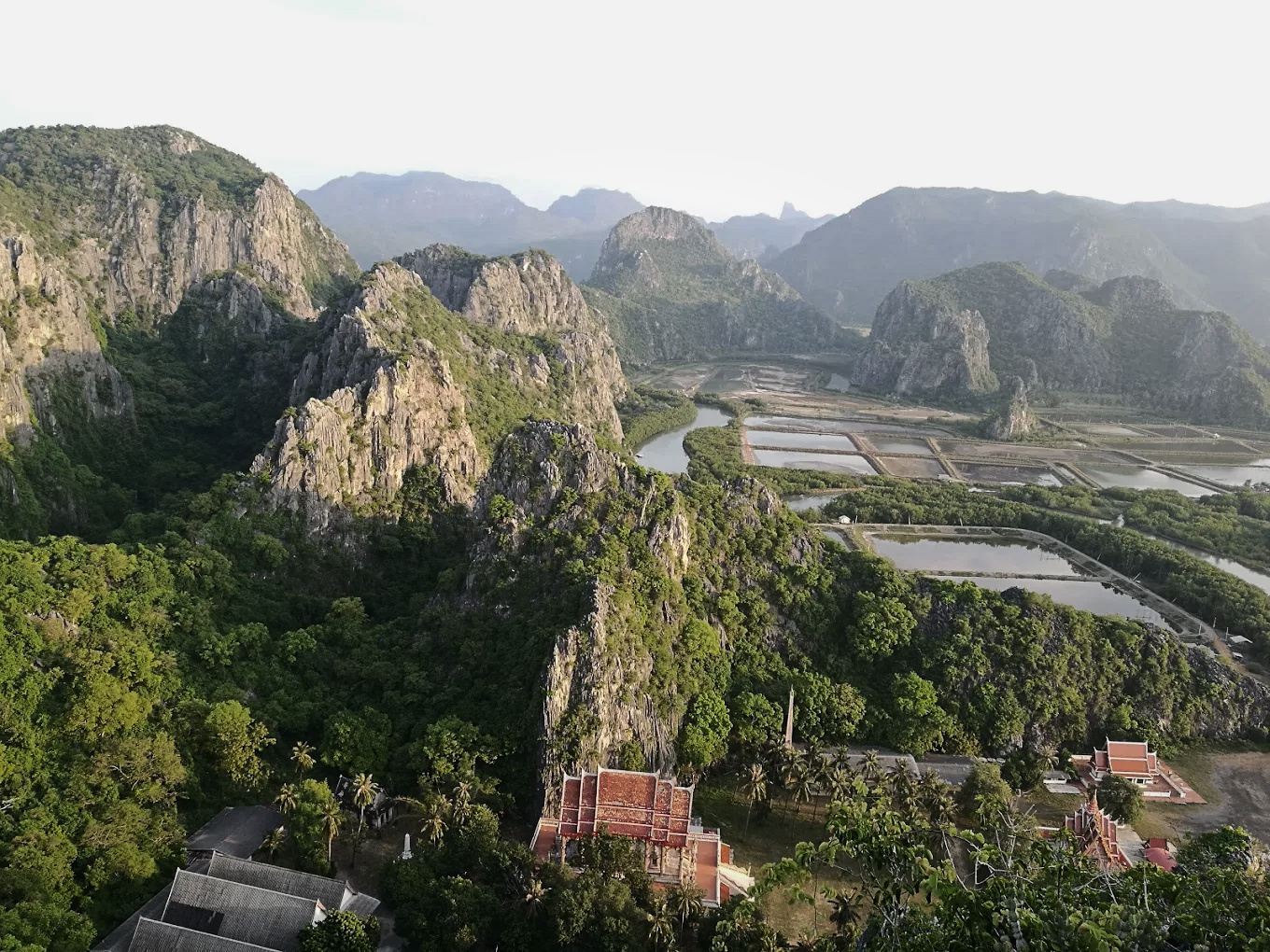 Sam Roi Yot· Prachuap Khiri Khan
"If this wild limestone horizon doesn't take your breath away, it's time to check your pulse!"
Thirty seconds. One form. Zero tourist traps in your inbox.
No selling. No spam. We barely email — because we're too busy finding gems.
Everything begins at Laem Sala Beach, where you make your first decision of the day: hike the mountain trail (45 minutes, coastal views, genuine scramble, maximum bragging rights) or take a longtail boat across the bay (ten minutes, ฿200–300, gentle on the knees, slightly less heroic narrative). Both are excellent choices. Both lead to the same staircase. There is no escaping the staircase.
The ascent: 430 metres of limestone pathway alternating between natural rock and carved stairs, winding through jungle where macaques observe your progress from the trees with the detached judgment of creatures who never have to do this because they live here and find the whole enterprise faintly absurd. The heat is real. The humidity is what humidity aspires to be when it's trying to make a point. Your calves will file formal complaints, cc-ing your lungs.
But here's what every Thai who has made this climb wants you to know: every switchback reveals something better than the last one. First the beach below. Then the bay opening out. Then the entire coastal stretch, the Gulf of Thailand spreading in every direction like liquid silver. You are already somewhere extraordinary before you've even reached the cave. The cave is additional.
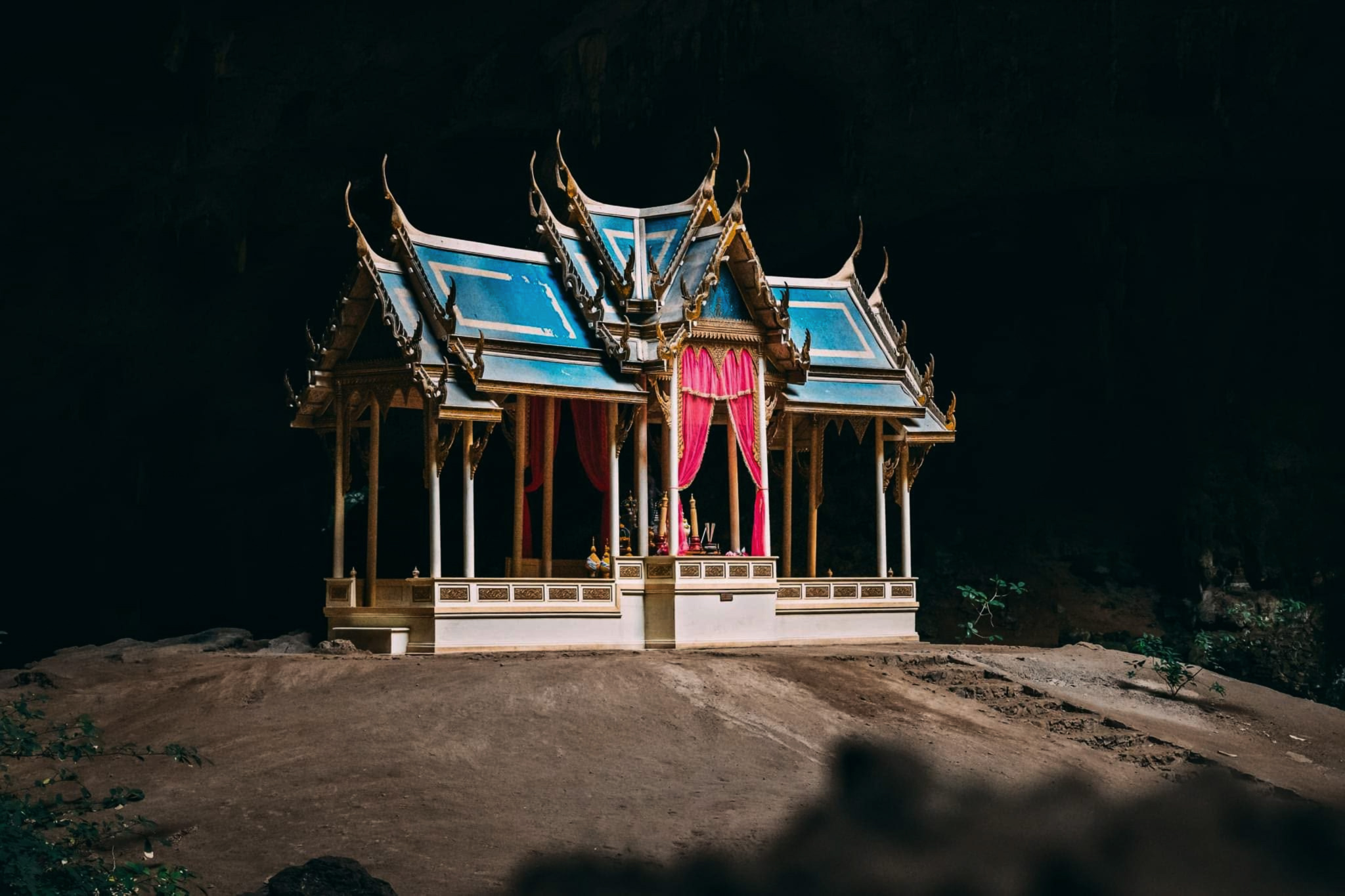
What locals know about the light: Phraya Nakhon Cave's collapsed ceiling acts as a natural spotlight. Once a day, for roughly sixty minutes, the sun angles through the ceiling opening at exactly the right trajectory to illuminate the Khuha Kharuhat Pavilion roof in full gold. This is the photograph that appeared on Thai currency. This is the reason people have been climbing this staircase since 1890. Miss the window and you get a beautiful pavilion in a beautiful cave. Hit the window and you get something that rewires your understanding of what light can do to architecture inside a mountain.
The window:
10:30 – 11:30 AM
Nov–Feb peak · Possible outside window
Work backwards: longtail from Bang Pu by 8:30–9:00 AM. Hiking the trail? Start no later than 8:00 AM. March–May, add 30 minutes — the heat makes the upper section a different beast entirely.
Bonus: Arrive at 10:00 AM and watch the light move across the pavilion as the sun tracks overhead — a slow reveal over thirty minutes that makes the eventual full illumination hit considerably harder than walking in at peak. Patience, here, earns a proportionally better experience. The cave rewards the same qualities the staircase required.
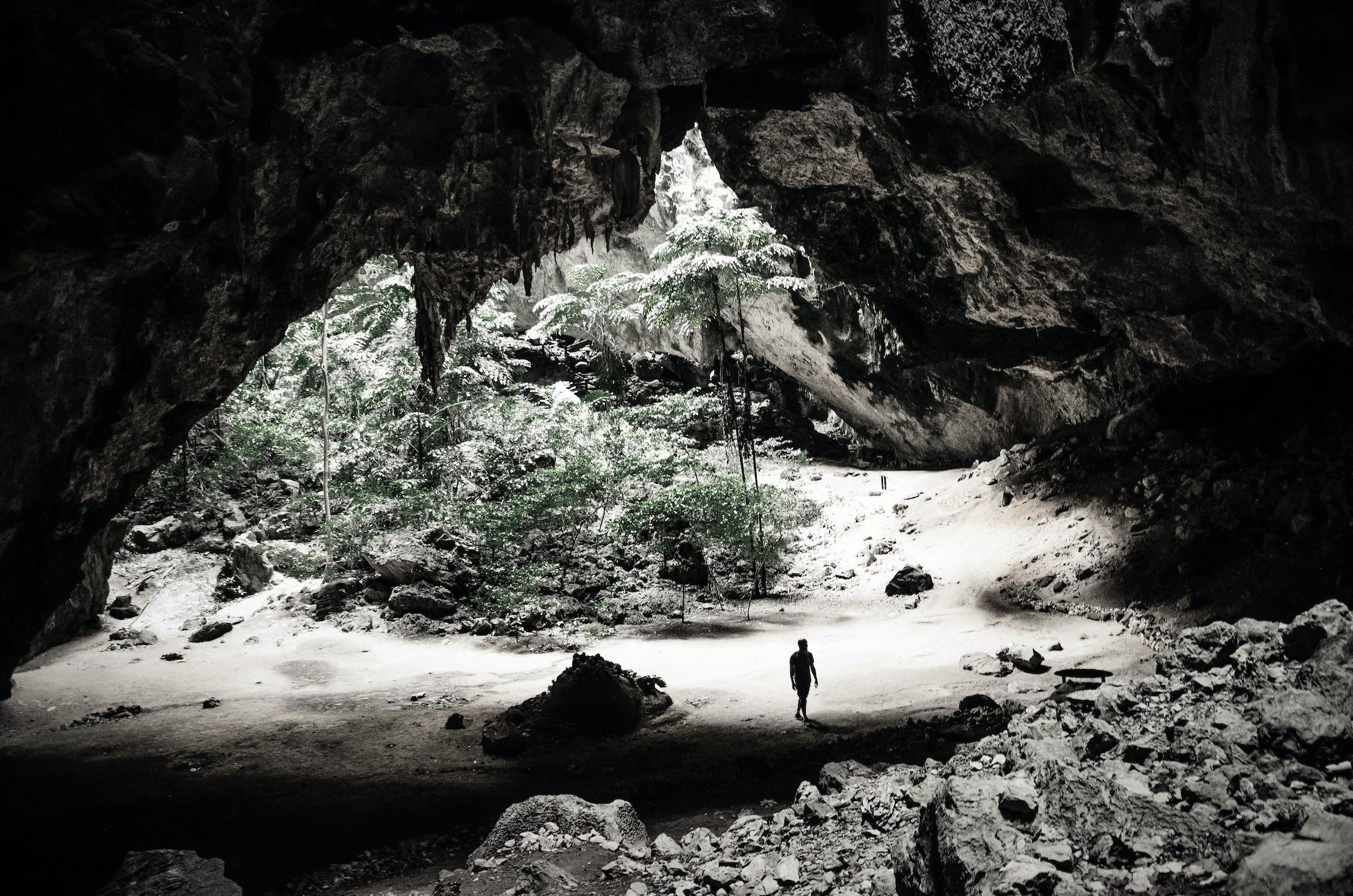
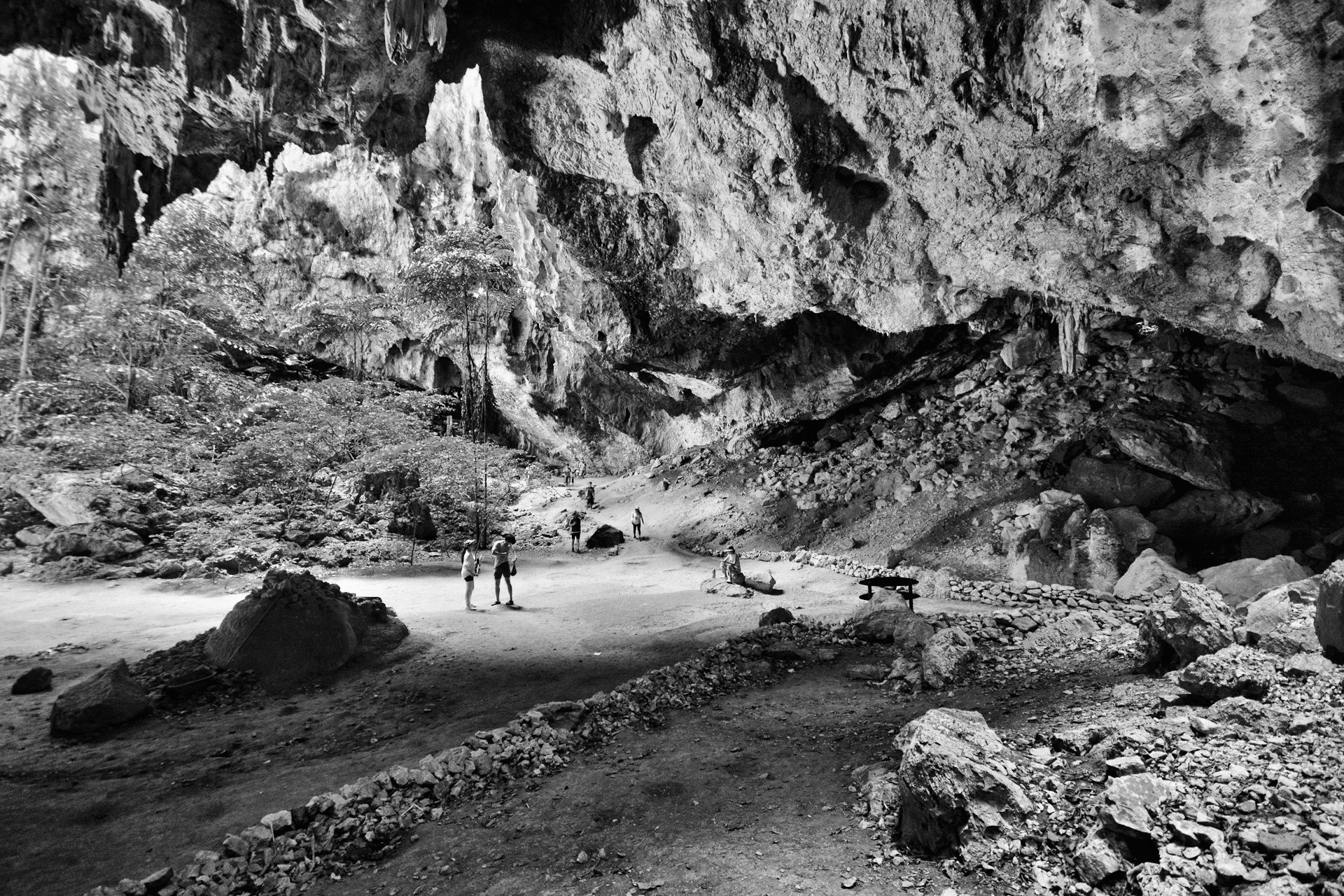
After the final switchback, Phraya Nakhon opens before you like nature decided to build a cathedral and, upon reflection, decided cathedrals were underselling it. Two chambers connected by collapsed ceiling sections, massive in scale, cool in temperature — the cave maintains a perpetual geological air conditioning that arrives after the heat of the staircase with the specific satisfying logic of a reward perfectly calibrated to the preceding effort.
Every whisper echoes. Every footstep announces itself. The stalactites hang like frozen waterfalls, growing at roughly 1mm per decade — that formation directly overhead has been accumulating since before the Ayutthaya Kingdom existed, and has no particular plans to stop. Bats roost in the darker corners. They are shy; they prefer to be left alone, which is a preference they share with everyone who works somewhere beautiful and gets visited constantly.
In the centre of the inner chamber: the Khuha Kharuhat Pavilion. Four-gabled, golden, surrounded by manicured gardens that somehow exist inside a limestone cave and are tended by park staff who make the same staircase journey on their working days — a detail that deserves a moment of reflection. When the morning light strikes it — when the shaft comes through the ceiling at its peak angle and the gold catches it and the green surroundings provide contrast so precise it looks professionally lit — standing there, legs still trembling from the climb, breathing cool cave air, watching light move across that roof, you understand something about why Thais have been making this trip for over a century.
It isn't just beautiful. It's saksit — consecrated. By history, by royal presence, by collective reverence across generations, and by the four hundred and thirty metres of staircase that precede it and ensure you arrive having given something of yourself to the encounter.
We sequence Khao Sam Roi Yot specifically: cave in the morning, marsh in the afternoon. Not because the guidebook says so — because the emotional logic demands it.
The cave climb is tham bun (ทำบุญ) energy — effortful, earned, spiritually weighted. You ascend. You see something consecrated by history and royal presence and 130 years of collective reverence. You descend changed, legs complaining, spirit quietly expanded. Then the marsh receives you: flat, open, still, sa-ngop. The lotus fields decompress everything the staircase wound up. It's a full emotional arc compressed into one day — exertion and release, grandeur and gentleness, the mountain and the water.
Doing them in reverse order works logistically. It just doesn't work as well as a day. The marsh first means arriving at the cave tired without the earlier momentum. The cave first means arriving at the marsh already opened by altitude and light, ready to receive the different, quieter extraordinary that the lotus fields offer. Some sequences matter. This is one of them.
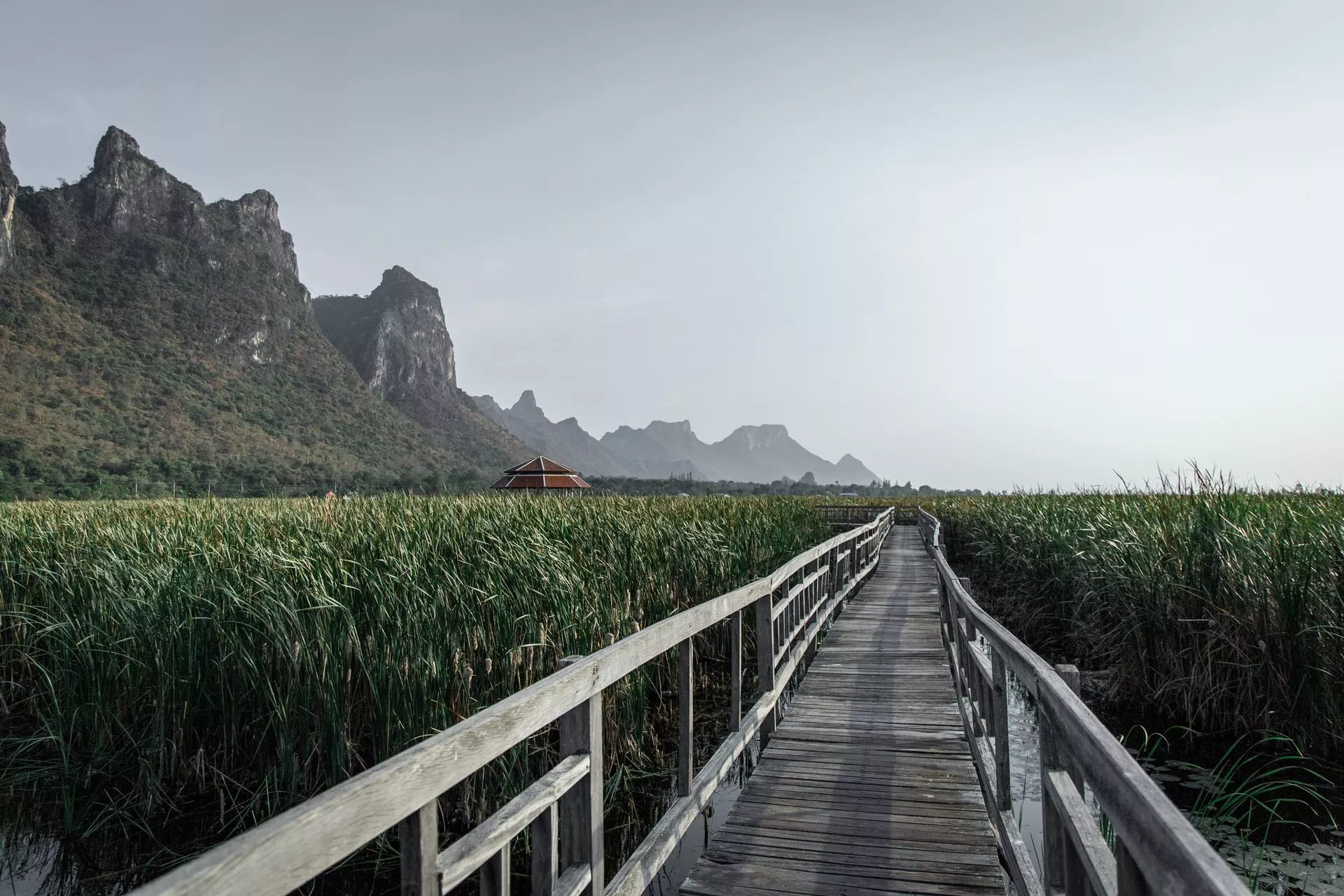
Flat. Open. Vast. Meditative. If the cave climb was vertical ambition rewarded, the Thung Sam Roi Yot freshwater marsh is horizontal peace delivered — and the contrast between them is precisely what makes a full day here feel like two entirely different countries visited without changing provinces.
Rent a wooden skiff and drift through lotus fields that stretch to the limestone horizon. Blooming sacred lotuses on all sides, their pink against the grey-green of the reeds, egrets calling from somewhere invisible, the mountain range you just descended now reduced to a dramatic backdrop behind an ocean of flowers. The silence here is a different kind of silence than the cave — wider, more horizontal, the kind that makes city noise feel like a category error. Ozone enters your lungs in quantities that feel almost unreasonably generous.
Birdwatchers: fair warning. 355 species have been recorded at this park, approximately half migratory, concentrating at the marsh in numbers that have been known to turn perfectly composed ornithologists into people who start photographing everything and narrating rapidly into a recorder. You will go completely feral. We will not apologize for this. Come in November–February for peak migration numbers and the cold season's gift of manageable humidity.
The Khlong Khao Daeng mangrove boardwalk delivers something rarer than drama: genuine ecological strangeness. One kilometre of elevated wooden walkway threading through mangrove forest so dense and architecturally complex it feels like the trees are doing structural engineering. The root systems twist, brace, and cantilever in ways that make human construction look straightforward by comparison. Dusky langurs — big-eyed, silver-furred, permanently expressing mild surprise — watch from branches with the energy of people who have heard your explanation and remain unconvinced.
At 4:30–5:00 PM, hire a longtail at Wat Khao Daeng for the evening canyon cruise. The boat slides through channels between limestone gorges, through a local fishing village, into canyon passages where cliff faces rise on both sides and the light does things to the water that painters have been attempting to replicate since forever. When the sun drops behind the peaks and dyes the entire cliff face liquid gold — water below catching it, the boat moving silently through it — it is the most visually complete ending a day in a national park has any right to offer.
Most tourists: Phraya Nakhon Cave. Feel deeply satisfied. Eat lunch. Drive back to Hua Hin by 3 PM. Mission complete. They've had a remarkable morning. They've had about 60% of the day available to them.
Thai families who know this park stay for the Khlong Khao Daeng evening boat cruise — and consider it the day's second, equally essential act. At Wat Khao Daeng (ask park rangers for directions, they know it), longtail operators run river cruises from approximately 4:30 PM through sunset. The route winds through fishing village channels, then into limestone canyon passages where late light turns everything the colour of warm amber. The moment the boat clears a final bend and the full canyon opens — sun dropping, water gilded, walls rising — is one of those unrepeatable geographical experiences that no photograph accurately conveys and no second-hand description does justice to.
This sentence is deliberately inadequate. That's the point.
Cost: ฿300–500 per boat (negotiate at the pier, share with other visitors if solo). Duration: 45–60 minutes. Verdict: Non-negotiable if you stay past noon. The cave earns the morning. The canyon earns the evening. In between: the marsh, the boardwalk, the langurs, the lotus fields. This is a complete day. It asks everything of you. It gives considerably more back.
"The cave keeps its pavilion hidden not out of secrecy but out of discernment. It has always been here. It has always been this beautiful. It simply required you to climb four hundred and thirty metres before it would show you."
The coastal geography of Khao Sam Roi Yot creates brackish water zones where freshwater meets the Gulf — conditions that produce prawns with a sweetness and mineral depth that inland aquaculture genuinely cannot replicate. The salt-grilling technique (whole, shell-on, over charcoal) seals natural moisture in and lets the prawn's actual flavour work without interference. Eaten at a simple restaurant in Bang Pu village after descending from the cave, legs still aching, cold drink in hand — this is the meal that makes the climb retroactively worth it in a new, entirely gastronomic way.
Pla kapong caught in the Gulf off this specific coastline runs cleaner and firmer than farmed equivalents — limestone-filtered coastal water, lower fishing pressure than more touristed areas, fish-to-kitchen timelines measured in hours rather than days. Steamed with lime, fish sauce, chilli, and garlic that has no interest in being subtle. This is the dish that makes you rethink every sea bass you've eaten before it. Found at the same Bang Pu village restaurants, ordered as a sharing plate, finished faster than you planned with absolutely no regret.
"Easy views are rarely memorable views. Beauty that requires nothing from you gives nothing back. This pavilion, this light, this mountain — they've been waiting. They just needed you to climb."
Khao Sam Roi Yot packs remarkable biodiversity into 98 km². The wildlife operates on its own schedule and has no interest in yours. The light window, however, is more reliable than most wildlife — and equally worth timing correctly.
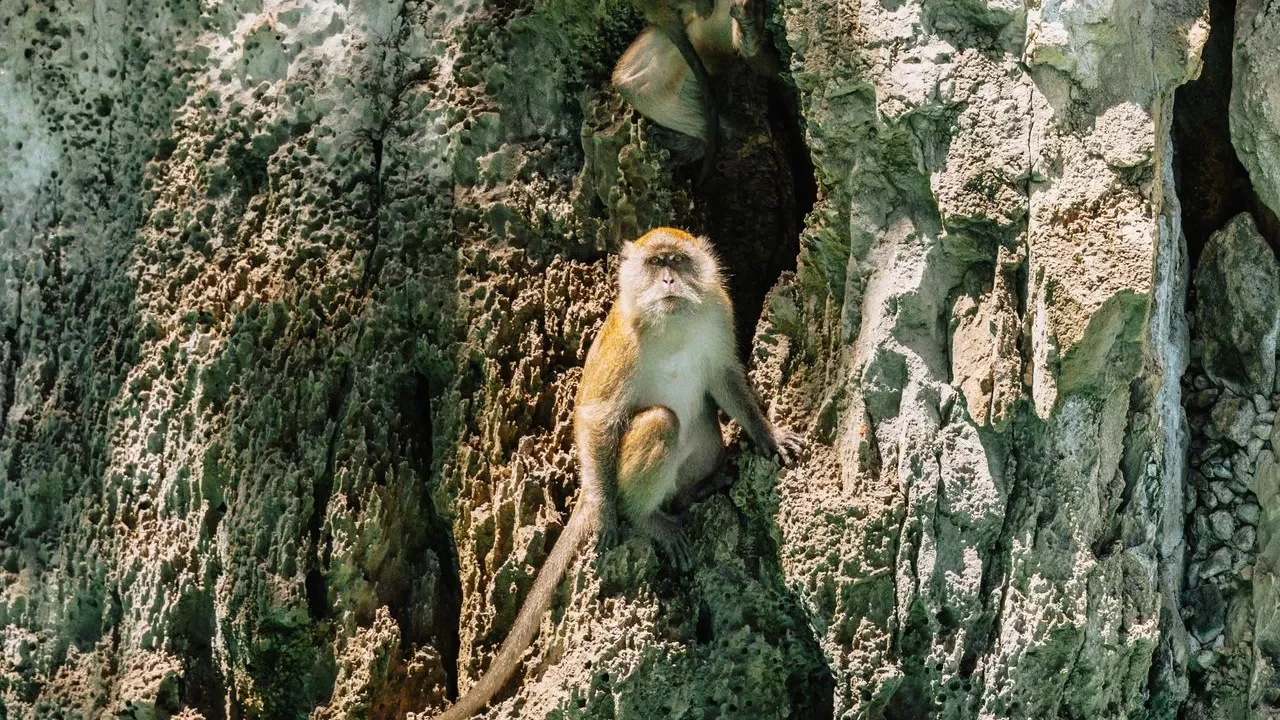
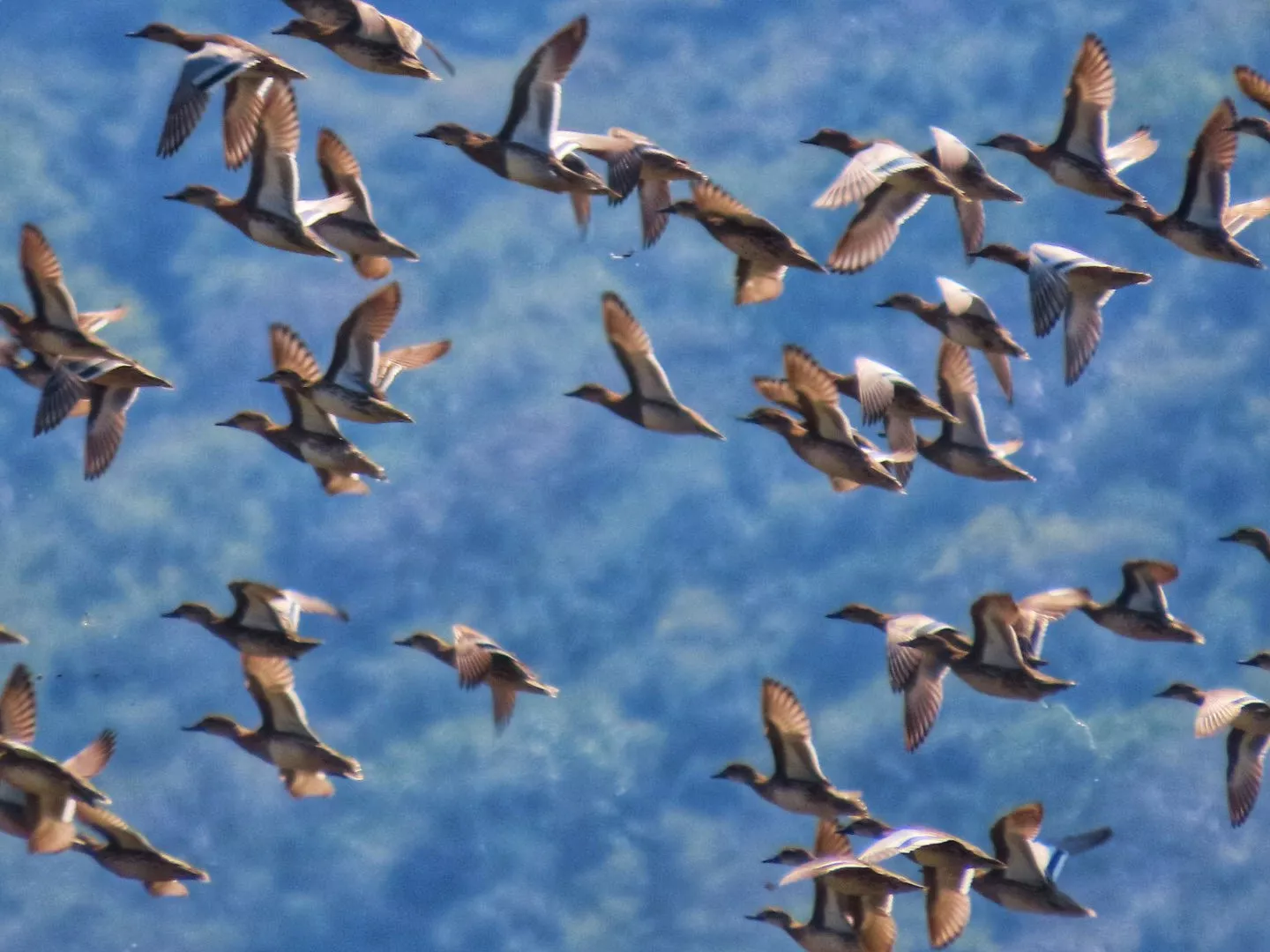
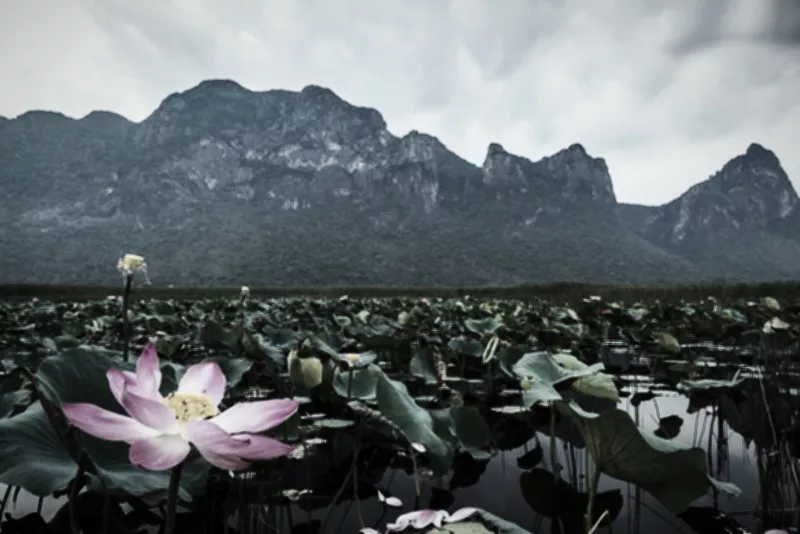
This is a national park, not a performance. The macaques have their own agendas. The migratory birds have their own calendars. The pavilion's light — uniquely — runs on solar time, which is more reliable than either.
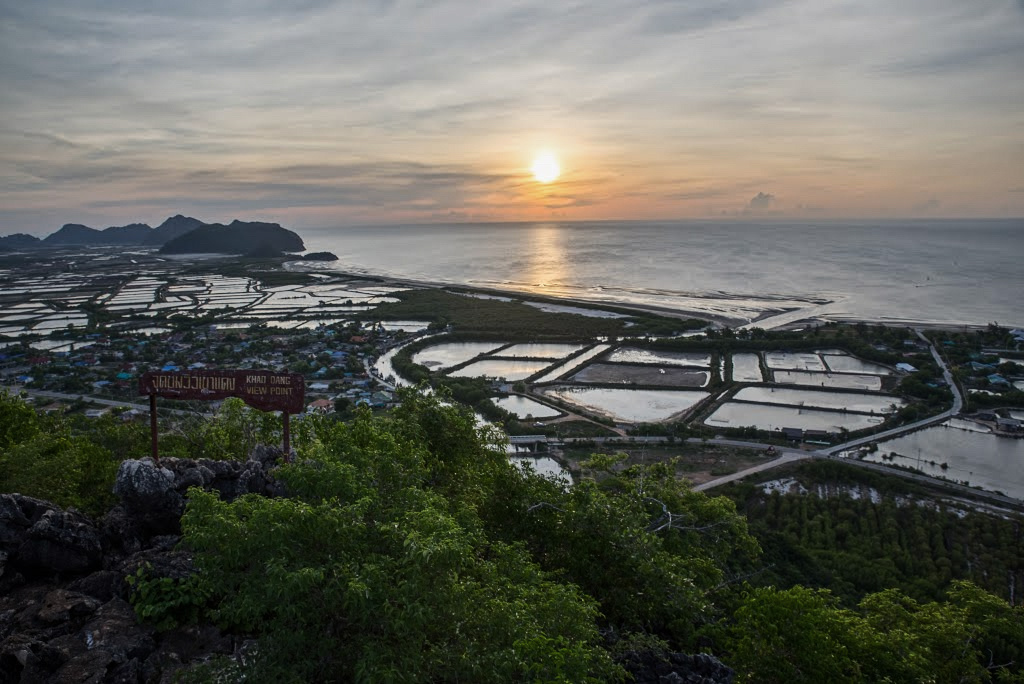 Thaitop.co
The most visually complete ending a day in a national park has any right to offer. And then the boat clears the canyon bend.
When you're sitting in the cave, the pavilion catching its daily ration of light, legs still processing the staircase, cool air doing its work on the sweat from the past two hours — here's the thing that settles in quietly: this stays peaceful because it costs something.
The hike filters the unmotivated. The longtail boat schedules filter the impulsive. The lack of luxury accommodation inside park boundaries keeps development at bay. The "inconvenience" of being sixty kilometres past where most tourists stop is doing conservation work every single day without anyone organizing it. Sacred spaces need protecting. Sometimes the most elegant protection is simply requiring people to want it enough to climb for it.
Khao Sam Roi Yot has been operating this policy since 1966. The pavilion has been operating it since 1890. Neither is changing the terms, and neither should.
The day you'll have here — cave at 10:30 AM, marsh in the afternoon, canyon at 4:30, prawns in Bang Pu after — is a complete thing, a day with a beginning, middle, end, and a full emotional arc running through it like the limestone runs through this park. Exertion and release. Grandeur and gentleness. The tham bun and the sa-ngop. The mountain and the water. You arrived at Laem Sala Beach this morning and you've been climbing toward something ever since. The light was always there. It just required you to show up.
From Bangkok: 3.5–4 hours by car, Highway 4 south · Or bus to Pranburi/Hua Hin then taxi south (฿200–400)
From Hua Hin: 60km south, 1-hour drive · Hire a driver for the day (฿1,200–1,800) — strongly recommended
Motorbike from Hua Hin: Possible for experienced riders; highway riding required. The day involves enough physical challenge already — plan accordingly.
No reliable public transport to park gates. Private transport is not a luxury here; it's the logistics.
November–February: Ideal — cool temperatures, lower humidity, peak bird migration at the marsh, the best light window conditions for the cave (10:30–11:30 AM most reliable).
March–May: Doable, hot. Start the cave hike no later than 7:30 AM or the heat becomes the story rather than the pavilion.
June–October: Wet season — lush, atmospheric, some trail sections slippery; longtail boats may be weather-affected. Marsh is dramatic; cave accessible but prepare for muddy trails.
Park entry: ฿200 adults / ฿100 children (foreigners) · Thai citizens ฿40/฿20 · Valid all day across all park sites
Longtail boat (Bang Pu → Laem Sala): ฿200–300/person return
Marsh boat rental (wooden skiff): ฿100–200/hour
Evening canyon cruise: ฿300–500/boat · Negotiate at Wat Khao Daeng pier
Camping: ฿30/tent spot (book ahead on weekends)
All-in daily budget: ฿500–900. The experience-to-baht ratio remains genuinely embarrassing.
Do not make loud noise inside Phraya Nakhon Cave. The acoustics are extraordinary. Other visitors are having experiences. Bats are minding their own business. The cave is not a performance space. Whisper, or better yet, simply be quiet. The cave rewards both.
Do not feed the macaques or dusky langurs. They will escalate this transaction in directions you will not enjoy and cannot easily reverse. They're watching you from the moment you arrive. They have noticed your bag. The answer is no.
Stay in Pranburi town (15km north) for considerably better value than Hua Hin. Easier 6 AM departure for the cave timing. Sam Roi Yot town market for fresh seafood and the local morning food scene that makes hotel breakfasts look like a category error.
Made it to the pavilion during the golden light? Tell us — did you actually gasp, or are you the composed type who simply nodded appreciatively while internally losing your mind? Share your cave moment, your marsh birds, your canyon sunset. We read every one. ⛰️