
The Elephant
in the Room.
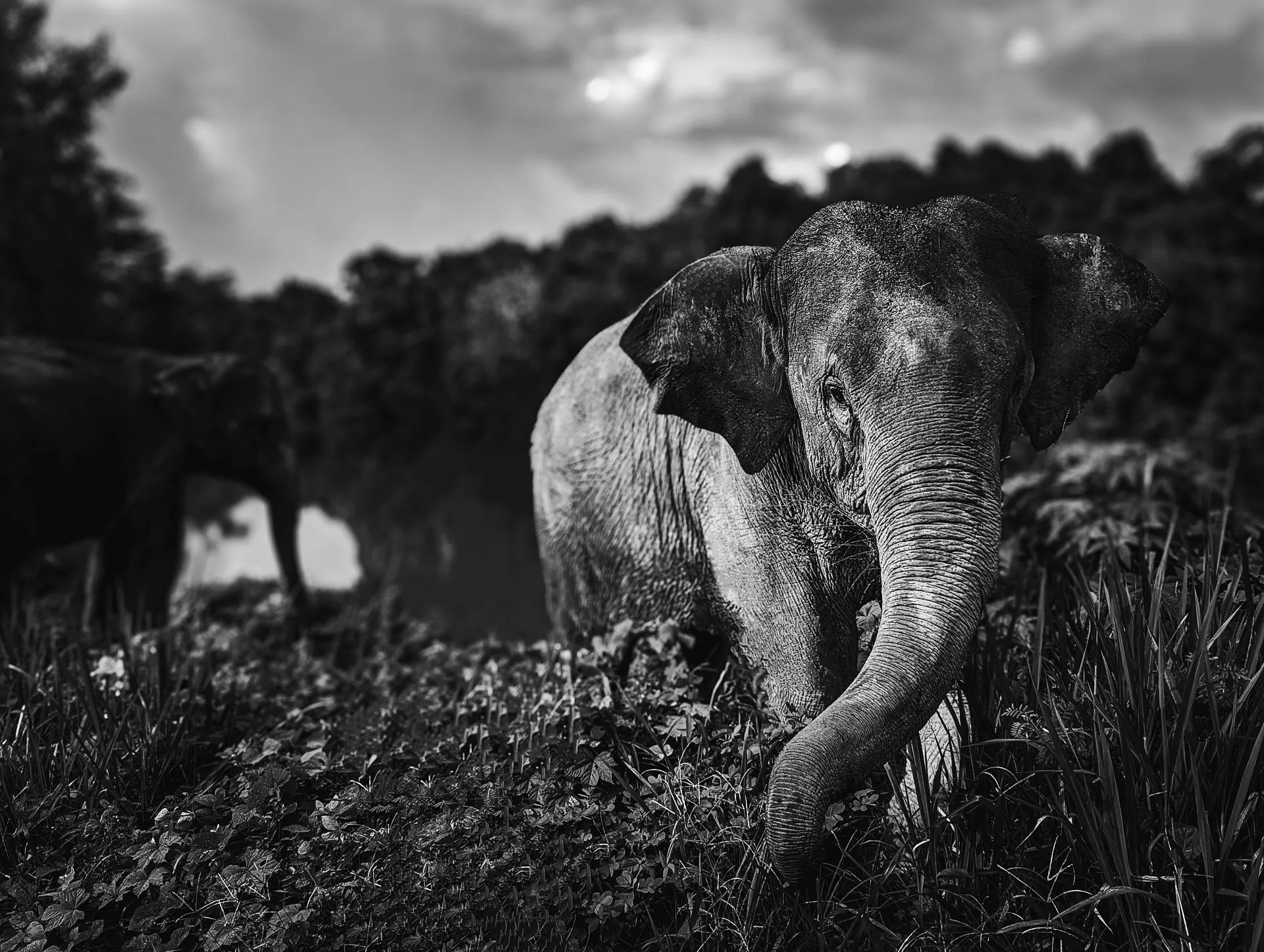
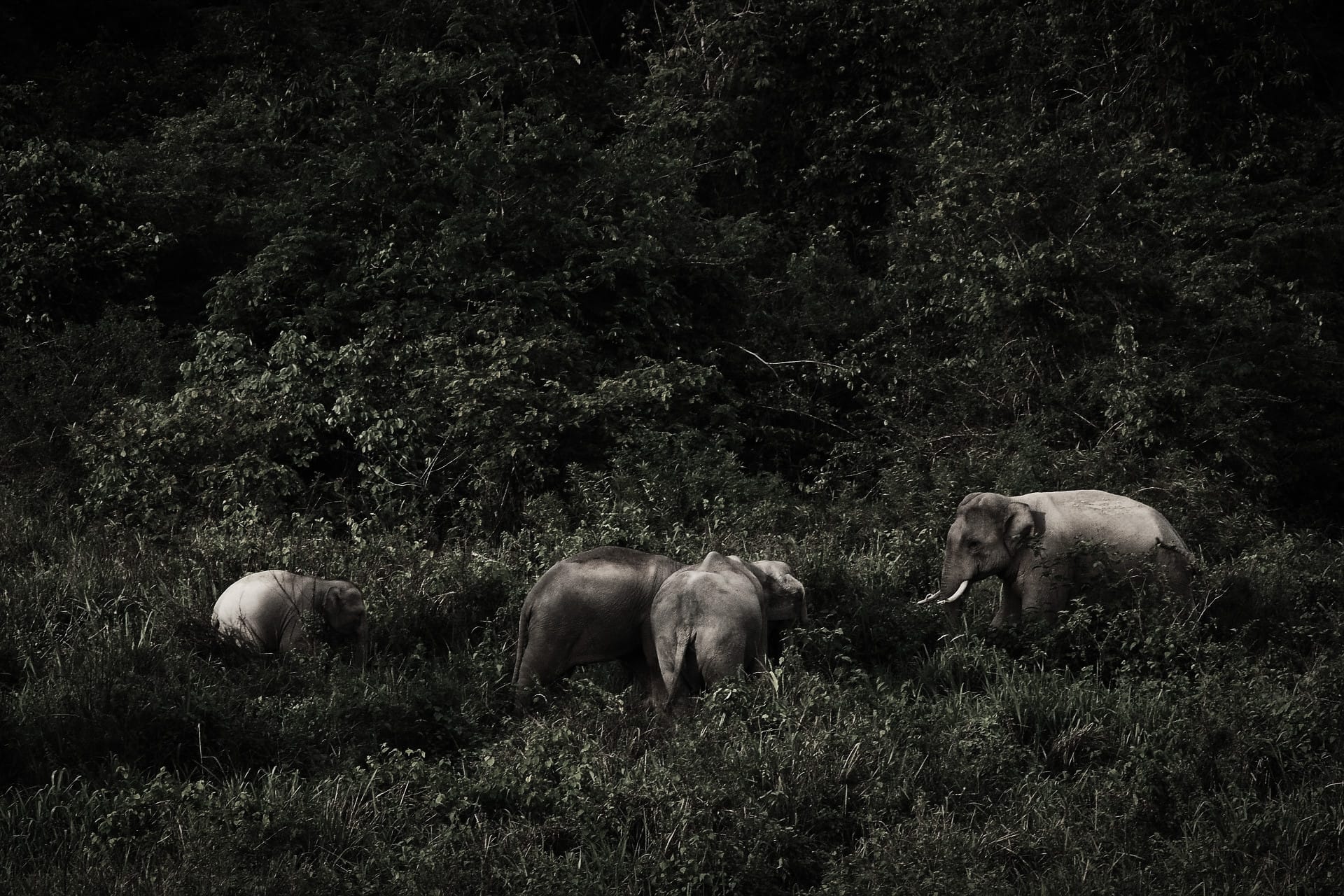
There's a moment that happens to almost every visitor at a genuine elephant sanctuary. You're standing at a respectful distance, maybe a little disappointed you can't touch anyone, when a 3,000-kilogram grandmother decides to dust-bathe herself six feet away, completely unbothered by your existence. And something in your chest just... unclenches. That's an elephant being an elephant. Not performing. Not working. Just existing, on her own schedule, for the first time in maybe forty years.
That moment is what we want for you. But we'd be lying if we said the road to it is simple.
Here's the uncomfortable truth: Chiang Mai has more elephant "sanctuaries" than a jungle has mosquitoes, and a good chunk of them are wearing the word like a costume. Riding is still sold. Bathing shows are still marketed as bonding experiences. Baby elephants still get passed around for selfies with a coconut in their trunk. If you've been dreaming about elephants since childhood (and honestly, who hasn't?), you deserve to know the difference between supporting an elephant's retirement and funding her next round of suffering.
This guide is us pulling back the curtain—on what "ethical" actually means, which places genuinely earn that word, and how to have the encounter you came here for without becoming part of the problem you didn't know existed. Chiang Mai is the beating heart of elephant tourism in Northern Thailand, which means it's also ground zero for both the best and worst of what this industry has become. Let's sort out which is which.
We're not going to hide from the hard parts—you deserve the real picture, not a sanitized brochure version. But we promise it ends somewhere hopeful, because it genuinely is. Thailand's elephant tourism story isn't finished, and the ending is still being written by people like you, one booking decision at a time.
 Ethical Elephant Tourism · Chiang Mai · 2026
"That's an elephant being an elephant. Not performing. Not working. Just existing, on her own schedule, for the first time in maybe forty years."
Why Ethical Elephant Tourism Matters
(More Than You Think)
To understand where we are, you have to understand where we came from—so bear with us for a quick, unglamorous history lesson.
For centuries, elephants worked. They hauled teak logs through Northern Thailand's forests, and they did it because a trained elephant is basically a bulldozer with a soul. Then in 1989, Thailand banned commercial logging. Overnight, thousands of elephants—and the mahouts (elephant handlers) whose families had cared for them for generations—lost their jobs. No pension plan. No retirement village. Just a very large, very hungry animal and a family that suddenly couldn't afford to feed her.
Tourism filled the gap. And for a long time, that meant elephants traded one form of labor for another: carrying tourists on their backs, performing tricks in shows, painting pictures with their trunks for a crowd's applause. It solved the economic problem. It did not solve the elephant's problem.
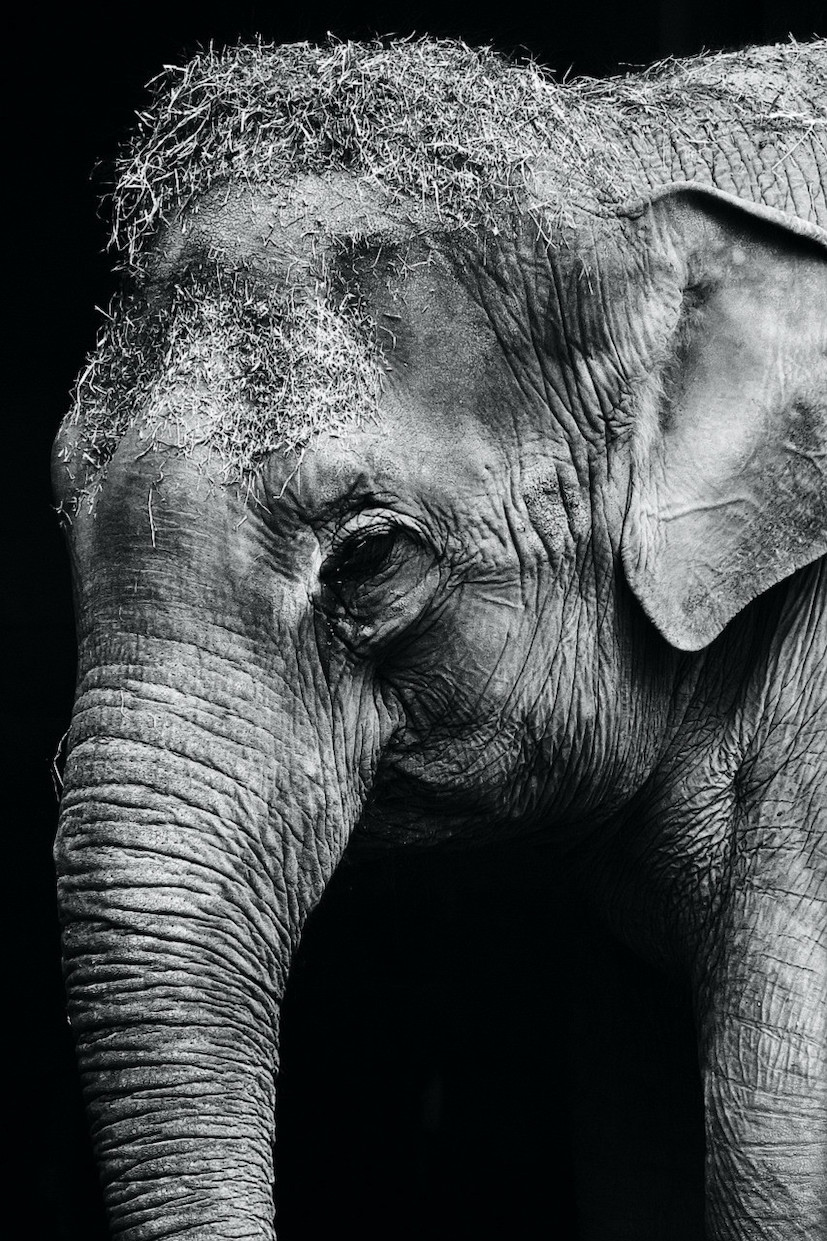
Here's What a Lot of Visitors Don't Realize Is Happening Behind the Friendly Signage
- Riding puts direct spinal pressure on an animal whose back was never built to carry a bench and two tourists, and it requires the elephant to be broken into submission first.
- Chains are still standard at many camps—short chains, for hours a day, on legs built to walk 30+ kilometers daily in the wild.
- Bullhooks (sharp metal hooks used to direct elephants) leave scars most tourists never look closely enough to see.
- Breeding for entertainment keeps the cycle going, producing calves whose only future is another few decades of the same.
- "The crush"—the traditional training process used to make a wild elephant safe for human contact—is exactly as brutal as it sounds, involving forced separation from the mother and repeated beatings until the animal's will is broken.
And here's the part that stings a little: it's not just the obvious offenders anymore. World Animal Protection's most recent Thailand assessment—covering nearly 2,900 elephants across 236 venues—found that 69% are still living in poor or unacceptable conditions, and more than half are kept on short chains during the day. What's changed is the marketing. As riding and circus shows have fallen out of fashion, "bathing" and "caretaker for a day" experiences have surged, dressed up in the language of bonding and love.
The research is blunt about it: bathing, feeding, and touching are only possible because an elephant has already been trained through fear to tolerate it. Only about 7% of elephants surveyed live in the kind of high-welfare, observation-only setting that genuinely puts the animal first.
We're Not Telling You This to Ruin Your Trip
We're telling you because your baht (and your Instagram caption) genuinely moves the needle. When you choose a real sanctuary, you're not just having a nicer morning—you're funding a system where elephants get to retire instead of perform, where mahouts get paid to protect instead of control, and where the next generation of elephants might never know a bullhook at all. That's worth getting right.
There's also a quieter side to this story that doesn't make it into most travel blogs: the mahouts themselves. Many are Karen or other hill-tribe families who've cared for the same elephant lineage for generations—their grandfathers' elephants pulled logs, their fathers' elephants gave rides, and now, if they're lucky enough to work with a genuine sanctuary, their own children grow up learning to read an elephant's mood instead of control her spirit.
Ethical tourism isn't just rewriting the elephant's story. It's giving these families a version of their traditional work that they can actually be proud of again. When we talk about "supporting" a sanctuary, we mean that in the fullest sense—it's an elephant's second chance and a family's dignity, tied together in the same afternoon hike.
"When you choose a real sanctuary, you're not just having a nicer morning — you're funding a system where elephants get to retire instead of perform, where mahouts get paid to protect instead of control, and where the next generation of elephants might never know a bullhook at all."Thaitop · On Why Your Booking Decision Matters
What Makes an Elephant Sanctuary Truly Ethical?
Think of this checklist as your bullsh*t detector. Any place calling itself a sanctuary should clear every single one of these—no partial credit.
Not bareback, not with a saddle, not "just for kids." If riding is on the menu, walk away.
Painting, dancing, playing basketball, "kissing" tourists for photos—all of it requires training methods no ethical sanctuary would touch.
This one surprises people the most, so let's sit with it: leading welfare organizations now consider bathing-with-tourists activities harmful, full stop, because the elephant has no way to opt out. A genuinely ethical place lets elephants choose whether to wade into water near you—not schedules them into a wash cycle for the 11am tour group.
Some working tools may still exist for medical care, but they should never be the mechanism by which you get your photo.
Watch their behavior, not the itinerary. Are they moving naturally through open space, forming their own little friend groups? Good sign.
True sanctuaries exist to give elephants a life after exploitation—not to produce more elephants for the tourism pipeline.
Good guides will tell you exactly where each elephant came from, scars and all, because the truth is the whole point.
If a place fails even one of these, it's not a sanctuary. It's a camp with better branding.
"Sanctuary," "rescue center," and "retirement home" have zero legal protection in Thailand —anyone can slap them on a sign. We've seen venues call themselves sanctuaries while offering bareback riding twenty meters from the entrance. So don't let the name do the convincing for you. Look at the actual activity list on the booking page. If you can select "bathing experience" as an add-on, that tells you more than any amount of green-and-leafy branding ever will.
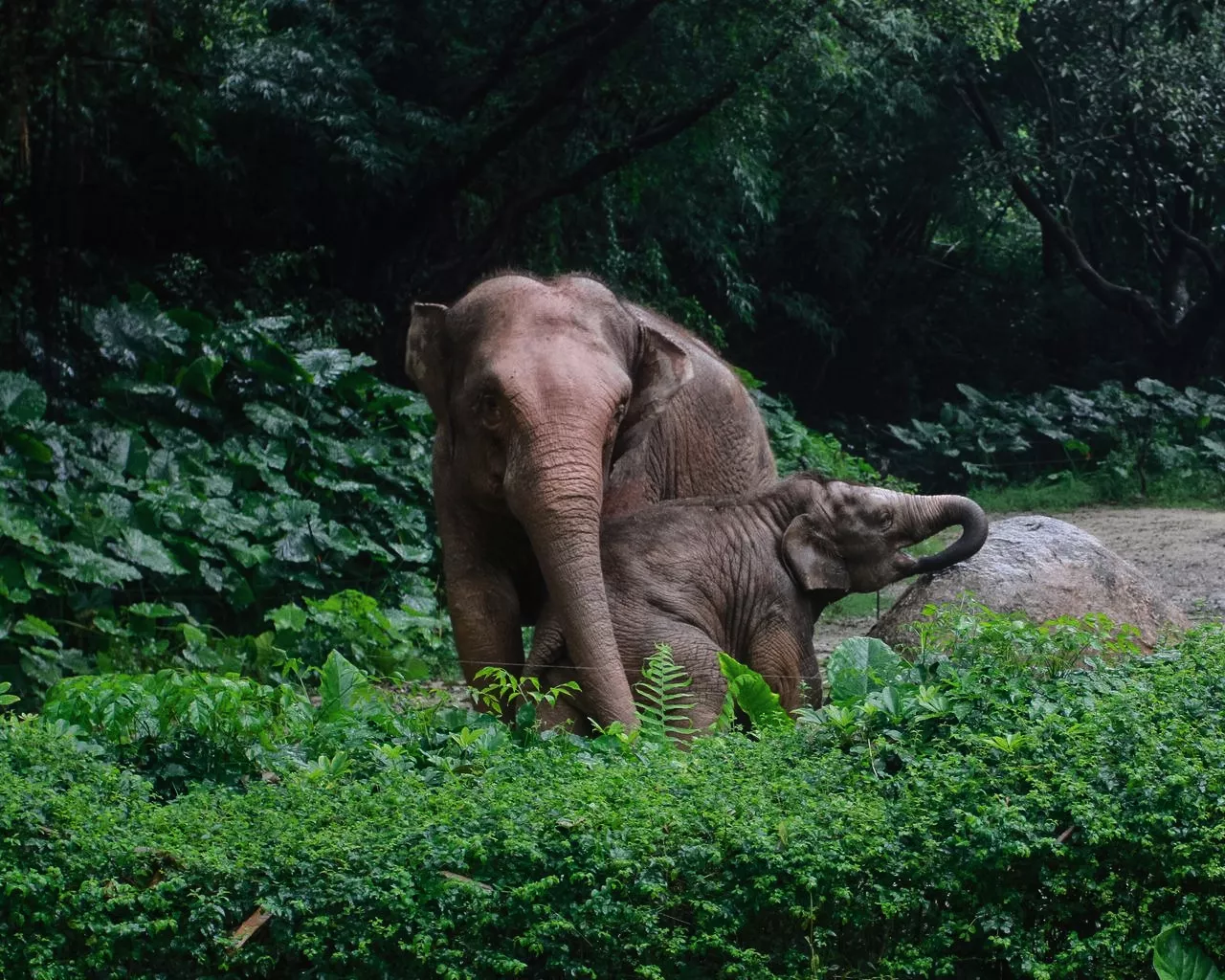
And here's a nuance worth sitting with, because it surprises even seasoned travelers: some places marketed as progressive—offering "hands-on caretaking" or "feeding and light interaction"—genuinely believe they're doing right by their elephants, and compared to the riding camps of a decade ago, they usually are. But "better than terrible" and "actually ethical" aren't the same thing. The gold standard, the one welfare researchers keep pointing to, is observation-only. If an elephant can choose to walk toward you or away from you and either choice is completely fine with the guides, you've found the real thing.
 Observation · Not Performance
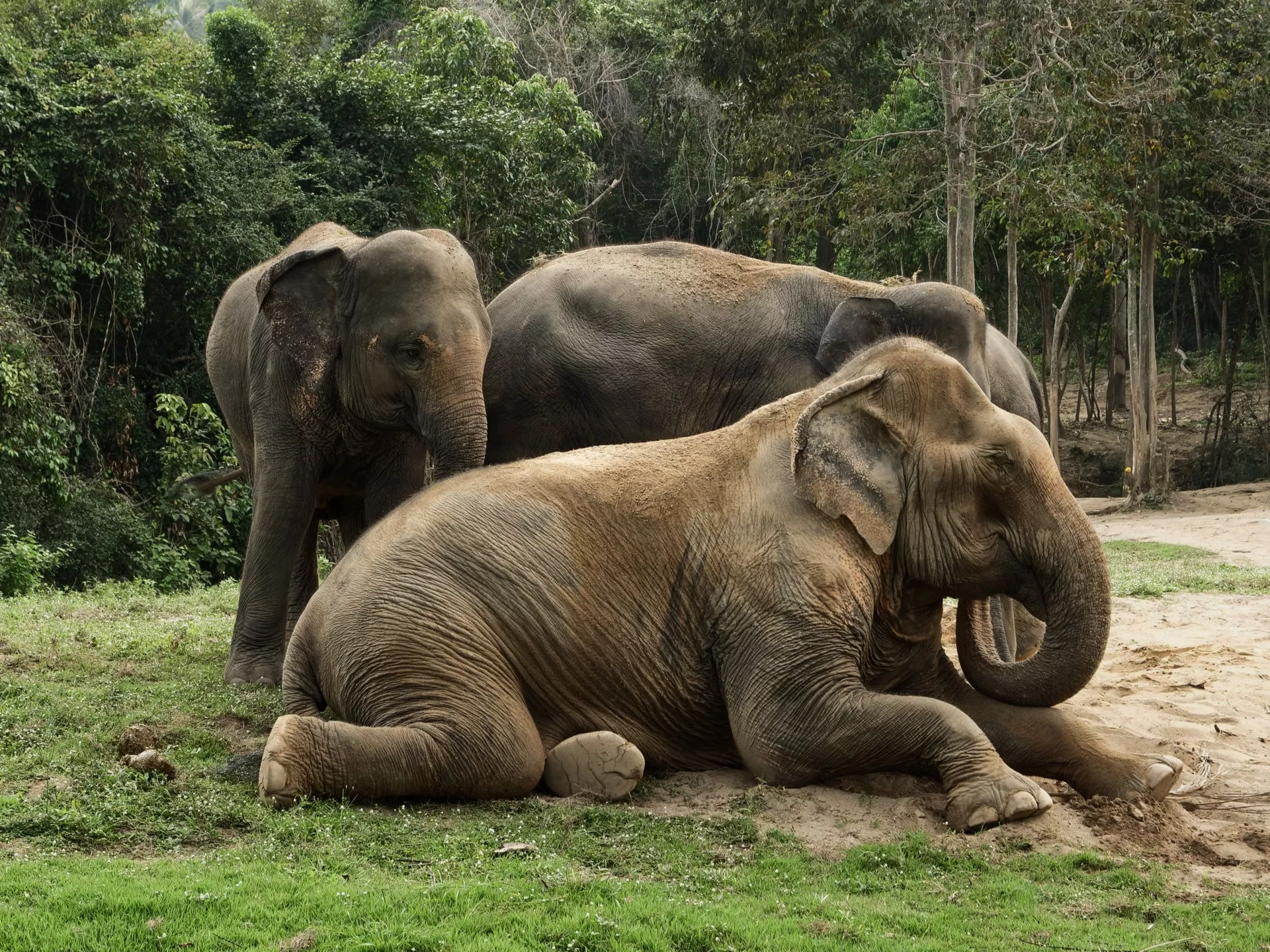 Free to Roam · On Thier Own Terms
The Sanctuaries That Actually Earn the Name
We pulled together the sanctuaries that consistently earn genuine praise from welfare researchers, longtime volunteers, and travelers who've actually done the muddy hike rather than just the marketing tour. Here's how they stack up:
| Sanctuary: SWIPE → | Distance from Chiang Mai | Interaction Level | Key Strengths | Caveats | Recommendation |
|---|---|---|---|---|---|
| Elephant Nature Park (ENP) | ~60 km (Mae Taeng Valley) | Observation + limited feeding | The pioneer—founded by Lek Chailert, home to 80+ rescued elephants, strong education focus, scale to prove the model works | Hugely popular, so book weeks ahead or expect sold-out dates | Highest |
| ChangChill | ~1–1.5 hrs | Strict no-touch | A genuine redemption story—used to offer riding and bathing pre-2017, transitioned fully with World Animal Protection's guidance; small, calm setting | Very limited number of elephants on-site | Very High |
| BEES (Burm and Emily's Elephant Sanctuary) | ~2.5–3 hrs | Strict observation only | Deeply immersive multi-day stays, family-run with real heart, one of the few Thai sanctuaries formally recognized by World Animal Protection | No day trips—you're committing to at least one overnight | Very High |
| Kindred Spirit (KSES) | ~4–5 hrs | Observation only (guided hikes) | True forest freedom for the elephants, deep partnership with the local Karen community, real conservation research happening on-site | Multi-day only, genuinely remote—not a spontaneous add-on | High |
A quick honest note: "highest" here doesn't mean "best day out." It means closest to what an elephant would actually choose for herself if she could. The further you get down this table, the more remote and immersive the experience becomes—which for a lot of travelers is exactly the draw.
Three Sanctuaries,
Three Stories
Elephant Nature Park deserves a bit more context, since it's the name most people already know. Founded by conservationist Lek Chailert in the 1990s—back when "ethical elephant tourism" wasn't even a phrase people used—ENP has become something like the Ellis Island of elephant rescue in Thailand: nearly every elephant here has a documented history of abuse or overwork before arriving.
The park now shelters over 80 elephants alongside hundreds of rescued dogs and cats (yes, really—once you're rescuing animals, apparently it's hard to stop). Its sheer scale means you'll likely be in a larger group than at the smaller sanctuaries, but it also means ENP has the resources and reputation to keep pushing the entire industry toward better standards.
Interaction: Observation + limited feeding · Recommendation: Highest · Book weeks ahead during high season (Nov–Feb) · 80+ rescued elephants · Founded by Lek Chailert · elephantnaturepark.org →
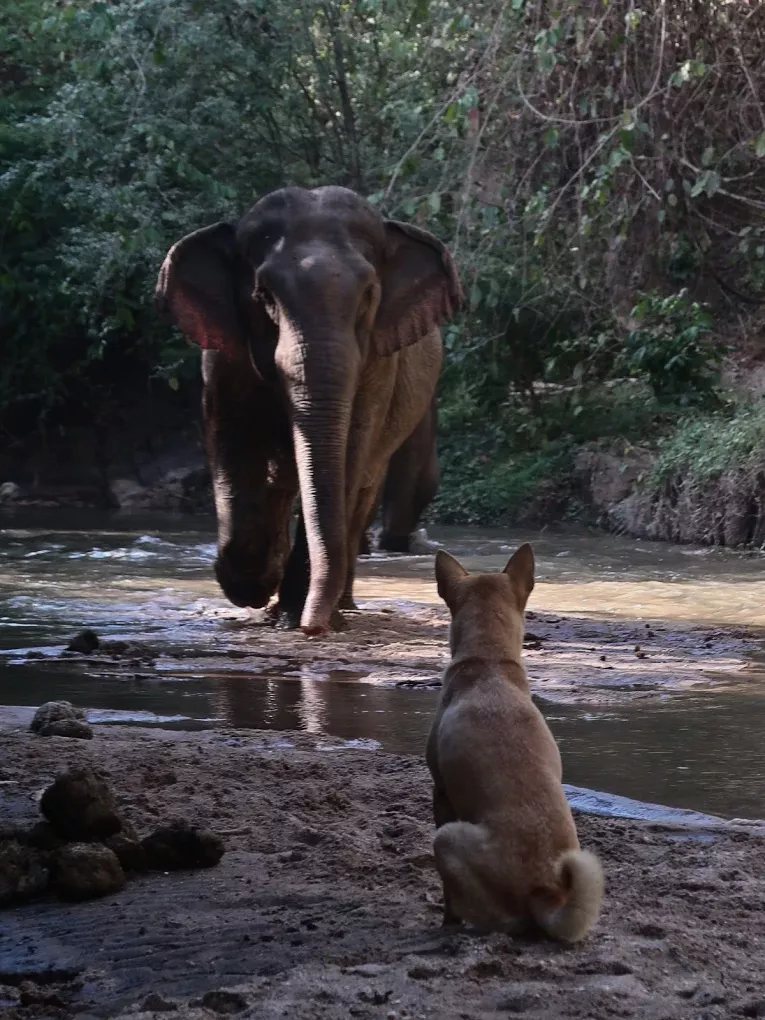
BEES, on the other hand, feels like the opposite end of the spectrum—intimate, slow, and deeply personal. Founded by Emily Rose McWilliam and her Thai partner Burm Pornchai Rinkaew after Emily witnessed conditions at a tourist camp that she couldn't unsee, BEES is now one of the small number of Thai sanctuaries formally recognized by World Animal Protection.
There's no day-trip option here on purpose—Emily and Burm want you to slow down enough to actually understand what you're looking at, not just photograph it.
Interaction: Strict observation only · Recommendation: Very High · No day trips — minimum one overnight · Formally recognized by World Animal Protection · Family-run with real heart ·
bees-elesanctuary.org →
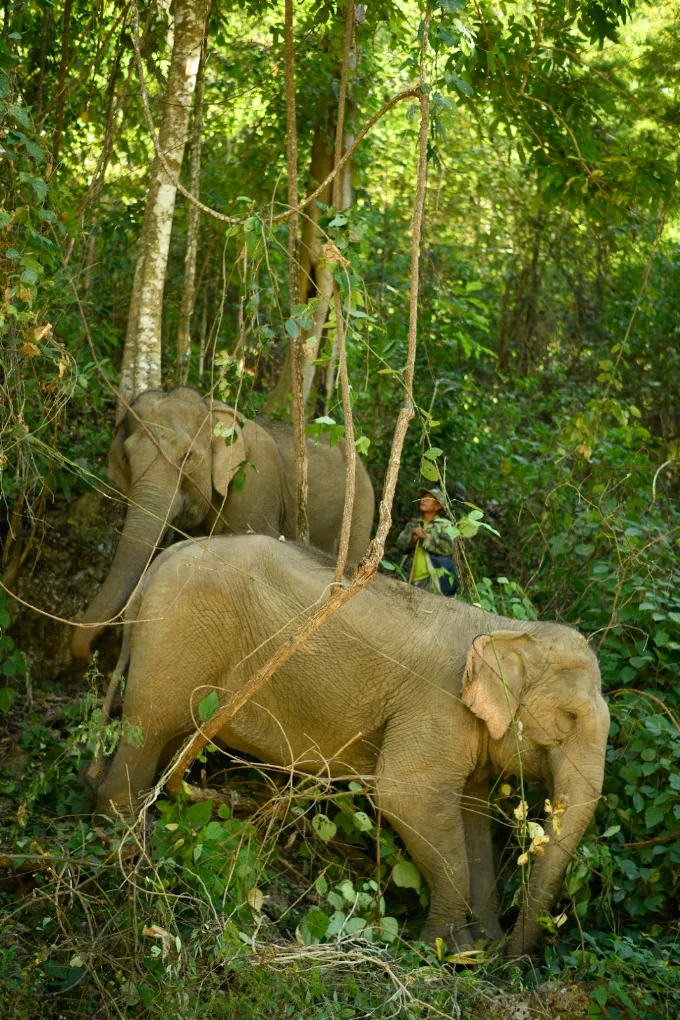
Kindred Spirit takes the immersion even further, doubling as an authentic Karen village homestay. You're not just observing elephants here—you're staying with a Karen family, learning their relationship to the forest and the animals within it, and often joining actual research on semi-wild elephant behavior.
It's remote enough that "spontaneous visit" isn't really a category that exists, but for travelers with the time, it's often described as the most profound of the bunch.
Interaction: Observation only (guided hikes) · Recommendation: High · Multi-day only · Karen village homestay included · Genuine conservation research on-site · Genuinely remote · kselephantsanctuary.com →
What to Actually Expect When You Visit
Let's demystify this, because "no touching" makes some people picture a boring day of squinting at elephants through binoculars. It's the opposite.
- You'll prepare food. Chopping watermelon, rolling herbal medicine balls, hauling baskets of bananas—this is where you build a relationship with an animal, not by touching her, but by feeding the life she gets to have now.
- You'll walk, not ride. Trekking alongside elephants through forest and river as they forage is, frankly, more thrilling than sitting on top of one. You get to watch how an elephant actually moves when nothing is controlling her.
- You'll hear the backstory. Every rescued elephant has one, and good guides don't sanitize it. You'll learn names, ages, old injuries, and the specific camp or logging operation they came from. It's heavy in the best way—it turns "an elephant" into "Mae Boon Ma, who worked illegal logging for 30 years before she was rescued in 2019."
- You might not get a close-up photo, and that's the point. If your itinerary promises guaranteed trunk hugs, that's a red flag dressed up as a perk.
- You'll probably cry a little, and nobody will judge you. Seriously. Between the rescue stories and the sight of an elephant finally moving without a chain in sight, it happens to more visitors than you'd think—guides usually have tissues on standby for exactly this reason.
- You'll likely meet mahouts who know each elephant intimately. Ask them questions. Most genuinely want to talk about the animals they've spent years learning to read—their personalities, their friendships within the herd, their quirks. Elephants, it turns out, hold grudges and make best friends just like the rest of us.
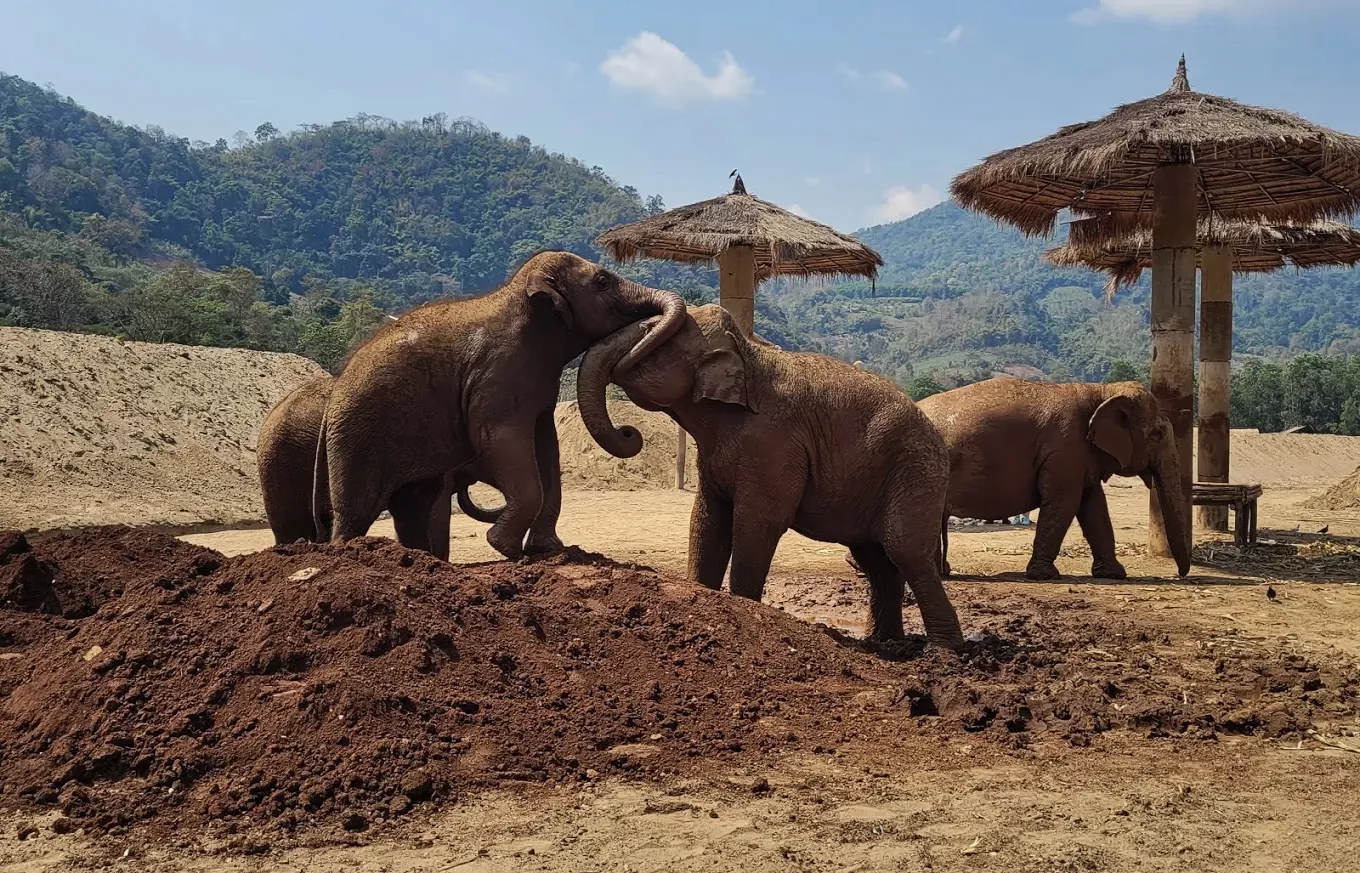
A day at a genuine sanctuary tends to move at the elephant's pace, not the tour bus's. Mornings are for food prep and observation as the herd wakes up and starts foraging. Midday often means a break during the worst heat (elephants are smart enough to nap through the sun; we should all be so wise). Afternoons bring the walk or hike, watching elephants interact—play-wrestling, dust-bathing, mud-wallowing, the occasional dramatic standoff over a particularly good patch of banana trees.
It's less "wildlife encounter" and more "spend a day quietly falling in love with a very large, very opinionated animal."
"It turns 'an elephant' into 'Mae Sri Nuan, who worked illegal logging for 25 years before she was rescued in 2005.' That's the whole point."Thaitop · On Why the Backstory Matters
Practical Notes
Before You Book
Book ahead, especially for ENP. It regularly sells out weeks in advance during high season (November–February).
Multi-day sanctuaries (BEES, Kindred Spirit) require real commitment—pack for basic accommodation, spotty WiFi, and a rural homestay vibe rather than a resort.
Dress for mud, sun, and river crossings. Closed shoes, quick-dry clothes, and a healthy disregard for how you'll smell afterward.
Skip anywhere offering both "ethical visits" and riding on different packages. A venue genuinely committed to welfare doesn't hedge its bets.
If a price feels suspiciously low, ask why. Genuine sanctuaries have real costs—vet care, land, food (an adult elephant eats roughly 150–200 kg of food a day, which is not cheap).
Read the most recent reviews, not just the highlight reel. Marketing photos can be years old. Recent visitor accounts—especially ones mentioning specific policies like "no bathing allowed" or "elephants roam free"—are far more reliable than a polished homepage.
Consider visiting during shoulder season (October–December) if you want smaller groups. It's Chiang Mai's sweet spot: comfortable weather without the peak-season crowds, which also means the elephants get a calmer day. For how this fits the rest of your trip timing, our Thailand planning guide covers Thailand's seasons in full.
Bring cash for small local vendors near the sanctuaries. Many are family-run operations woven into surrounding villages, and a few extra baht spent on snacks or handicrafts on the way helps the whole community that makes ethical tourism possible.
One more thing worth knowing: reputable sanctuaries won't push you to add on activities that don't sit right with your gut. If a booking page is trying to upsell you into "just a little bit of bathing" or a "special VIP touch experience," that's the industry's old habits creeping back in through the side door. Trust the instinct that brought you to this guide in the first place.
The Ending Is Still
Being Written
We won't pretend this industry has fully turned a corner—it hasn't. But we will say this: every single visitor who chooses observation over riding, who asks the awkward question about bathing policies before booking, who picks the sanctuary over the show, is quietly rewriting what elephant tourism gets to look like in Thailand.
You showing up informed isn't a small thing. It's the whole mechanism by which this gets better.
So go. Watch a grandmother elephant dust herself off in the afternoon light, learn her name and her history, and leave your baht somewhere it actually helps her live the rest of her life the way she was always meant to—on her own terms, at her own pace, finally just being an elephant.
Thailand's elephant tourism story isn't finished. The ending is being written by people like you, choosing carefully, one visit at a time.
Ready for Your Next Move?
Every experience Thaitop recommends passes the same test as this guide: would we take our own mother there? Would we be proud to explain exactly what happens and why? If yes — it makes the list.