
When Chiang Mai
Finally
Lets Go.
Updated date: September 25, 2026.
If you've read our Loy Krathong vs Yi Peng guide, you already know the difference between the festival that floats and the one that flies. Good. Consider that your orientation. This is the part where we actually take you home with us. And if this is your first real introduction to the city itself, our Chiang Mai travel guide is the fuller picture — the neighborhoods, the pace, the reasons we never left.
Because here's what almost nobody tells you about Yi Peng in Chiang Mai: the version most travelers experience — one paid ticket, one synchronized lantern release, one perfect photo — is real, but it's roughly 5% of what's actually happening in this city on these nights. The other 95% is unfolding quietly in temple courtyards, bamboo groves, and front-yard lantern arches all over the Old City, completely free, and largely untouched by tourist itineraries. We'd know. Some of us grew up here.
And here's the part that matters more than the ratio: the paid version isn't wrong, exactly. It's just one moment, pulled out of a sequence that took days to build up to. Skip straight to it and you get a beautiful photo. Follow the sequence — the way we actually do — and you get the reason that photo means anything at all.
This is our full insider's guide to Chiang Mai Yi Peng 2026 — the seven stages that make up the real festival, where to actually go for each one, a full evening walking route, what to skip, what to wear, and how to spend one of Chiang Mai's most beautiful nights the way people who live here actually spend it.
What Is Yi Peng?
(And Why It's Not Just
"The Lantern Festival")
Yi Peng ( ป๋าเวณียี่เป็ง ) is the full-moon tradition of the second month of the Lanna lunar calendar — older than the city that celebrates it, deeper than any single image can hold. At its honest core, it comes down to four words: Faith · Light · Letting Go · Community. Not four themes for a travel guide. Four reasons this tradition has stayed meaningful for over 700 years.
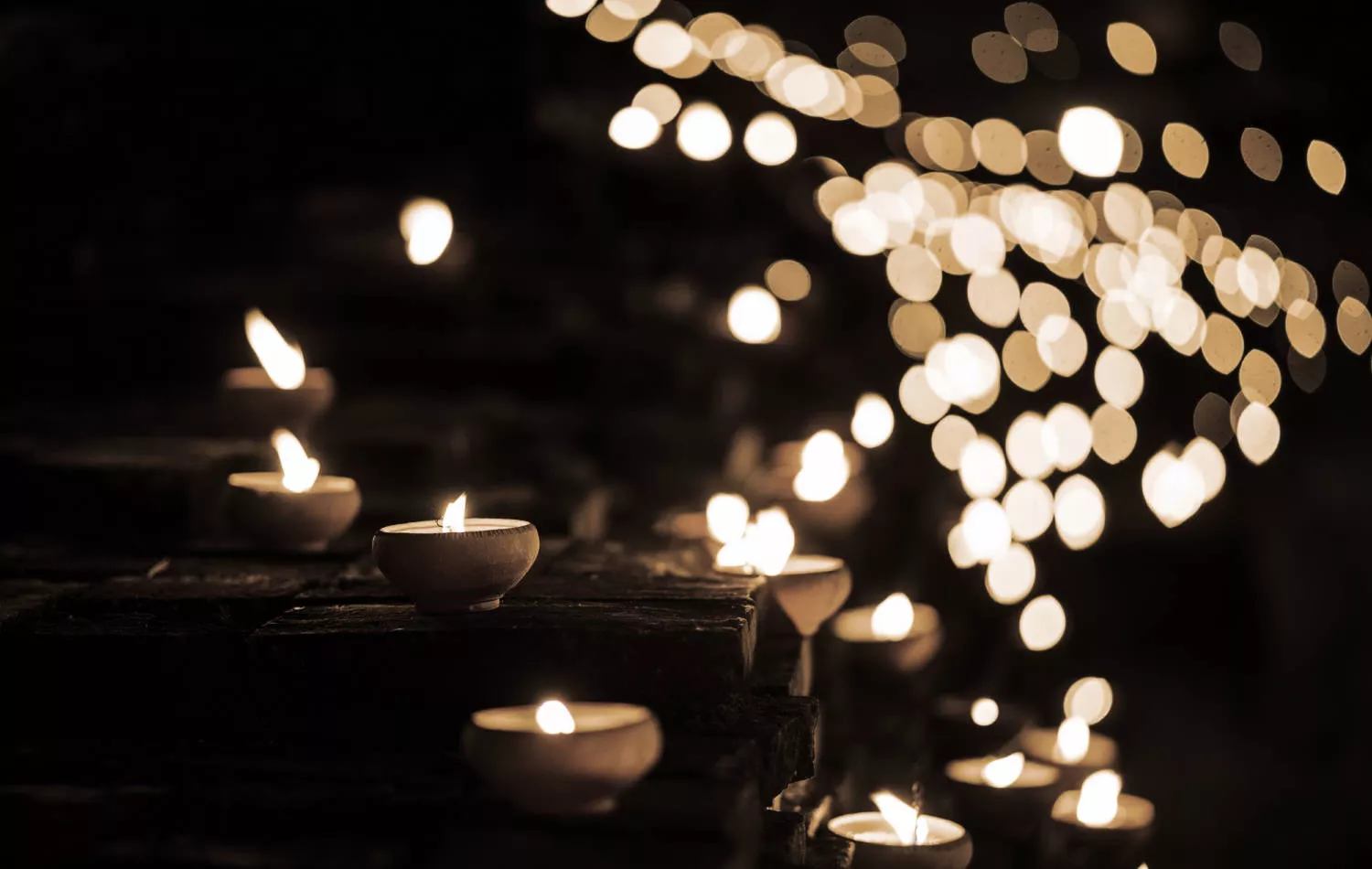
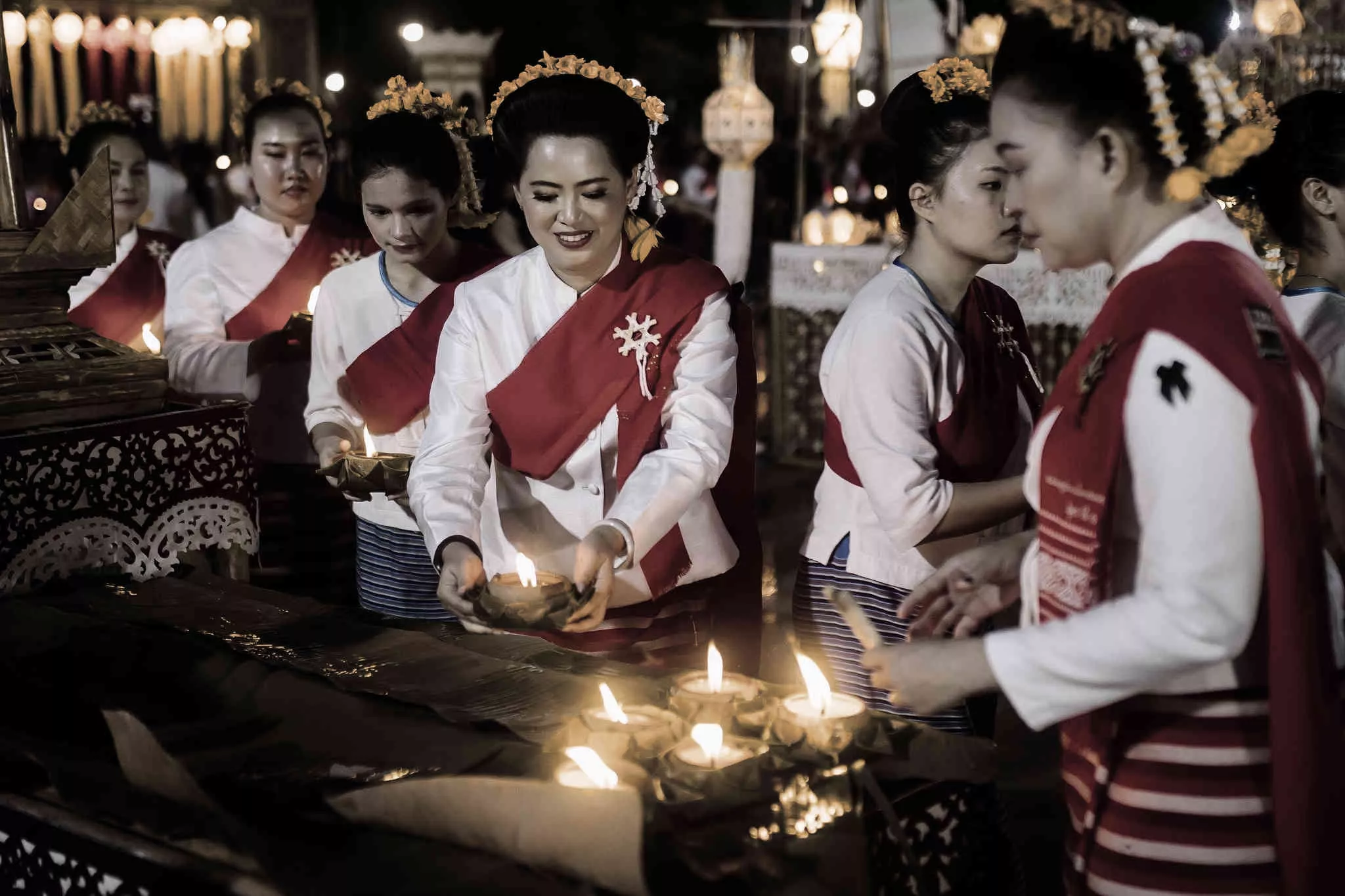
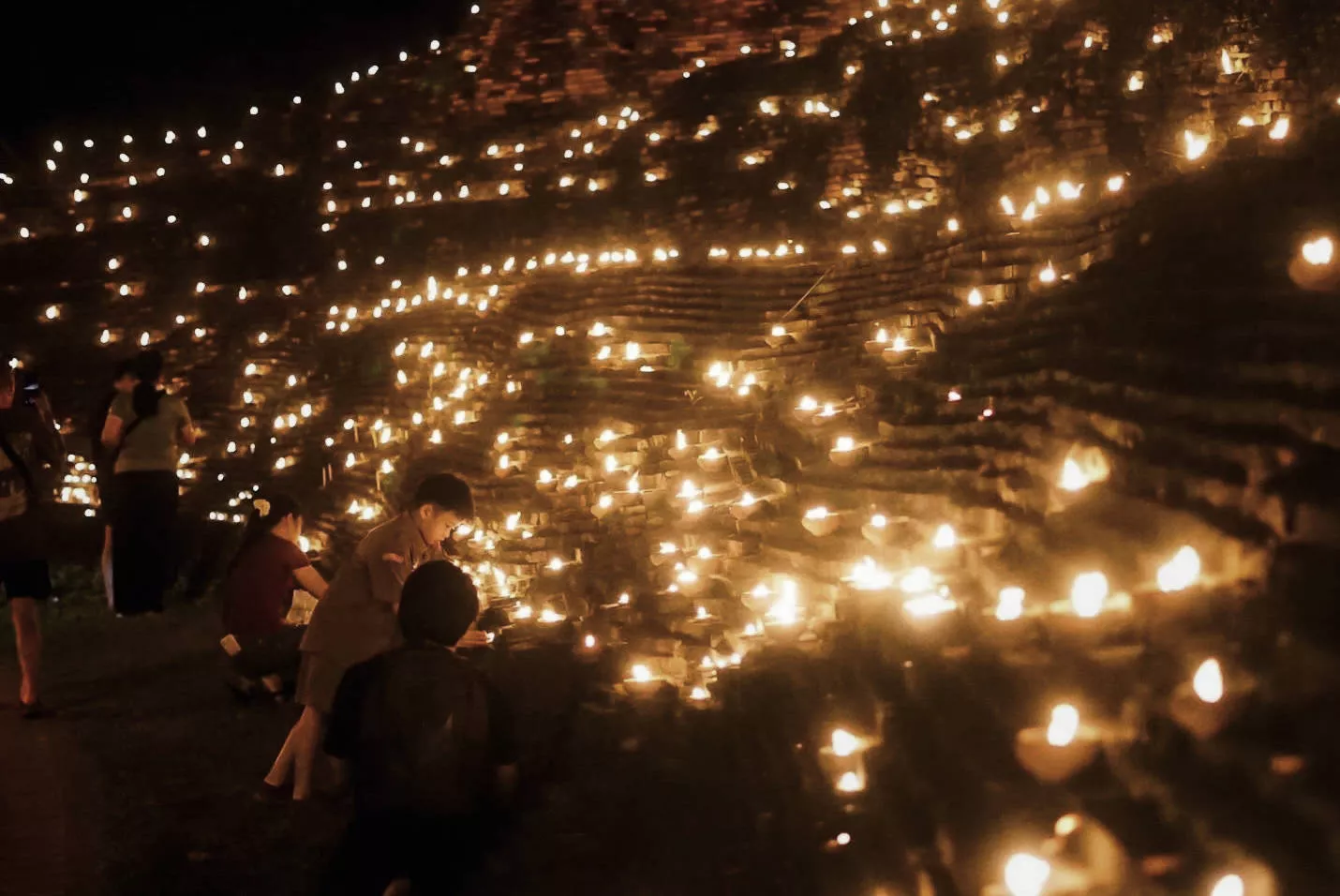
Faith is where Yi Peng begins — going to temples, making merit, offering alms, listening to sermons that connect the living to something much older than themselves. Light fills every corner deliberately: Phang Pratheep oil lamps lining temple walls, Khom lanterns strung across doorways, candles flickering along the ancient city moat — each one carrying the same quiet meaning: brightness over darkness, goodness over misfortune, chosen together. Letting Go is the most personal moment — no ticket, no countdown, no instructions. Just a person, a flame, and a quiet decision to release something they've been carrying and watch it drift away. And Community is what most visitors, rushing toward the lantern release, accidentally walk past entirely: neighbors building archways together, families reuniting at temple grounds, children learning from grandparents who learned the same way, villagers cooking and making merit side by side. Yi Peng is a festival of people far more than lanterns. The sky fills with light because the community chose — together, deliberately — to light it.
 ยี่เป็ง เชียงใหม่ · Old City, Chiang Mai
"The community is what gives
Yi Peng its heart."
Yi Peng 2026 Dates:
When Is It, and What
Happens Each Day
Official Yi Peng is expected around November 24–25, 2026 (the full moon of the 12th Lanna month), per the lunar calendar. But here's the thing locals know and most guides skip: the real Yi Peng doesn't start on the full moon. Local and temple activity — preparation, house decorating, early merit-making — begins days earlier. If you only arrive for the official dates, you'll catch the peak, but you'll miss the build-up that makes the peak mean anything.
Yi Peng at a Glance
| When | What Lanna People Traditionally Do |
|---|---|
| Before the Full Moon | Make forest gates, lanterns, tung, and Phaang Prateep |
| 14th Lunar Night | Prepare offerings, decorate temples, begin merit-making |
| Full Moon Day | Visit temples, make merit, pray, listen to sermons |
| Full Moon Evening | Light Phaang Prateep and decorate homes and temples with lanterns |
| Nighttime | Enjoy community celebrations; sky lanterns may be released where permitted |
| Around the Same Period | Loy Krathong and local northern floating traditions may take place |
| Following Days | Temple fairs, performances, processions, and community activities |
Insider Planning Tip If you can only give this trip one night, make it Nov 24–25 — that's when the sequence hits its emotional peak, with temples, moat, river, and sky all glowing within hours of each other. But if you truly want to understand what you're looking at, arrive by the 22nd and let the sequence build the way it's meant to. Still working out flights and the rest of the shape of your trip? That's what our Thailand trip planning guide is for.
The Moments That
Define Yi Peng
Before we send you deep into the neighborhoods, here's the full lay of the land — the moments and spots that define Yi Peng in Chiang Mai, local-style.
Disclaimer: Expected schedule based on past years & tradition. Not an official 2026 Chiang Mai Municipality announcement — details may change.


08:00–15:00

Khom Loi Release
Note: Sky lantern releases are heavily regulated for safety and not permitted within Chiang Mai's city limits — only at designated, licensed locations, and only between 19:00–01:00.

Same Festival.
Different Chiang Mai.
Lesser Crowds.
If you want to experience Yi Peng in the Old City the way it actually feels to us — gentle, profound, and blissfully uncrowded compared to the Tha Phae Gate crush — these are the spots real Chiang Mai people and craft enthusiasts return to, year after year.
While most visitors wait riverside to float krathongs, plenty of us slip into this temple instead, to listen to the sermon on the merit of lighting phang prateep and join in lighting candles around a chedi that has stood over 600 years. Hundreds of candles flickering against ancient laterite, multicolored lanterns overhead, a cool breeze, and the low hum of chanting — it's the most spiritually quiet version of Yi Peng you'll find in the city.
Its ancient chedi framed by a lantern-strung gate arch, timed right at sunset as the first phang prateep get lit, is about as perfect an opening scene as Yi Peng offers — soft gold light, quiet crowds, centuries-old brick. Come for this alone if you only have one golden hour to spend.
Skip the crowds at Tha Phae Gate or Wat Phan Tao and you'll find this instead: a pond at the temple's center, crossed by a bamboo bridge, doubling every lantern above it in still water below. Colorful Lanna lanterns light up the entrance and pond area come evening, and the whole scene has a hush to it that photographs beautifully without ever feeling staged. The temple's name and history trace back to the royal consecration ceremonies of Lanna kings, using seven sacred water channels ("Ched Lin"), which means lighting a lamp here carries a little more history than most. No processions, no mass releases — just one of the most authentically Lanna corners of the whole festival.
Famous for its golden teakwood viharn, this temple's monks and novices create a small illuminated garden around the pond and bamboo grove during Yi Peng. Watching young novices meditate among lanterns and clay lamps by the water is one of the genuinely iconic, under-photographed scenes of the whole festival.
This isn't a temple, technically — it's an alley in the Old City where residents still decorate their own front gates with banana-stem arches and lines of clay lamps. Wander through, buy a snack from someone's actual front porch, and you'll end up chatting with an elder sitting outside their home. This is what Yi Peng looks like when nobody's performing it for a crowd. Treat it like the home it is, not a backdrop.
This old canal running through the Raeng Kae–Phuak Taem stretch has been beautifully restored in recent years, and during Yi Peng it becomes one of the most peaceful stretches of light in the whole city — lanterns strung along traditional wooden houses, phang prateep set right at the water's edge. It's about as far from a ticketed event as this festival gets, and locals treat it like their own quiet reward at the end of a long evening.
Home to generations of traditional lantern makers, this temple area invites visitors to try "dripping" phang prateep — pouring wax into clay cups yourself. The ancient 52-tiered round chedi, ringed in handmade octagonal lanterns, sits quiet and mostly tourist-free. A rare chance to directly support the artisans keeping this craft alive.
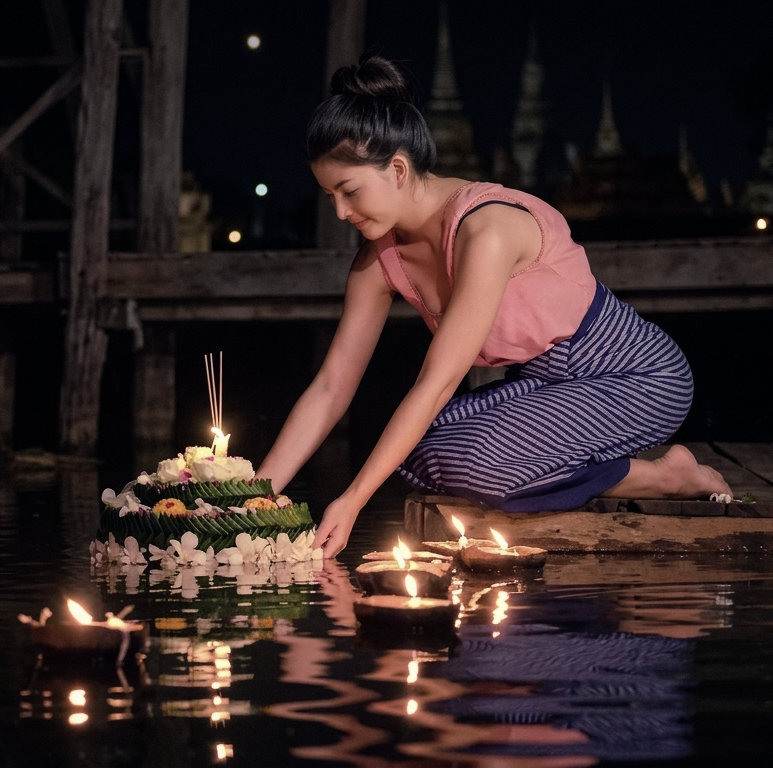
Cross the Ping River to the Wat Ket side and you'll find an old trading community still glowing with warm orange lanterns strung along colonial-Lanna wooden houses. Pay respects at Wat Ket Karam (home to the relic honored by those born in the Year of the Dog), then float a traditional coconut-shell or banana-leaf krathong from the community pier — a genuinely different rhythm from the Nawarat Bridge crowds just across the water.
 วัดพันเตา · Wat Phan Tao
 "The lamps are lit to drive away darkness.
The monks sit still to show you where the darkness actually lives — inside the mind,
not outside the temple."
The One-Evening
Walking Route
This is the exact rhythm we'd walk if you asked us to show you one perfect Yi Peng evening, start to finish — the physical path that connects several of the stages above into a single night. No tuk-tuk needed, just good shoes and no rush.
And a quick word before you start: don't try to see everything. The biggest mistake visitors make with Yi Peng is treating it like a checklist — one landmark, one photo, move on. That's not how we experience it. We visit a temple, make merit, eat something we probably shouldn't have three of, walk with family, and stop when something's beautiful. Let this route bend. It's built to.
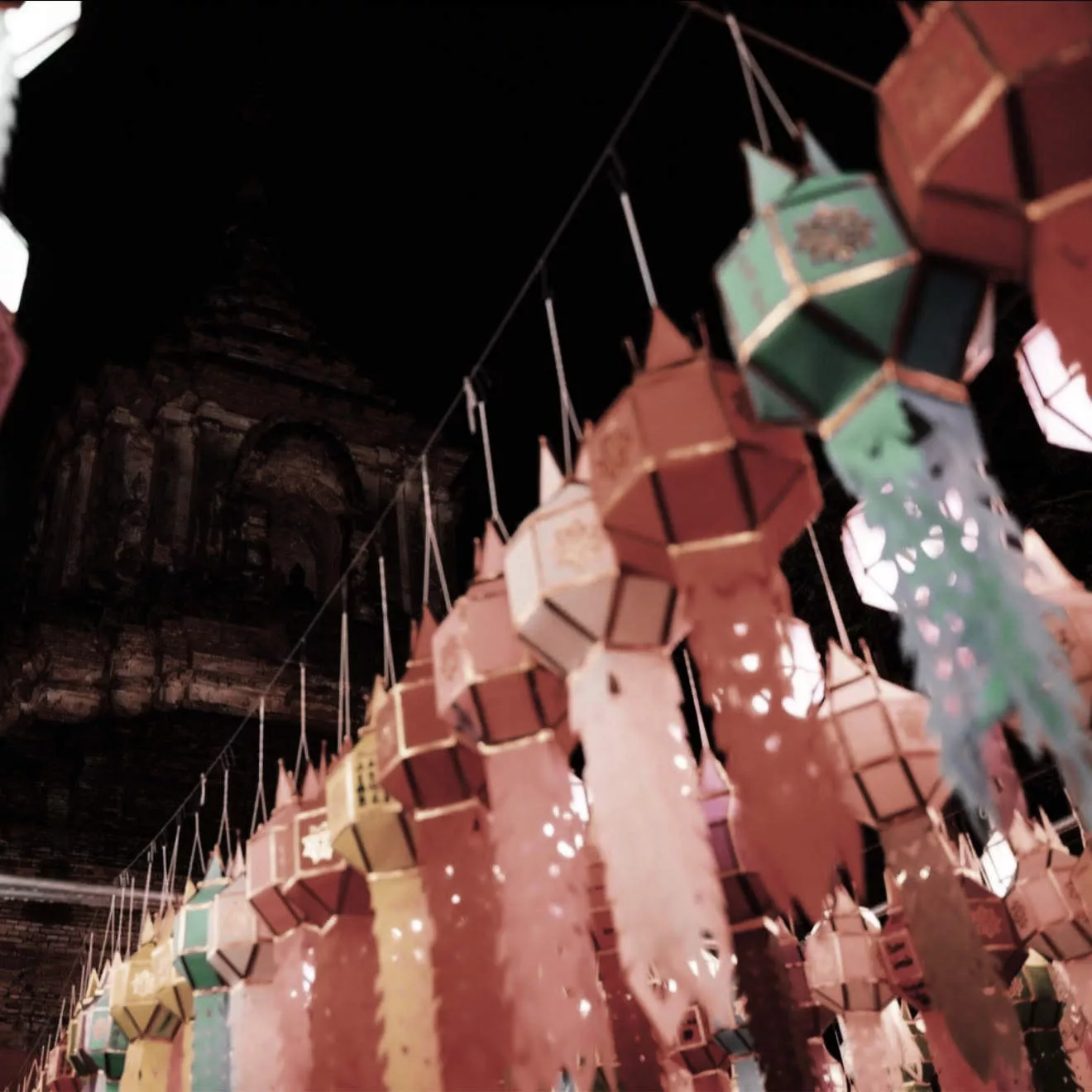
Start at Wat Lok Molee, timed so the sunset disappears right as phang prateep lighting begins around its ancient chedi. This is, genuinely, the most perfect opening scene of the night — the temple gate arch strung with hundreds of hanging lanterns, the light turning soft and gold right as the first flames get lit. From there, walk out to the northern moat wall, where locals and volunteers are just beginning to set long lines of clay lamps along the old brick. Candlelight doubling on the moat's still water, with almost nobody fighting you for the view yet, is one of the quietest, most beautiful moments the whole festival offers — and it's completely free.

Head toward the Three Kings Monument, where the main Lanna Hanging Lantern Plaza comes alive — a proper sky-facing phang prateep ceremony, folk music drifting across the square, and enough gentle chaos to feel like a real celebration rather than a photo backdrop. From here, drift onto Ratchadamnoen Road toward Tha Phae Gate. The road closes to traffic and turns into a full cultural walking street — browse the lantern-strung alleys, grab a snack, and time your arrival at the gate to catch the grand krathong procession rolling past. Duck into a side lane along the way if the crowd gets to be too much — that's where the evening actually gets good. Watch for lanterns going up outside houses, flowers staged for temple visits, families getting ready. This isn't a warm-up act. The city itself is the festival tonight.


This is where we peel off from the crowd entirely. Head to Mae Kha Canal, specifically the Raeng Kae–Phuak Taem stretch — a beautifully revitalized old canal where residents hang lanterns along traditional wooden houses and light phang prateep at the water's edge. It's quiet, warm, and about as far from a ticketed event as this night gets. From there, cross the Chansom Bridge (locals commonly call it "Khua Khaek") toward Wat Ket Karam on the river's far side, float a banana-leaf or coconut-shell krathong from the community pier, and look up — sky lanterns released from farther out will still be drifting silently overhead.
Grab hot, crispy roti at Roti Pa De, a Michelin Bib Gourmand shop near Wat Mahawan, or settle into Vieng Joom On Teahouse — the distinctive pink teahouse by the river — for a slow cup of tea as the current carries the last krathongs past. This is genuinely how we close the night, every year. If it's a temple you stop at instead, stand quietly to the side if a ceremony is underway. You don't need a photo of every beautiful moment — sometimes putting the camera down is the most local thing you can do.
This kind of slow, unscripted evening is what we mean every time we talk about authentic Thai cultural experiences — Yi Peng just happens to be the most beautiful version of it.Best Places to
Float a Krathong
If you ask us honestly — not the tourism brochures — most Chiang Mai locals aren't floating their krathongs at Nawarat Bridge, and they're definitely not paying thousands of baht at a private event ground to do it. We go somewhere quieter.
- Wat Si Khong pier, in front of Chiang Mai Municipality Office, or Nawarat Bridge — the well-known, central spots. Beautiful, but crowded.
- Wat Pa Daet pier (southern Ping River) — an orderly riverside temple scene, locals making merit and floating krathongs at a current that's gentle rather than chaotic.
- Wat Sophanaram pier (Mae Rim district, just north of the city) — quiet, natural, and ideal if you've got family in tow and want fewer elbows around you.
- Wat Ket Karam community pier — smaller community alley piers instead of the main bridge crush, and genuinely friendly greetings from residents who live right there.
Support a 100%
Handmade Krathong
Here's a small thing that makes a real difference: buy your krathong from the people actually making them by hand, not from a middleman reselling factory versions.
- Kad Luang (Warorot Market) and Ton Lam Yai Market — local grandmothers folding fresh banana-leaf krathongs riverside from morning through afternoon, priced around 20–50 baht.
- Kad Pratu Chiang Mai — traditional banana-leaf krathongs assembled with bamboo pins, ready to float with candle and incense already inserted.
- Wat Ket community alleys — residents selling banana-leaf, fresh flower, and traditional coconut-shell krathongs directly from tables outside their own homes.
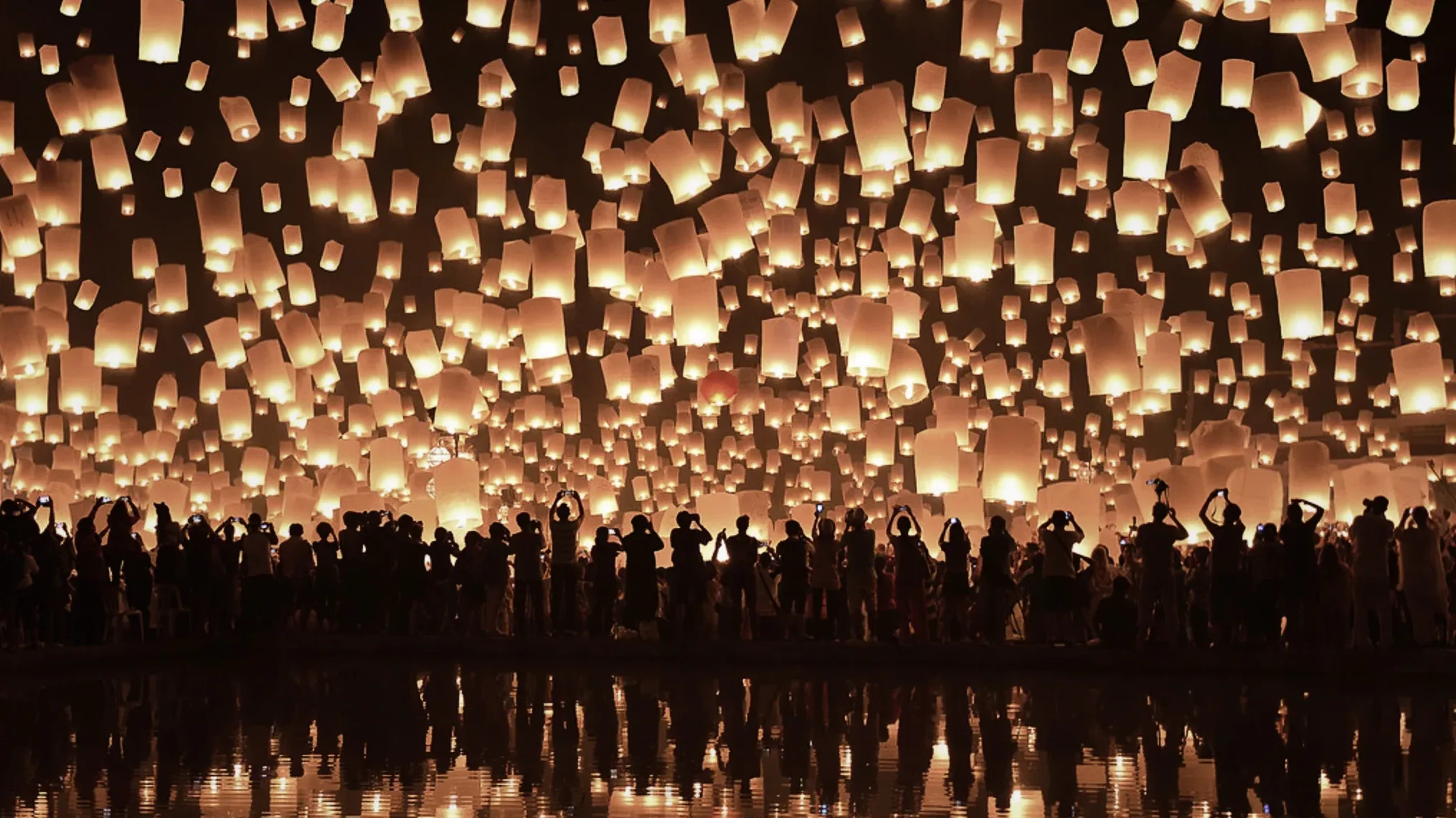 ปล่อยโคมลอยขึ้นสู่ท้องฟ้า
 "In the glow of Yi Peng, you realize that even the smallest flame can illuminate the vastness of the darkness."
Mass
Sky Lantern
Release Events
You'll see two ticketed mass-release events mentioned everywhere online:
Mae On district, ~30–45 minutes out, 20,000+ attendees. Requires advance tickets and sells out early.
Near Mae Jo University, San Sai district, ~18 km out — a quieter religious-ceremony format with around 3,000 attendees. Requires advance tickets and sells out early.
That's genuinely all we'll say about them here — they're not really our scene, and this guide isn't about choosing a ticket tier. If you're weighing whether one is worth booking, we've answered that honestly in the FAQ below. Everything else in this guide is how we actually spend this night.
The closest legal spot to downtown to see a thousand lanterns rising without paying for a ticket is around Mae Jo University in San Sai district, roughly 18 km out — lanterns released from the Tudongkhasathan Lanna grounds (a paid event) fill the sky there most Yi Peng nights, visible well beyond the temple gates themselves.
What to Wear
to Yi Peng
Light, natural-toned cotton — think white, cream, or teakwood brown, or Lanna clothes even better — isn't just about the photos (though, fine, it does look beautiful under lantern light). It's a small gesture of respect toward the temples and communities you'll be walking through. Pair it with flat, easy-to-remove shoes, since you'll be on stone, old brick, and temple grounds most of the night, and comfort matters more than style after hour three. This respect-first approach isn't just a Yi Peng thing — it's how Chiang Mai works generally. Our Chiang Mai guide has the fuller list of local customs worth knowing.
Rules You
Actually
Need to Know
We're going to drop the jokes for one second because this part is genuinely serious: releasing sky lanterns outside of designated times and zones in Thailand carries real legal penalties — fines up to 200,000 baht and imprisonment up to 5 years in restricted areas (think flight paths and high-security zones). And to be completely clear about what that means in practice: basically the entire city of Chiang Mai is off-limits, yes, including within and around the Old City moat. This isn't Thaitop being dramatic. It's aviation safety law.
The safe, legal version is simple:
- Release lanterns only between 19:00–01:00, and only in designated permitted areas
- Use standard-sized lanterns made of natural materials — not oversized or synthetic ones
- Skip the giant firecrackers, especially near temples or crowds
- Respect temple etiquette: modest dress, quiet voices, no photos where signs say not to, no touching monks (yes, even a friendly high-five is a no)
- Respect residents' private space — Lam Chang and Wat Ket are homes, not theme park sets
Yi Peng 2026
Quick Facts
Frequently
Asked
Questions
Yes — but not just anywhere, and definitely not inside or around the Old City moat, which sits within the no-fly zone. The closest legal, free release area to downtown is near Mae Jo University in San Sai district, roughly 18 km out, where public releases happen during permitted hours (19:00–01:00). Releasing anywhere in the restricted zone carries fines up to 200,000 baht and possible imprisonment.
No — and honestly, most of what makes Yi Peng Yi Peng is free. The paid mass lantern releases (like CAD Khomloy) are one polished slice of the festival, maybe 5% of it. The other 95% — temple ceremonies, moat lighting, neighborhood lantern-hanging, krathong floating — costs nothing but showing up. Tickets buy you a specific spectacle. They don't buy you the festival. Curious how festival costs fit into a bigger Thailand trip? See our complete guide to planning a trip to Thailand.
Official Yi Peng falls on November 24–25, 2026, the full moon of the 12th Lanna month. But if you want the real build-up — not just the peak — arrive by the 22nd. Local prep, temple decorating, and early merit-making all start days before the moon is actually full, and that's where a lot of the meaning quietly happens.
Away from Tha Phae Gate, mostly. Our regulars are Wat Chedi Luang, Wat Lok Molee, Wat Jet Lin, and Wat Phan Tao for quieter temple scenes, plus Mae Kha Canal and the Wat Ket community across the river for lantern-lit neighborhoods that aren't performing for anyone. Same festival, same city — just the version we actually grew up with.
Dress modestly in light, natural-toned cotton, keep your voice down near temples, and don't touch monks — not even a friendly high-five. If you wander into a residential lane like Lam Chang or Wat Ket, remember it's someone's home, not a photo set. And when it comes to lanterns: only release where and when it's legal (19:00–01:00, designated zones), full stop. This is the same spirit behind everything in our guide to authentic Thai cultural experiences.
Depends what you're after. CAD Khomloy Sky Lantern Festival (Mae On district) is the big ticketed event — 20,000+ attendees, monk ceremonies, a synchronized mass release that produces the golden-sky photo you've likely seen online. Tickets run roughly 4,900–15,900 baht depending on tier, and sell out early. Yee Peng Lanna International, near Mae Jo University, is the smaller, quieter, more religiously-focused alternative (around 3,000 attendees). Both are genuine, well-run events — just know you're paying for a curated spectacle, not the spontaneous community tradition. If it's the photo you want, CAD delivers. If it's the feeling you want, the free temple-and-community route in this guide will get you there for the cost of a krathong.
Skip Nawarat Bridge — that's where everyone else is headed. We like Wat Pa Daet pier for a gentler current, Wat Sophanaram pier in Mae Rim if you've got family in tow, and the Wat Ket community pier, where you'll get actual conversation from the neighbors selling krathongs off their own front tables.
Light, natural-toned cotton clothing and flat, comfortable shoes — practical for a long night of walking on temple stone and old brick, and respectful of the sacred spaces you'll pass through.
Wat Chedi Luang, Wat Phan Tao, Wat Phuak Hong, and Wat Ket Karam each offer a distinct, less-crowded version of the festival compared to the main Tha Phae Gate crowds.
We Came to Help Keep the City Lit
Coming to Chiang Mai for Yi Peng isn't really about being a tourist — it's about opening your heart to how this city takes care of itself, one small clay lamp at a time. The real festival isn't the ticket you bought. It's the stream of compassion still flowing quietly from temple to home, from neighbor to stranger, across eight quiet stages, exactly the way it has for 700 years.
Come for the lanterns. Stay for the feeling that, for one night, you weren't just watching Chiang Mai glow — you were part of what kept it lit.
For the full story behind these two traditions, don't miss our guide to Loy Krathong vs Yi Peng, and explore more of what makes Northern Thailand's culture so alive in our Authentic Thai Cultural Experiences guide.