Same Moon.
Same Night.
Entirely
Different Thailand
Forget the therapy couch. Skip the four-figure wellness retreat. Once a year, Thailand resets its entire collective soul with nothing more than a hand-carved banana leaf basket, a match, and a river — and honestly, it works better than anything you'll find at a soul detox retreat. It's our national therapy session. But make it gorgeous.
Here's the problem: the internet has thoroughly scrambled the difference between Loy Krathong and Yi Peng into one glowing, Instagram-optimized blur. Sky lanterns, floating baskets, golden skies, candlelit rivers — somewhere along the way, these two separate festivals got mashed together into a single mythical event that doesn't quite exist the way people think it does. We're here to un-scramble the Loy Krathong vs Yi Peng confusion, Thai-insider style, so you can experience the real spiritual magic of both without falling for the overpriced tourist version.
Loy Krathong
vs Yi Peng
Quick version, before we go deep:
| Swipe | Loy Krathong | Yi Peng |
|---|---|---|
| Element | Water | Sky |
| Where | Nationwide | Northern Thailand (Lanna region) |
| Who you're thanking | Phra Mae Khongkha, the water goddess | The heavens, the Buddha, the cosmos itself |
| The feeling | Personal, quiet, a little confessional | Communal, expansive, a full village looking up together |
Here's the mindset shift that actually matters: Loy Krathong is a grounded, reflective apology — think of it as an annual heartfelt text to the river goddess, the kind you'd send after realizing you've been a little too careless with someone all year.
Yi Peng, on the other hand, is a full celestial reset button — less "sorry" and more "here, universe, take this bad energy off my hands entirely."
And in Chiang Mai, something wonderful happens: these two completely separate traditions collide on the same nights, in the same city, creating a double spectacle found nowhere else in Thailand — a glowing river below, a starry sky above, and you, standing in the middle of it, slightly overwhelmed in the best possible way.
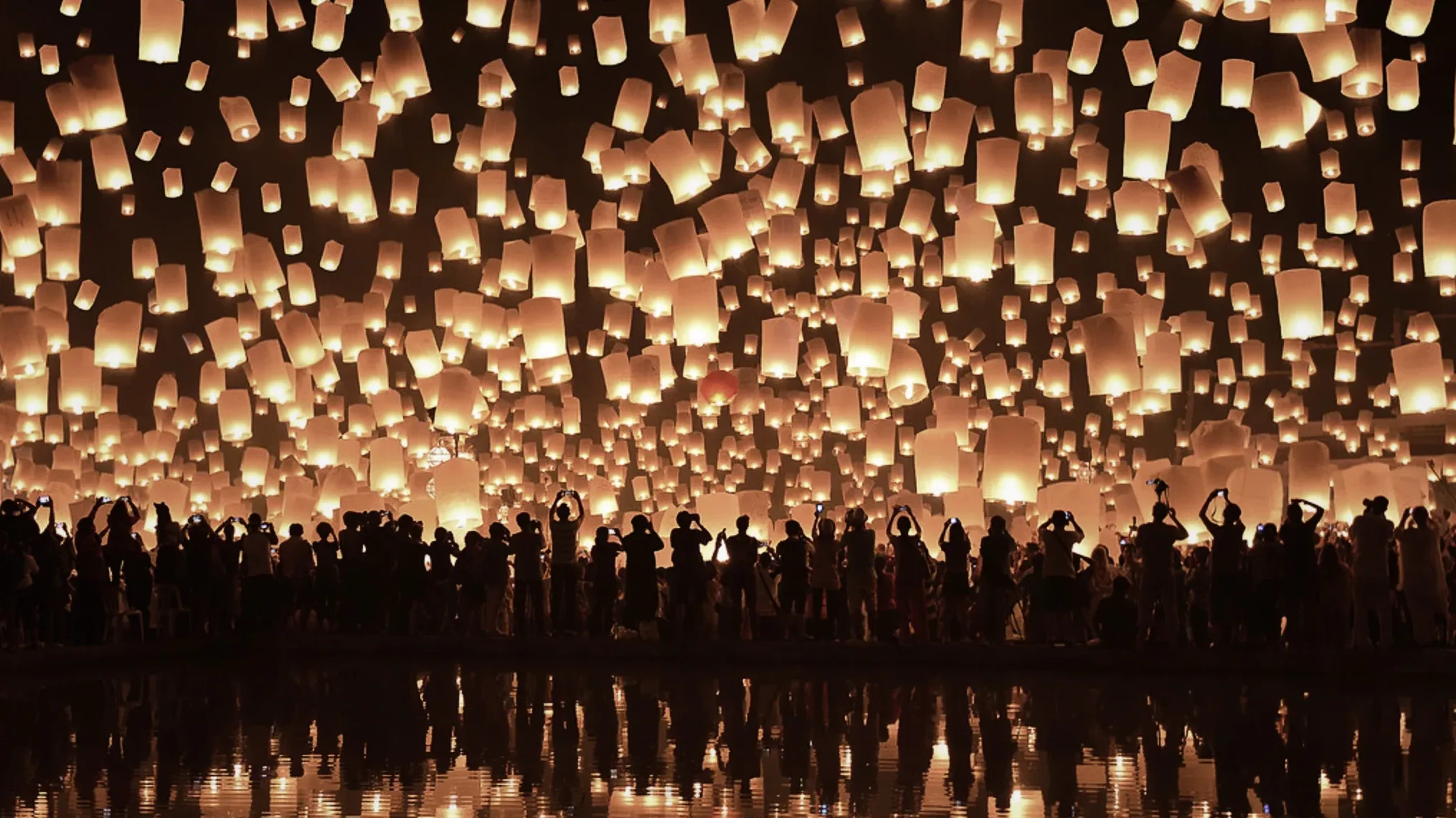 Yi Peng · Chiang Mai · November 2026
"A glowing river below, a starry sky above — and you, standing in the middle of it, slightly overwhelmed in the best possible way."
Why We Even Do This
(Because Nobody Explains It Properly)
For generations, Thai life has revolved around water — rice fields, canals, rivers connecting village to village. Water gave us everything, and also, let's be honest, we didn't always treat it kindly.
Loy Krathong is our once-a-year way of saying thank you to Phra Mae Khongkha for the water that fed us, and sorry for the mess we made of it along the way. You're not just releasing a pretty basket. You're settling a debt.
Rooted in Lanna Buddhist tradition, Yi Peng centers on merit, generosity, and letting go. The sky lanterns floating upward are traditionally understood as offerings of veneration toward Phra That Ket Kaew Chulamanee — a celestial stupa believed to hold sacred relics — while simultaneously carrying away misfortune.
It's less "thank you to one specific goddess" and more "collective spiritual spring cleaning, sent upward instead of into a trash bag."
"It's impossible to float a krathong, watch it drift into darkness, and not feel something shift inside you. That's the real magic."Thaitop · On Loy Krathong
Loy Krathong
and Yi Peng 2026 Dates
Sky Lantern Festival · Chiang Mai
Tuesday — Full Moon of the 12th Lunar Month
Both festivals follow the lunar calendar, so the dates shift every single year (yes, this trips up even Thai people occasionally — we double-check too). While the main event — floating your krathong, releasing a lantern — happens on the full moon night itself, village decorations, temple lantern displays, and cultural parades typically run 3–4 days around it. Give yourself the whole window, not just one evening — if you're still shaping the rest of the trip around it, our Thailand planning guide covers the logistics.
How to Actually Celebrate Yi Peng
Northern Thailand & the Lanna tradition - Yi Peng Done Right.
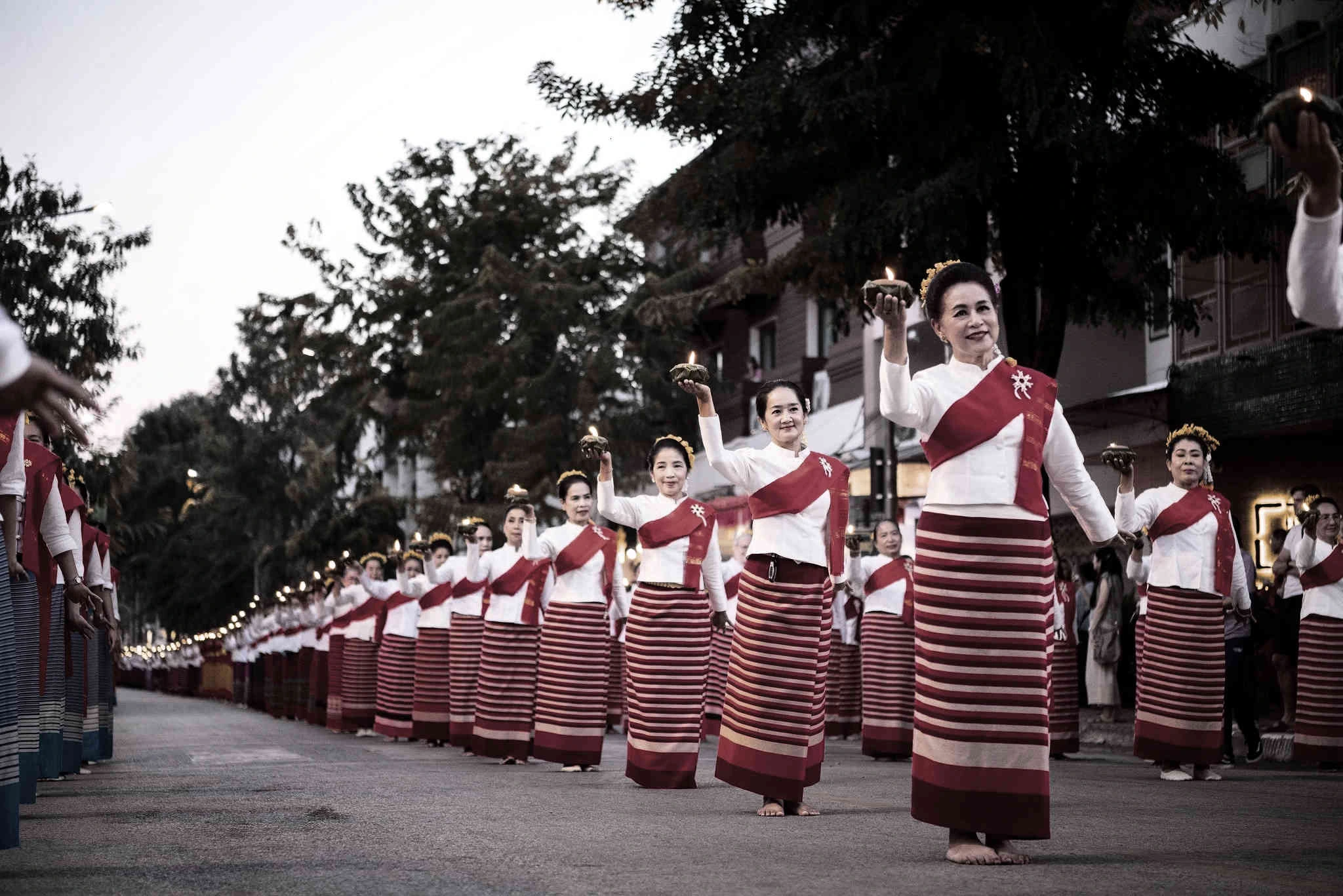
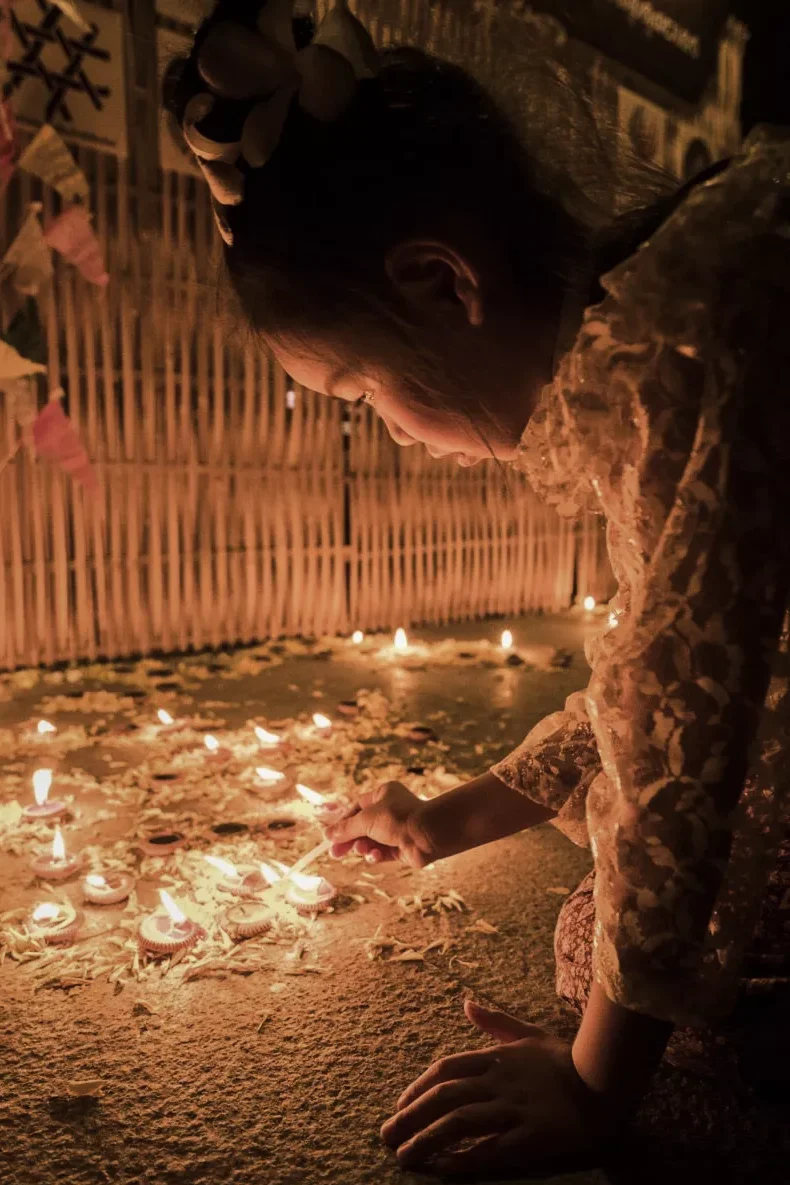
I still remember being a little girl, watching my grandparents light phang prateep — tiny terracotta oil lamps — around our house every Yi Peng evening. They'd line them along the balcony railing, tuck them along the fence posts, set them glowing at the gate. By nightfall, the whole house looked like it was breathing soft gold light from every edge. I didn't understand the spiritual mechanics of it as a kid. I just knew that for one night, our ordinary home turned into something a little bit magical, and I never wanted it to end.
That's the real Yi Peng — and it's worth knowing before you book a 45-minute ticketed lantern release and call it a day. The full tradition unfolds in six unhurried steps:
Villagers construct green archways from banana trunks, sugarcane, and palm leaves at home and temple entrances, welcoming the return of Prince Vessantara.
Communities gather in temple viharn halls as monks chant all 13 chapters of the Vessantara story — a marathon of merit-making, not a quick blessing.
Tiny clay lamps filled with beeswax illuminate walls, courtyards, and windows, driving dark energy out of the home (this is the part that turned my childhood balcony into something out of a storybook).
Rice-paper lanterns lift toward Phra Ket Kaew Chulamanee, the celestial stupa believed to hold sacred relics, carrying misfortune away with them.
Miniature wooden sailing ships, loaded with flowers and offerings, are set afloat down northern rivers.
Village-wide cleanups, the crackle of local bok fai fireworks, and the fun, slightly chaotic navigation of temple bamboo maze paths (Khao Wongkot).
That's the version most visitors never see — and there's a lot more of it worth knowing before you land in Chiang Mai. Our full Yi Peng guide breaks down exactly how to celebrate like a local — where to go, what to wear, and which nights actually matter.
How We Actually Celebrate Loy Krathong
Central Thailand & nationwide — while the north looks up, the rest of Thailand looks down — toward the water that's carried us for centuries.
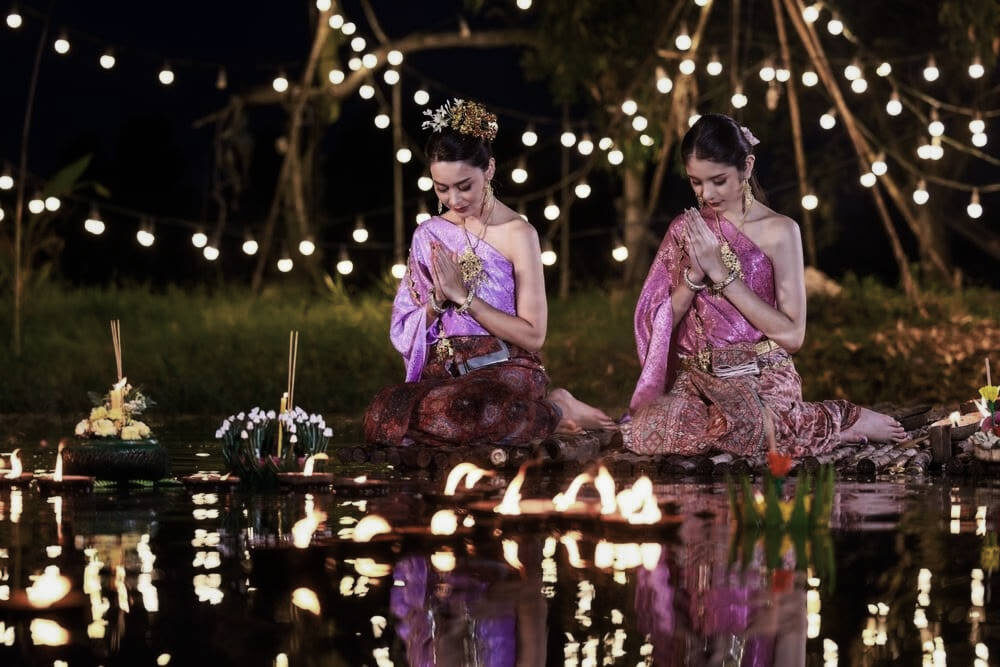
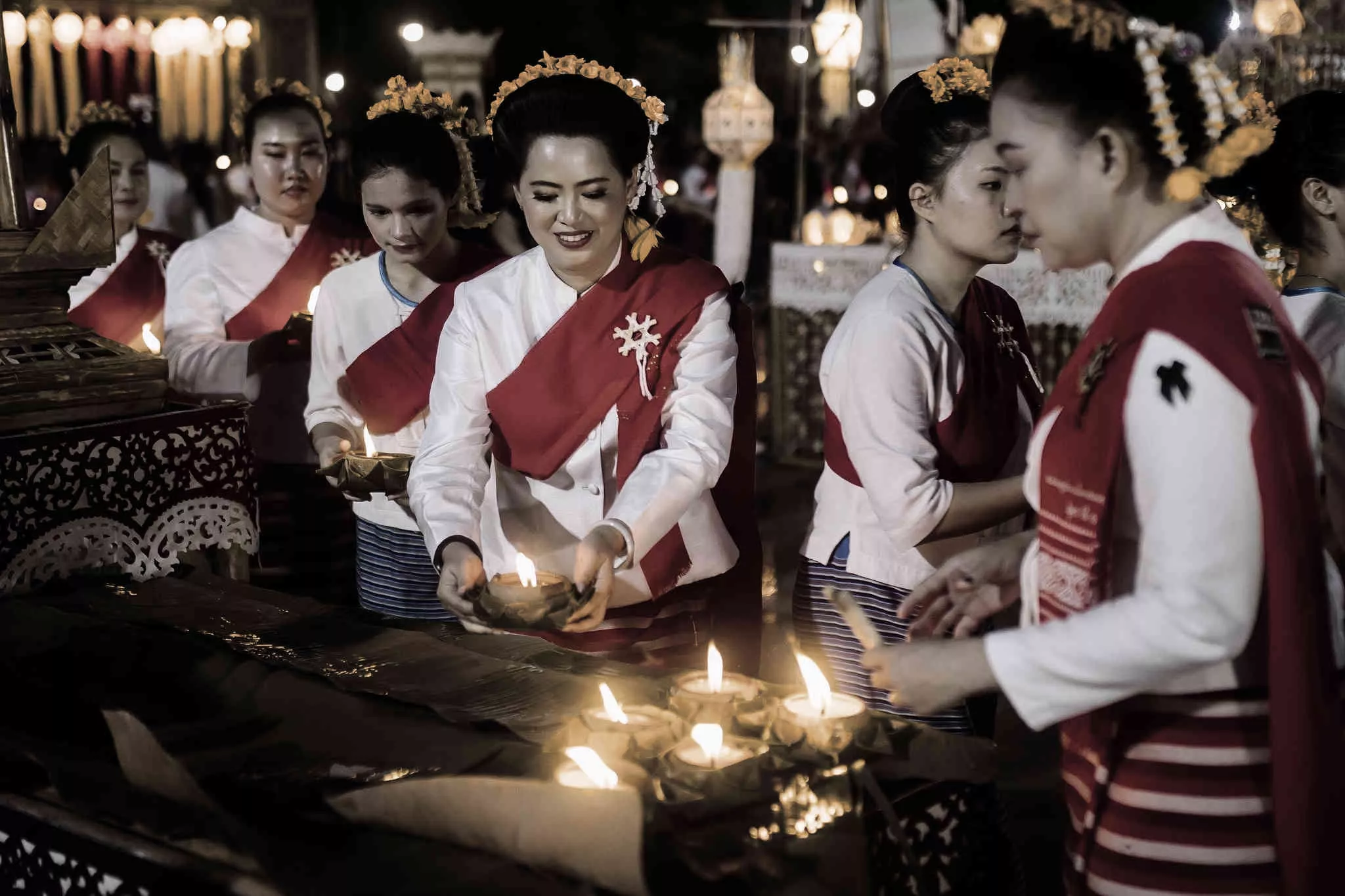
- Handcrafting the krathong: Thin slices of banana trunk (ton kluai) form the base, banana leaves (bai tani) get folded into elegant tiers, and the whole thing is finished with marigolds, orchids, a candle, and incense sticks.
- The personal purge: Here's the detail most guides skip entirely — many locals quietly tuck a coin, a strand of hair, and a small fingernail clipping inside the basket. It sounds strange until you understand the logic: you're literally cutting off a small piece of your past self, your stress, your grudges, and letting the river physically carry it away. It's less "pretty basket" and more "release ceremony with actual teeth."
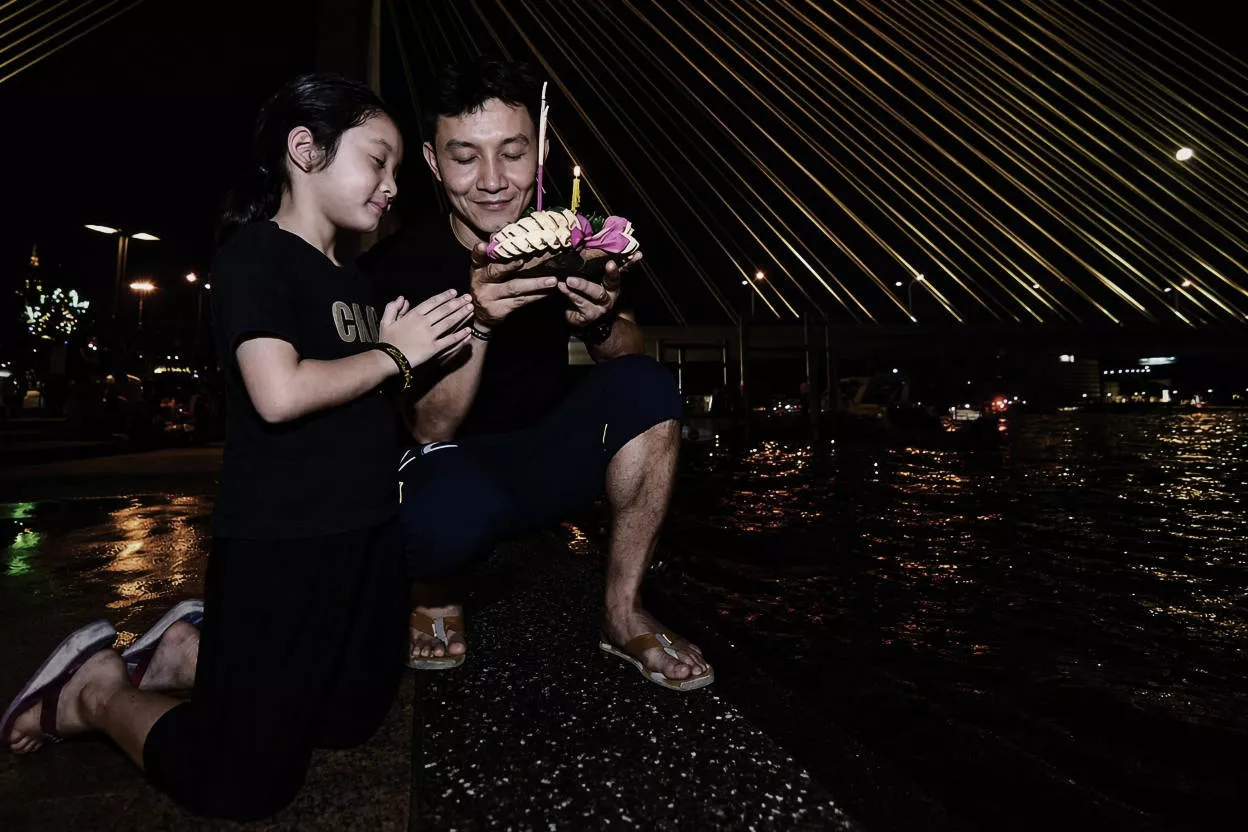
- The waterfront apology ritual: Kneel at the riverbank, raise the krathong to your forehead, quietly ask forgiveness from Phra Mae Khongkha for the year's carelessness, make a wish, and send it into the current.
- Temple fairs and Miss Noppamas pageants: Neon-lit wat fairs, luk thung folk music blasting from speakers, vintage Ferris wheels creaking overhead, dart games, and beauty pageants honoring the court lady credited with crafting the first decorative krathong — this is Loy Krathong's louder, more festive cousin to the riverside quiet.
- Rustic village roots: Away from the neon and crowds, plenty of families still float simple handmade leaf boats down backyard canals — no fanfare, no crowd, just a quiet moment with the water.
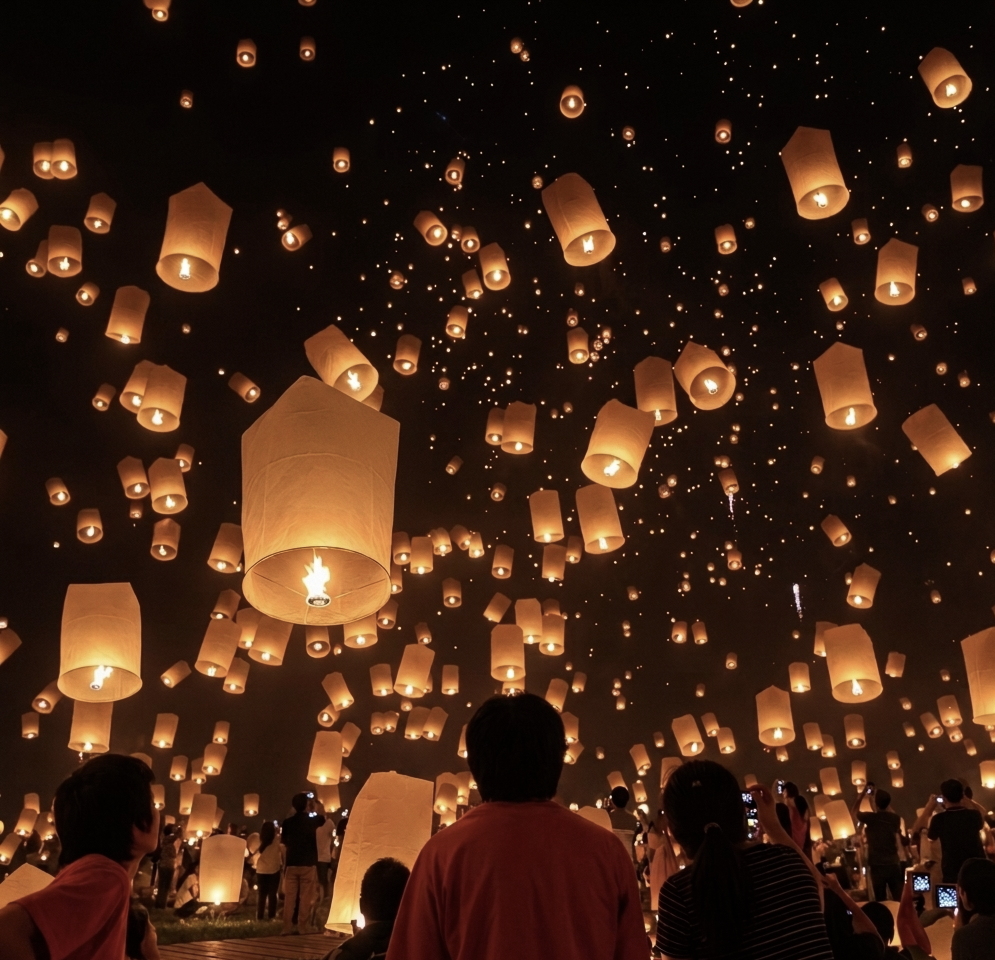 Sky · Yi Peng · Chiang Mai
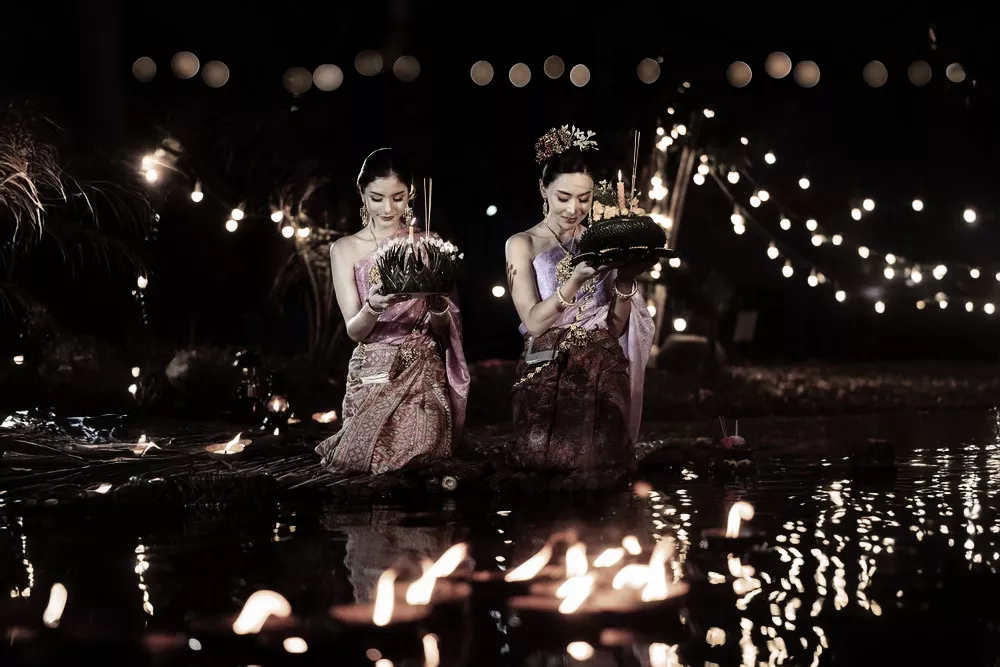 Water · Loy Krathong · Nationwide
Lanna Yi Peng
vs Central Loy Krathong
| Swipe | Lanna Yi Peng | Central Loy Krathong |
|---|---|---|
| Direction of light | Upward, into the sky | Downward, onto the water |
| Spiritual focus | Merit, letting go, celestial devotion | Gratitude and apology to the water goddess |
| Home preparation | Phang prateep lamps, forest gates | Handcrafted krathong |
| Overall vibe | Communal, cosmic, village-wide | Personal, reflective, river-side |
Best Places to Celebrate in 2026
Chiang Mai is the only city on earth where Loy Krathong and Yi Peng collide on the same nights — one on the water, one in the sky, both happening at once, neither apologizing for the other. The Ping River carries krathongs downstream while lanterns rise above the city. Two traditions, same nights, one gloriously overwhelmed city.
Light phang prateep at Wat Phra Singh and float your krathong at Wat Ket Karam community pier — smaller alley piers, actual neighbors, zero elbow competition. Same river goddess. Considerably better odds of actually feeling something.
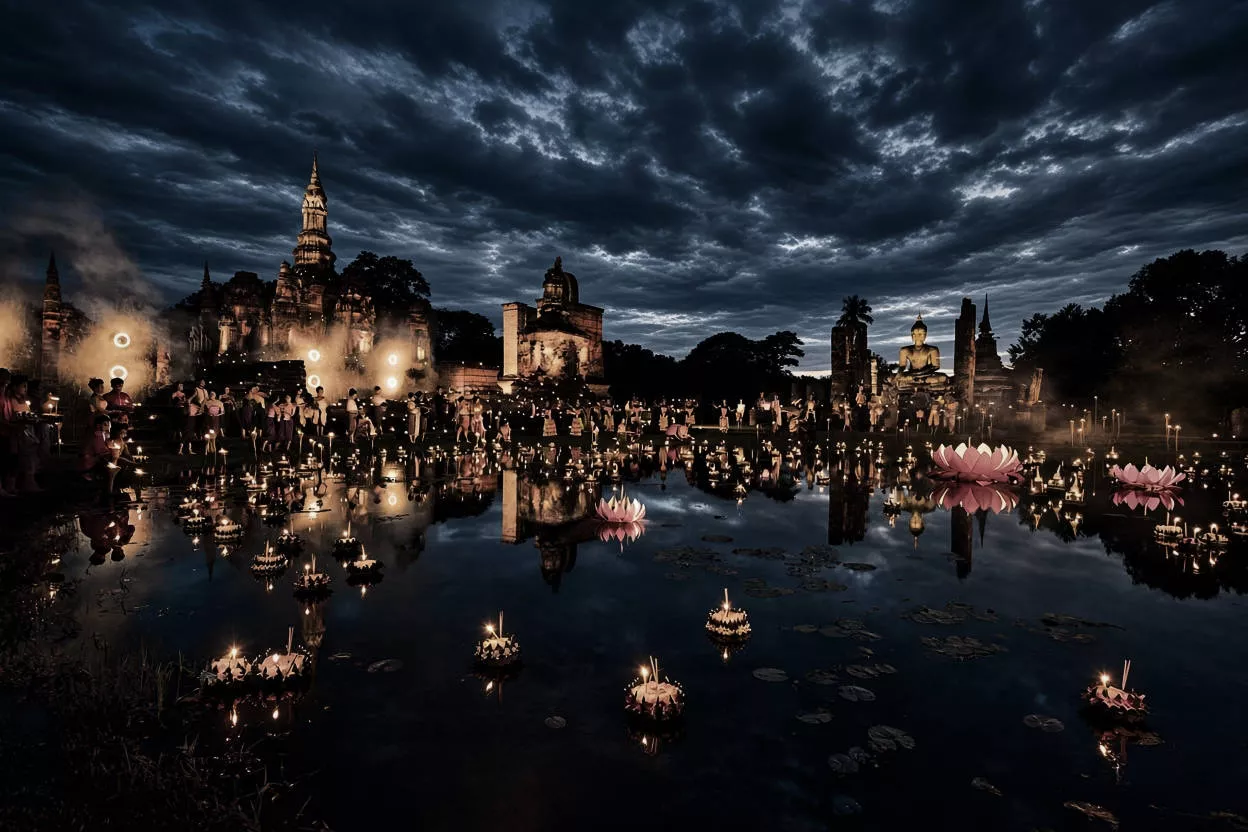
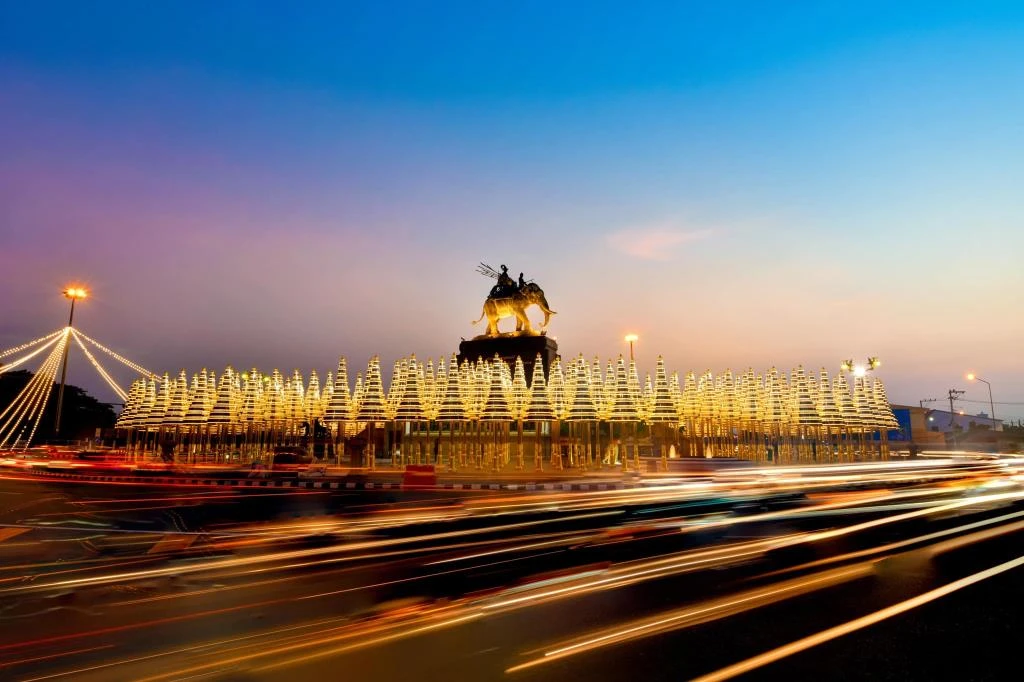
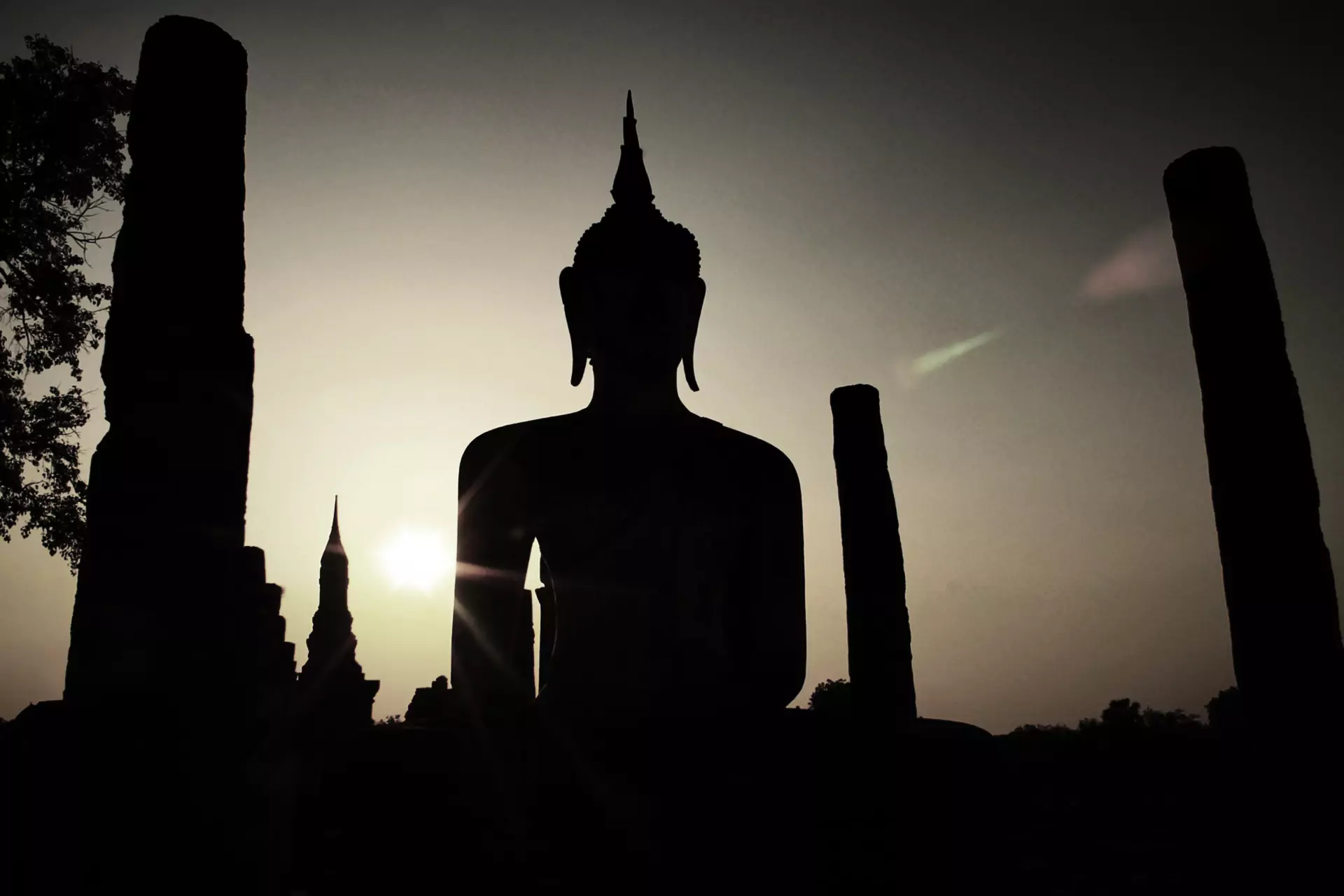
Every Loy Krathong celebration in Thailand traces back to one place: Sukhothai. This is where the tradition was born — and unlike most origin stories, the evidence is still standing. Seven-hundred-year-old ruins, ancient reservoirs, stone stupas that were already old when the first krathong was floated. The festival here isn't recreating history. It IS history, still running.
The signature celebration is Phao Thian Len Fai — tens of thousands of hand-molded terracotta candles lit around ancient stupas, reflected in historic reservoirs that have held this same light for centuries. If Loy Krathong is a letter to the river, Sukhothai is where the first one was written.
Bangkok celebrates Loy Krathong the way Bangkok does everything — in at least two completely different ways simultaneously. The Chao Phraya version is grand and unapologetic: Tha Maharaj's relaxed riverside atmosphere, Wat Arun and Wat Rakhang lit against the water, ancient temple spires doing their level best to outshine the skyscrapers behind them. Then there's the quieter
Bangkok — Lumphini, Benchakitti, Vachirabenjatas Park — where families float krathongs on city park ponds framed by the same skyline, considerably fewer elbows, and the river goddess receiving offerings under office buildings. Both are Bangkok. Both are valid. Pick your crowd level accordingly.
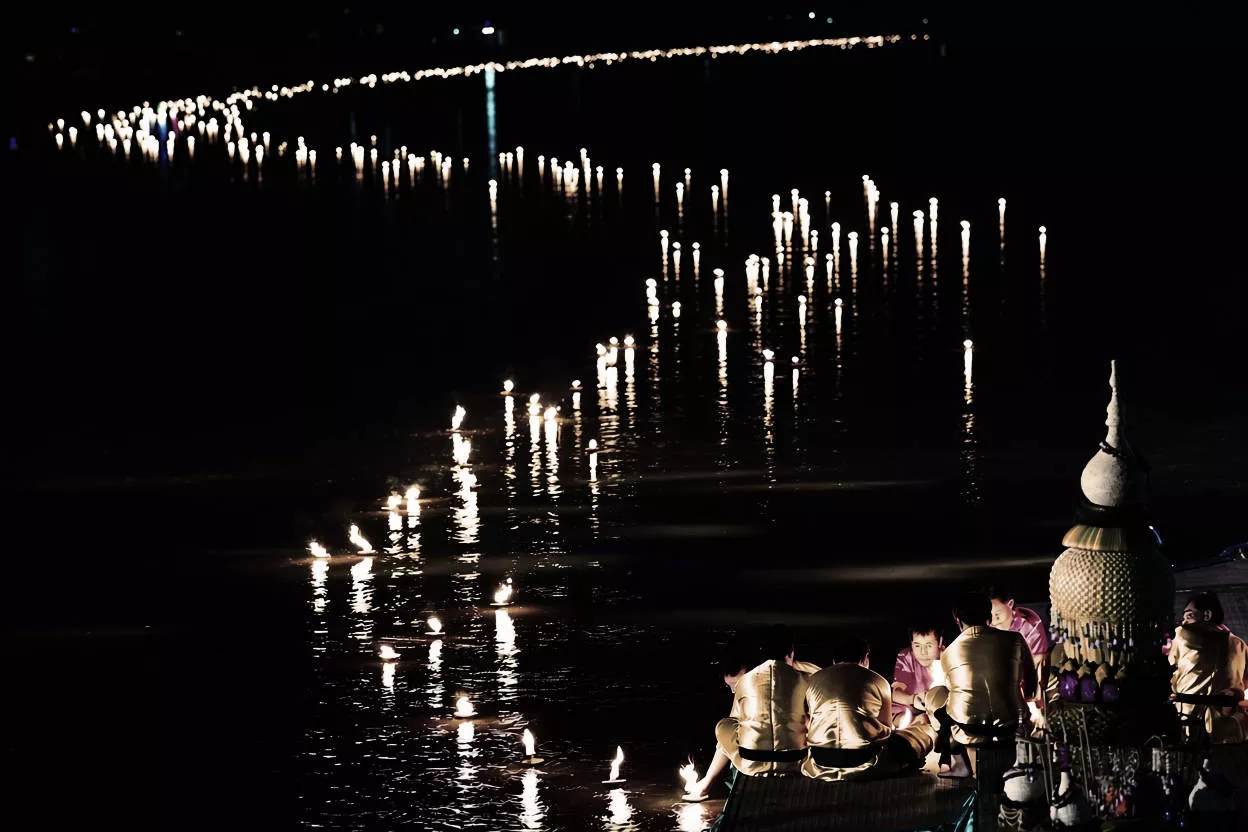
Tak Province does something found nowhere else in Thailand: instead of individual floating baskets, communities here craft connected banana-trunk "trains" — long chains of offerings that stretch across the entire width of the river, carrying the year's intentions downstream in one unbroken procession.
It's the same festival, completely reimagined. The scale of a banana-trunk train moving across a dark river by candlelight is something your camera will try and fail to capture. Same festival, entirely different Thailand.
"Try putting your phone down for just one moment. Hold whatever you're about to release with real intention. Say a quiet thank-you to the water, or the sky, or whichever one you've chosen to trust with this year's baggage."Thaitop · On Loy Krathong & Yi Peng
Eco-Tips, Rules & Local Etiquette We Wish Every Visitor Knew
Styrofoam krathongs are a hard no — they don't decompose, and they turn a beautiful ritual into literal river pollution by morning. Bread krathongs work fine for open rivers with fish happy to eat the crumbs, but in closed city park ponds, that same bread just sits there, choking the water instead. Your safest bet: natural banana stalk krathongs or the newer ice-molded versions, which simply melt away by dawn.
Chiang Mai enforces a strict no-fly zone across the Old City and central areas — this isn't bureaucratic fussiness, it's real airport flight-path safety, given how close the city center sits to an active runway. Releasing a lantern in the wrong zone risks a genuinely serious fine and, more importantly, real air traffic danger. Stick to designated release zones or licensed events outside the flight path.
Cover shoulders and knees, keep your voice low near waterside monks and quiet ritual moments, and participate with genuine mindfulness rather than treating the temple grounds as a backdrop. A little respect goes a long way on a night that's fundamentally about respect to begin with.
Your Questions, Answered
Think of Loy Krathong as the nationwide water festival and Yi Peng as the Northern sky festival crashing the same party. Loy Krathong is everywhere — Bangkok, Phuket, your hotel pool if it has one — floating banana-trunk baskets (krathongs) on the water to thank the river goddess. Yi Peng is strictly Lanna: we release paper lanterns into the night sky, and we don't share that one nationwide. Two distinct festivals. One calendar date. Pure coincidence, maximum drama.
Tuesday, November 24, 2026 — the full moon of the 12th lunar month, and the main event for both. Expect opening ceremonies, floating krathongs, and the first big lantern releases. Yi Peng keeps going into Wednesday, November 25, closing out with the Grand Krathong parade.
Yes — and Chiang Mai isn't just where you can see both, it's the only place both actually belong to. Lanna's cultural heart gives you Yi Peng; being a major Thai city gives you Loy Krathong. Float your basket at 7pm, watch a thousand lanterns lift at 8pm. It's the visual equivalent of a mic drop. For the full playbook — dates, temples, where locals actually go — see our Chiang Mai Yi Peng guide.
Not quite. "Sky Lantern Festival" is the internet's nickname for one photogenic moment — thousands of khom loi lifting into the night sky, usually at a paid event outside the city. Yi Peng is the whole tradition behind it: days of community prep, temple sermons, phang prateep lighting, krathong floating, and yes, lanterns too — just one stage in a much longer story. Every Sky Lantern Festival moment is technically Yi Peng. Yi Peng is definitely not just the Sky Lantern Festival.
Absolutely not. 95% of the magic happens for free — streets, the Ping River, local temples. You only need a ticket for the private mass-release events (like CAD), which are really just curated, paid photo shoots. If you want the gritty, chaotic, actually-real version, lace up your walking shoes — our Yi Peng guide has the free spots locals go to instead.
It's spiritual housekeeping, done in two steps. Krathongs go on the water to thank Phra Mae Khongkha, the Goddess of Water, for the year's supply and to apologize for a year of polluting it. Sky lanterns are Buddhist merit-making — releasing one means sending your misfortunes, bad luck, and general bad vibes up into the ether where they belong.
At its core: letting go. Clip a fingernail or a strand of hair, place it in your krathong, and you're not building a tiny botanical boat — you're casting off the past year's grudges, grief, and bad energy. Watching it drift into the dark is a quiet, private reset button. Therapy, basically. Better street food, though.
Ready to Watch Your Worries Float Away?
However you end up celebrating — kneeling at a quiet riverbank with a handmade krathong, or standing in a village courtyard watching phang prateep light up every fence post like your childhood balcony just did for someone else's grandkid — try putting your phone down for just one moment.
Hold whatever you're about to release with real intention. Say a quiet thank-you to the water, or the sky, or whichever one you've chosen to trust with this year's baggage.
Thailand's most magical night doesn't need your Instagram story to work its magic. It just needs you, present, for a few unhurried minutes.
The rest, we promise, takes care of itself.
Then let it go.
Ready for Your Next Move?